Author: contact@promarineelectronics.com

  • Best Kayak Fish Finders

    Best Kayak Fish Finders

    Kayak fish finders need to balance capability against size, power draw, and price differently than boat-class units. Here’s how the best current options compare.
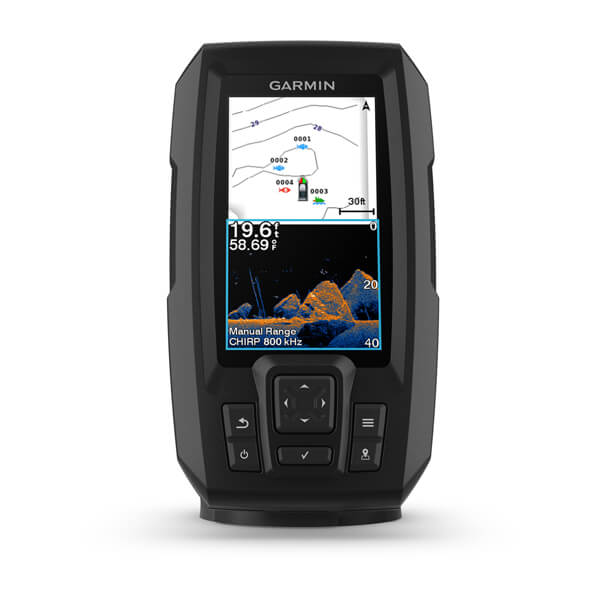
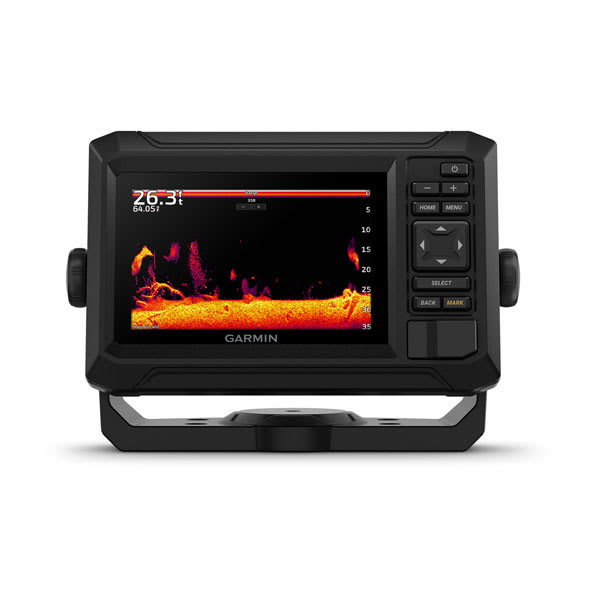
    Garmin Striker Vivid compact fish finder display
    Compact, low-power displays like the Garmin Striker Vivid are built for kayak-sized power budgets.

    Best Overall: Garmin Striker Vivid 4cv

    The Garmin Striker Vivid 4cv Fish Finder ($149.99) packs real CHIRP and ClearVu sonar plus built-in GPS into a compact, low-power 4-inch display — the best all-around balance of capability, size, and price for a kayak setup.

    Best for a Bigger Screen: Humminbird HELIX 5 CHIRP GPS G3

    The Humminbird HELIX 5 CHIRP GPS G3 ($249.99) steps up to a larger, easier-to-read display while staying within a reasonable kayak power budget, a strong choice if screen size matters more to you than shaving every last watt.

    Best Zero-Installation Option: Deeper PRO+ 2

    The Deeper PRO+ 2 Smart Sonar Castable WiFi Fish Finder ($199.99) skips mounting and wiring entirely — cast it out, pair it with your phone over WiFi, and you have sonar with zero permanent installation. Ideal if you switch between kayaks, canoes, or fish from the bank as often as you paddle.

    Best Mid-Size Combo: Lowrance Eagle 9

    The Lowrance Eagle 9 with US Inland Lakes and TripleShot Transducer ($699.99) is a larger step up for kayak anglers who want a genuinely boat-class display with preloaded inland lake charts and TripleShot sonar — worth considering if your kayak has the deck space and you want minimal compromise on capability.

    Best for Live Sonar on a Budget Frame: Garmin ECHOMAP UHD2 73cv

    The Garmin ECHOMAP UHD2 73cv GN+ ($649.99) brings a full combo chartplotter/sonar display in a still-kayak-manageable size, with support for adding LiveScope later if you want to grow into forward-facing live sonar down the line.

    Frequently Asked Questions

    What screen size is realistic for a kayak?
    4 to 7 inches covers most kayak setups comfortably; anything larger starts to compete seriously for deck space and battery capacity unless you have a dedicated fishing kayak with a large console.

    Do I need a separate battery for these, or can they run off anything?
    All of these mounted units need a dedicated 12V power source (a small marine battery in a waterproof box is standard); the Deeper PRO+ 2 is the exception, running on its own internal rechargeable battery instead.

    Is GPS necessary on a kayak fish finder?
    It’s highly recommended even on small water — marking productive spots and navigating back to a launch point matters just as much from a kayak as from a boat, and every model above includes it except the Deeper, which relies on your phone’s GPS instead.

    New to setting up electronics on a kayak?
    Read our full kayak fishing electronics 101 guide first for power, mounting, and setup basics.

    Browse the complete kayak & small boat electronics collection.
  • Kayak Fishing Electronics 101

    Kayak Fishing Electronics 101

    Kayak fishing has its own electronics rules — limited deck space, no dedicated power system, and a hull that needs a clean, non-invasive mounting approach. The good news is you can build a genuinely capable setup without the budget or complexity of a full boat rig. Here’s where to start.

    Power: The First Thing to Solve

    Unlike a boat, a kayak has no engine charging a battery bank, so every electronic device draws down a dedicated, portable power source. A small 12V sealed lead-acid or lithium battery in a waterproof box is the standard setup for a fish finder and any accessories; size it to your unit’s draw and typical time on the water, and always carry it in a way that keeps connections dry. This is the first budget line to plan for — a great fish finder with no reliable power is dead weight.

    Choosing a Fish Finder for a Kayak

    Compact displays built for small craft, like the Garmin Striker Vivid 4cv, hit the sweet spot of a small footprint, low power draw, and real CHIRP/ClearVu sonar with built-in GPS — more than enough for most kayak anglers without the size or cost of a full boat-class unit. If you want a step up in screen size and still-modest power draw, the Humminbird HELIX 5 CHIRP GPS G3 is a popular mid-tier choice. For the fundamentals of how any of these units actually work, see our how fish finders work guide.

    Compact fish finder mounted on a kayak
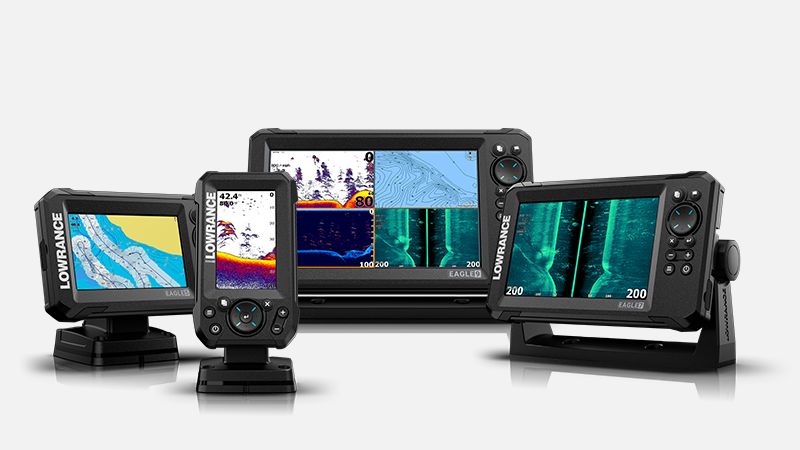
    Compact displays like the Lowrance Eagle series are built for the limited space and power budget of a kayak.

    A Castable Option Worth Knowing About

    If you’d rather skip permanent mounting and wiring entirely, castable sonar units like the Deeper PRO+ 2 Smart Sonar pair a floating, throwable sonar ball with your phone over WiFi — no battery installation, no transducer mount, and it works from a kayak, the bank, or ice. It trades some of the screen size and features of a mounted unit for genuine simplicity.

    Mounting Without Drilling

    Many kayak anglers avoid permanent hull penetrations by using a transducer arm or scupper-hole mount that clamps to the kayak rather than requiring thru-hull installation, along with track-mount systems (RAM mounts and similar) that let you add and reposition a display without new holes each time you upgrade gear.

    Adding a Trolling Motor and Live Sonar

    Once the basics are dialed in, many kayak anglers add a small trolling motor like the Bixpy K-1 Outboard Motor Kit for hands-free positioning, and increasingly, kayak-compatible live sonar via mounts like the Power-Pole Micro Anchor for instant-hold shallow anchoring. Our live sonar vs. traditional sonar guide covers whether that upgrade makes sense for your fishing style.

    Frequently Asked Questions

    How much should I budget for a basic kayak fish finder setup?
    A capable entry unit, a small dedicated battery, and basic mounting hardware typically runs a few hundred dollars total — considerably less than a boat-class setup while still giving you real CHIRP sonar and GPS.

    Do I need to drill into my kayak to mount electronics?
    No — scupper-hole and clamp-on transducer mounts, along with track-mount display arms, let most anglers add a full fish finder setup without any permanent hull modification.

    Is a castable sonar as good as a mounted fish finder?
    It trades some screen size and continuous power for simplicity — a castable unit like the Deeper PRO+ 2 is a strong choice if you want zero installation, but a mounted display generally offers a larger, easier-to-read screen on the water.

    How do I keep electronics dry on a kayak?
    Use waterproof battery boxes, marine-rated connectors, and mount displays above expected spray lines; even “waterproof” units benefit from keeping wiring connections out of standing water in the hull.

    Ready to see specific kayak-friendly fish finders side by side? See our best kayak fish finders guide, or browse the full kayak & small boat electronics collection.
  • Best Shallow Water Anchors

    Best Shallow Water Anchors

    From budget-friendly traditional anchors to Bluetooth-controlled shallow water spikes, here’s how the current lineup breaks down for flats, bay, and small-boat anglers.

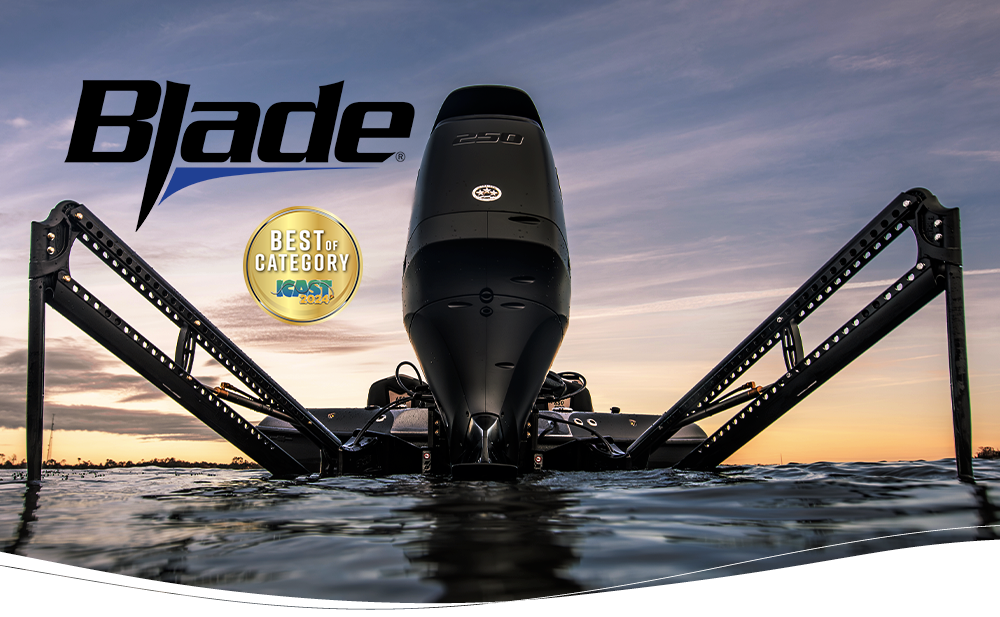
    Power-Pole Blade Series shallow water anchor deployed off a boat
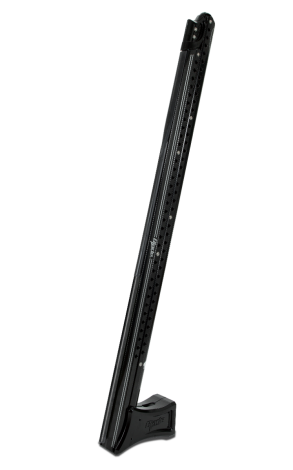
    Power-Pole’s Blade Series is one of the most established names in shallow water anchoring.

    Best Overall: Minn Kota Raptor 8ft

    The Minn Kota Raptor 8ft Bluetooth Shallow Water Anchor ($799.99) leads the category with a 135 lb hold rating, auto-depth sensing, and a genuinely quiet “Silent Deploy” mechanism — the current benchmark most flats and bay boat anglers compare everything else against.

    Best for Maximum Depth: Power-Pole Blade Series 10ft

    The Power-Pole Blade Series Shallow Water Anchor (10ft) ($699.99) reaches deeper water than most competitors, a strong choice if you fish marsh or flats with more depth variation and don’t want to be limited by a shorter spike.

    Best Value Power-Pole: Blade Series 8ft

    The Power-Pole Blade Series Shallow Water Anchor (8ft) ($649.99) delivers the same Bluetooth-controlled Blade technology at a slightly lower price than the 10ft version, ideal if your typical fishing depth doesn’t call for the extra reach.

    Best for Kayaks and Small Boats: Power-Pole Micro Anchor

    The Power-Pole Micro Anchor ($699.99) brings the same Bluetooth hydraulic deploy technology to a universal mount built specifically for kayaks and small boats — there’s genuinely no comparable option at this size.

    Best Traditional Backup Anchor: Fortress FX-11

    Every shallow water spike still benefits from a proper traditional anchor for deeper water or overnight use. The Fortress FX-11 Aluminum Anchor ($139.99) is lightweight, corrosion-proof, and rated for boats up to 28ft — a smart, affordable pairing alongside any shallow water anchor.

    Frequently Asked Questions

    Do I need both a shallow water anchor and a traditional anchor?
    Most flats and bay boat owners carry both — the shallow water anchor for quick, repeated stops in skinny water, and a traditional anchor and rode for deeper water or overnight anchoring.

    Is a longer spike always better?
    Not necessarily — a longer spike reaches deeper water but isn’t needed if you consistently fish shallower flats; match spike length to the depths you actually fish rather than buying maximum length by default.

    How much boat can these anchors handle?
    Check each model’s rated hold and boat-length compatibility before buying — the Minn Kota Raptor’s 135 lb hold rating and the Power-Pole Blade series are both built for typical bay and flats boats up to the mid-20-foot range; very large or heavy boats may need to consult manufacturer specs.

    New to shallow water anchors?
    Read our full shallow water anchors explained guide first to understand how spike anchors work and where they fit alongside a traditional anchor.

    Browse the complete shallow water anchor collection.

  • Shallow Water Anchors Explained: How Spike Anchors Work

    Shallow Water Anchors Explained: How Spike Anchors Work

    Anyone who fishes flats, marsh, or shallow backwater eventually runs into the same problem: a traditional anchor and rode is slow, noisy, and awkward in two feet of water, and it can drag or foul on grass and structure. Shallow water anchors (often called “shallow water spikes” or “stake anchors”) solve this with a completely different mechanism. Here’s how they work and how to choose one.

    How a Shallow Water Anchor Works

    Instead of a traditional fluke anchor and rode, a shallow water anchor mounts to the transom or bow and drives a fiberglass spike (or in some cases a blade-shaped pole) straight down into the bottom using hydraulic, electric, or manual power. Deploy it and the boat is pinned in place almost instantly; retract it and you’re moving again in seconds — no pulling anchor line, no coiling rode, no risk of a fouled anchor stuck on structure.

    Depth Range and Hold

    Shallow water anchors are purpose-built for skinny water — typically effective from a few inches down to 8-10+ feet depending on the spike length, with units like the Power-Pole Blade Series 10ft reaching deeper flats and marsh water than shorter spikes. Holding power comes from the spike’s penetration into the bottom rather than weight or fluke design, which is why they excel in mud, sand, and grass but aren’t a substitute for a real anchor in open, deep water.

    Power-Pole Blade Series shallow water anchor mounted on a boat transom
    A shallow water anchor deploys and retracts in seconds, holding the boat by driving a spike into the bottom.

    Bluetooth and Remote Control

    Most current-generation shallow water anchors, including the Minn Kota Raptor and Power-Pole’s Blade and Micro lines, offer Bluetooth app control and wireless remotes, letting you deploy or retract from anywhere in the boat — genuinely useful when you’re mid-cast and need to stop quickly without walking to a switch.

    Kayak and Small Boat Options

    Shallow water anchors aren’t just for bay boats — the Power-Pole Micro Anchor is purpose-built with a universal mount for kayaks and small boats, bringing the same instant-deploy convenience to craft that would otherwise rely on a drift sock or a simple stake tied off by hand.

    When You Still Need a Traditional Anchor

    Shallow water anchors don’t replace a traditional anchor entirely — for open water, deeper anchoring, or overnight security, a proper fluke or plow anchor like a Fortress FX-11 with adequate rode is still the right tool. Most flats and bay boat owners carry both: a shallow water anchor for quick, repeated stops while sight-fishing or working structure, and a traditional anchor for deeper or overnight anchoring.

    Frequently Asked Questions

    What depth is too deep for a shallow water anchor?
    Most spikes top out around 8-10 feet of effective depth; beyond that, holding power and structural stress become issues, and a traditional anchor and rode is the right choice.

    Do shallow water anchors work in mud and grass, or just sand?
    They’re actually most popular specifically because they hold well in mud, sand, and grass bottoms where a traditional anchor tends to drag or foul — hard rock or shell bottom is where they perform worst.

    Are these anchors noisy when deploying?
    Older hydraulic units could be noticeable; current models, including the Minn Kota Raptor’s “Silent Deploy” feature, are specifically engineered to minimize noise so you don’t spook fish in shallow water.

    Can I mount a shallow water anchor on a small boat or kayak?
    Yes — the Power-Pole Micro Anchor is designed specifically for kayak and small-boat universal mounting, bringing the same technology to smaller craft.

    Ready to compare specific models? See our best shallow water anchors roundup, or browse the full shallow water anchor collection.

  • Best Marine Radar for Small and Mid-Size Boats

    Best Marine Radar for Small and Mid-Size Boats

    Every unit here is radar-capable when paired with a compatible radar antenna, spanning a wide budget range from a compact 9-inch combo unit to a full 16-inch offshore-grade display. Here’s how they stack up.

    Garmin GPSMAP multifunction display with radar overlay capability
    Garmin’s GPSMAP xsv series supports networked radar alongside sonar and chartplotting.

    Best Budget Entry: Simrad NSS9 evo3S

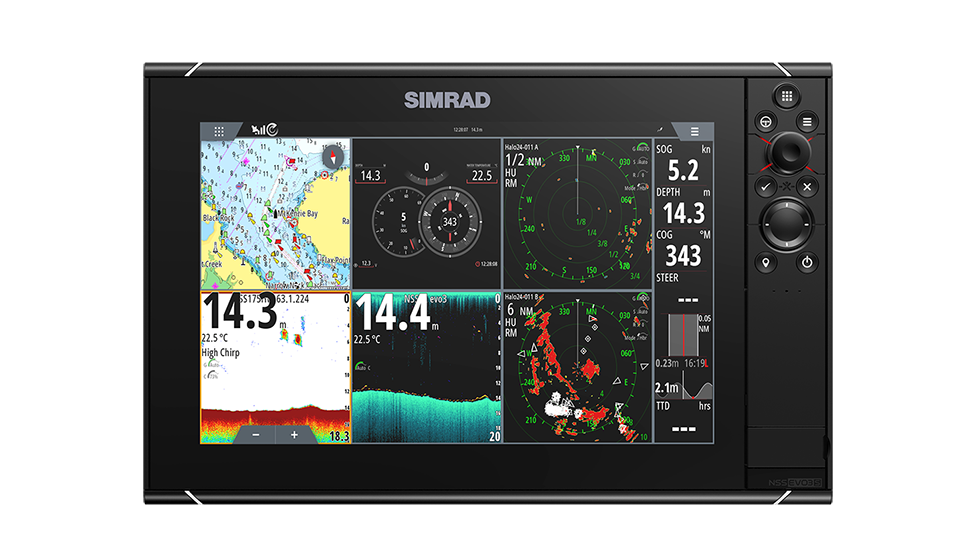
    The Simrad NSS9 evo3S 9-Inch Chartplotter Fishfinder ($1,199.00) is the least expensive way into a radar-capable networked system here, pairing C-MAP Discover charts with a display that supports Simrad’s Halo and 3G/4G radar lines — a strong starting point for a small to mid-size boat.

    Best Value Multifunction Display: Garmin GPSMAP 8610xsv

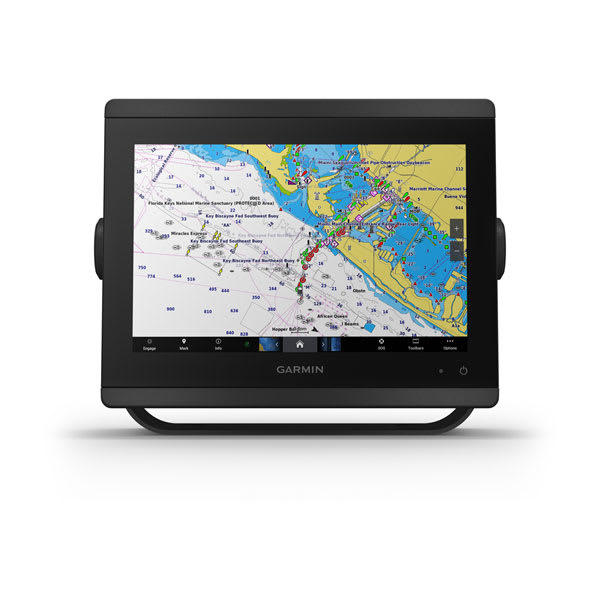
    The Garmin GPSMAP 8610xsv GN+ Multifunction Chartplotter ($1,899.00) brings Garmin’s xsv-series radar and sonar networking to a 10-inch display, a solid mid-size-boat pick that leaves room to add a radome later.

    Best for 3D Sonar Plus Radar: Raymarine AXIOM+ 12RV

    The Raymarine AXIOM+ 12RV with LightHouse North America Maps ($2,229.00) combines RealVision 3D sonar with a 12-inch display and full radar networking support — a strong choice if you want 3D sonar imaging and radar on one larger screen.

    Best for Larger Boats: Garmin GPSMAP 8612xsv

    The Garmin GPSMAP 8612xsv GN+ Multifunction Chartplotter ($2,969.00) steps up to a 12-inch display with the same xsv radar and sonar networking, suited to a busier helm running multiple data sources at once.

    Best for Full Offshore Helms: Garmin GPSMAP 8616xsv

    The Garmin GPSMAP 8616xsv GN+ 16-Inch Multifunction Display ($4,519.00) is the largest and most capable unit in this lineup, built for boats running a full networked helm with radar, multiple sonar sources, and AIS all displayed at once. It’s a serious investment aimed squarely at offshore and larger center-console owners.

    Frequently Asked Questions

    Does the radar antenna come included with these displays?
    No — these are the display/chartplotter units, and each supports a specific line of compatible radar antennas sold separately. Confirm the compatible radar family for your chosen display before ordering.

    What size display do I need to read radar clearly?
    9-10 inches works for a single full-screen radar view; if you plan to split-screen radar alongside sonar and charts simultaneously, 12 inches or larger makes a noticeable difference in usability.

    Is a bigger, more expensive display always the better choice?
    Not necessarily — match the display to your boat size and how many data sources you’ll run simultaneously. A 9-inch unit like the Simrad NSS9 is plenty for a smaller boat running radar and sonar alone.

    New to marine radar generally?
    Read our understanding marine radar guide first to understand range, overlay, and whether you actually need it for how you boat.

    Browse the full chartplotter & MFD collection to compare specs side by side.

  • Understanding Marine Radar: Range, Overlay, and When You Need It

    Understanding Marine Radar: Range, Overlay, and When You Need It

    Radar is the one piece of marine electronics most recreational boaters go without — and the one that matters most the first time you’re caught out after dark, in fog, or in a sudden squall with visibility dropping to nothing. Here’s what marine radar actually does and how to know if you need it.

    What Marine Radar Actually Shows You

    Unlike sonar, which looks down into the water, radar sweeps horizontally, sending out radio pulses and building a picture of everything solid around your boat — other vessels, shoreline, buoys, and squalls carrying enough moisture to reflect a return. On a networked multifunction display like the Garmin GPSMAP 8616xsv, radar typically overlays directly on your chart screen, so you see real vessel and shoreline returns lined up against your GPS position and course.

    Range and Resolution

    Radar range is a trade-off: longer range lets you spot weather and large vessels well in advance, but resolution drops at distance and close-in targets can get harder to distinguish. Most recreational radomes cover a practical range from a few hundred feet out to 24-48 nautical miles depending on the unit and antenna height, with better near-range resolution generally coming from open-array antennas over compact radomes — though radomes remain far more common on recreational boats for their lower cost, weight, and easier mounting.

    Marine chartplotter display showing radar and navigation overlay
    Radar typically overlays directly onto the chart screen on a networked multifunction display.

    Collision Avoidance and Fog/Night Navigation

    The single biggest reason recreational boaters add radar is situational awareness when visual range is compromised — fog, heavy rain, or running after dark in busy traffic areas. Radar picks up vessels and hazards well before they’re visible, and features like MARPA (Mini Automatic Radar Plotting Aid) on higher-end systems track other vessels’ speed and heading automatically to flag potential collision risks.

    Storm and Weather Tracking

    Radar also reads precipitation density, which means a boat with radar can visually track an approaching squall’s intensity and movement on screen well before it arrives — genuinely useful information when you’re deciding whether to keep fishing or head in.

    Do You Actually Need It?

    If you exclusively day-boat on a small inland lake in clear conditions, radar is a nice-to-have rather than essential. If you run coastal, offshore, in busy shipping lanes, or regularly out before dawn or after dusk, radar moves from optional to genuinely important safety equipment — the kind of purchase that pays for itself the one time visibility drops and you’re glad it’s there.

    Frequently Asked Questions

    Does radar replace AIS for collision avoidance?
    No — they’re complementary. AIS shows you the identity, course, and speed of other AIS-equipped vessels via broadcast signal; radar shows you everything solid in range regardless of whether it’s transmitting AIS, including small craft, buoys, and landmasses. Serious offshore setups run both.

    Can I add radar to a chartplotter I already own?
    Often, yes, if your existing MFD supports a networked radar antenna — check your unit’s compatibility list before buying a standalone radome, since radar typically requires a specific network connection type matched to the display brand.

    How much does adding radar typically cost?
    Radar-capable multifunction displays like the units in our best marine radar for small and mid-size boats guide start in the low thousands including the display, with the radar antenna itself typically an additional cost on top.

    Do I need radar if I already have a good chartplotter and GPS?
    GPS and charts show you where you are; radar shows you what else is physically out there right now, including things with no GPS transponder at all — they solve different problems and most offshore-capable setups eventually add both.

    Ready to see specific radar-capable systems? See our best marine radar for small and mid-size boats guide, or browse the full chartplotter & MFD collection.

  • Best Marine Chartplotters Compared

    Best Marine Chartplotters Compared

    Chartplotters range from focused, no-sounder navigation displays to full sonar/radar-ready multifunction units. Here’s how the current lineup breaks down by use case and budget.

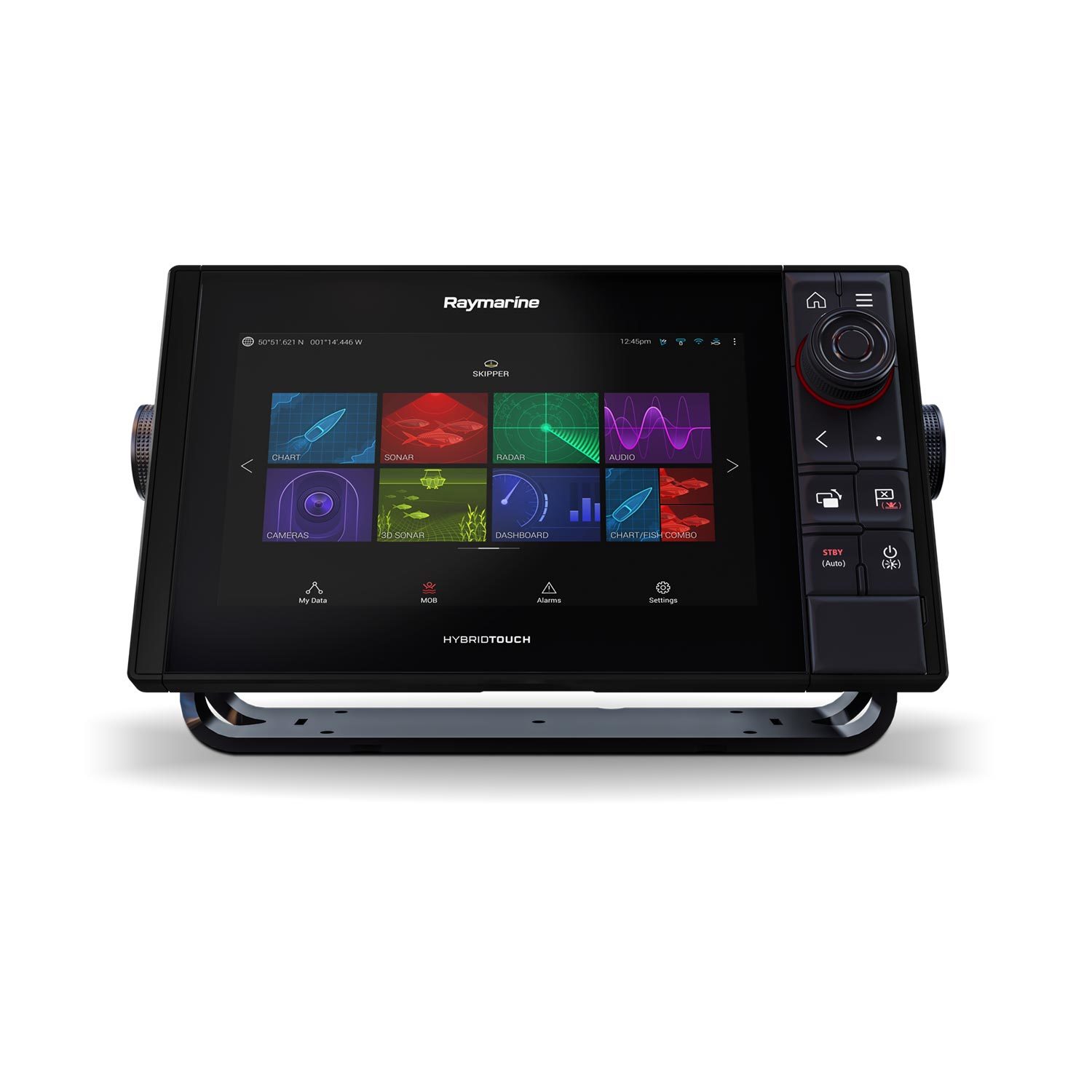
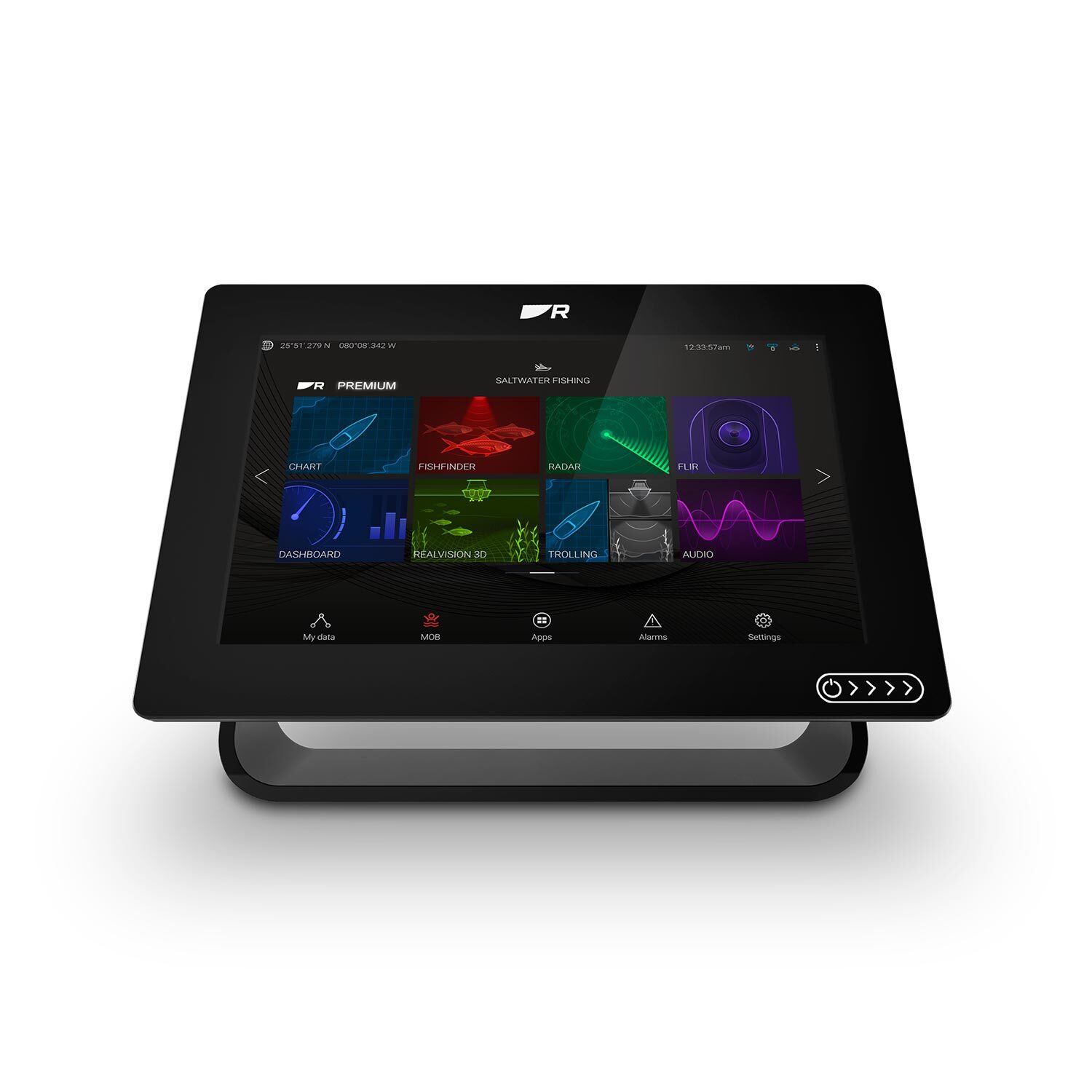
    Raymarine Axiom+ 9 multifunction chartplotter display
    The Raymarine Axiom+ 9 is a dedicated chartplotter display built to network with sonar, radar, and autopilot.

    Best Overall: Raymarine Axiom Pro 9 S

    The Raymarine Axiom Pro 9 S HybridTouch Chartplotter ($1,669.97) ships with Navionics+ North America charts preloaded and HybridTouch controls (touchscreen plus physical keys, useful in rough water when a wet touchscreen gets unreliable), making it a strong all-around choice for boaters who want charts ready to go out of the box.

    Best for Adding to an Existing Sonar Setup: Axiom+ 9 (No Sounder)

    The Raymarine Axiom+ 9 Multifunction Display (No Sounder) ($1,319.99) is priced lower specifically because it skips a built-in sounder — the right choice if you already have dedicated fish finder hardware and just need a networked navigation display alongside it.

    Best With Built-In 3D Sonar: Axiom+ 9 RV

    The Raymarine Axiom+ 9 RV with RealVision 3D ($1,199.99) bundles Raymarine’s 3D sonar imaging with LightHouse charts in one unit, a strong value pick if you want chartplotting and modern sonar imaging from a single display without buying components separately.

    Best for Large Helms and Offshore Boats: Garmin GPSMAP 8616

    The Garmin GPSMAP 8616 GN+ 16-Inch Display Unit ($2,899.99) is built for boats running a full networked helm — radar, multiple sonar sources, AIS, and autopilot all on one large, bright display. It’s an investment, but it’s the category most serious offshore and center-console owners land in.

    Best Budget Combo Unit: Humminbird HELIX 10 G4N

    The Humminbird HELIX 10 CHIRP MEGA SI+ GPS G4N ($1,099.00) combines CHIRP sonar, MEGA side imaging, and full GPS chartplotting in one display at a noticeably lower price than the Raymarine and Garmin options above — a strong choice if a single all-in-one unit at a lower price point matters more than networked expansion.

    Frequently Asked Questions

    Do I need “Plus” charts included, or can I buy them separately?
    Most units can accept additional chart cards later, so a lower-priced no-sounder or base-chart unit isn’t a dead end — but buying with your primary cruising region’s charts preloaded, like the Axiom Pro 9 S with Navionics+ North America, saves an extra purchase.

    What’s the real benefit of a networked multifunction display over a standalone unit?
    A networked MFD shares data across every connected device — sonar return on the chart screen, radar overlay on the map, autopilot waypoints from the chartplotter — instead of juggling separate displays for each function.

    Is a touchscreen-only chartplotter reliable in rough water?
    Capacitive touchscreens can be less responsive with wet or gloved hands; units with HybridTouch or physical keypad backup, like the Axiom Pro line, hold up better in genuinely rough conditions.

    Still deciding between a phone app and a dedicated chartplotter?
    Our chartplotter vs. phone GPS apps guide breaks down exactly when each makes sense.

    Browse the complete fish finder & chartplotter collection to compare specs side by side.

  • Chartplotter vs. Phone GPS Apps: Do You Need a Dedicated Unit?

    Chartplotter vs. Phone GPS Apps: Do You Need a Dedicated Unit?

    Your phone already has GPS, a mapping app, and a bigger app ecosystem than any marine electronics company will ever build. So why do serious boaters still spend hundreds to thousands of dollars on a dedicated chartplotter? The answer comes down to reliability, integration, and a few capabilities phone apps fundamentally can’t match on the water.

    What a Phone GPS App Does Well

    Apps like Navionics Boating or similar marine navigation apps are genuinely good for casual, close-to-shore boating — they’re inexpensive, the charts are regularly updated, and most boaters already know how to use a phone interface. For a weekend on a familiar lake or a short coastal run with cell coverage nearby, a phone app is a perfectly reasonable primary tool, and even boaters with a full chartplotter often keep one installed as a backup.

    Where Phone Apps Fall Short

    The gap shows up in conditions that matter most: direct sunlight readability (marine displays are built for full-sun visibility; phone screens generally aren’t), waterproofing (a chartplotter is rated for spray and rain; a phone in a case is a compromise), and battery life (a chartplotter runs off the boat’s power system all day; a phone burns through its battery fast with GPS and screen-on navigation running continuously). More importantly, a dedicated unit like the Raymarine Axiom Pro 9 S integrates directly with your boat’s sonar, radar, and autopilot over a single network — a phone app operates in isolation from all of that.

    Raymarine Axiom Pro chartplotter mounted at the helm
    A helm-mounted chartplotter integrates sonar, radar, and autopilot data that a phone app can’t reach.

    Signal and Cell Coverage

    This is the dealbreaker for many boaters: most phone navigation apps rely at least partly on cell data for map tiles, live weather, and AIS traffic overlays, even if base charts are cached offline. Once you’re a few miles offshore or in a coverage dead zone, that functionality can degrade exactly when you need it most. A standalone chartplotter’s charts, GPS, and (if equipped) radar and AIS all run independently of cell signal.

    Integration With Sonar and Radar

    If you already run a fish finder or are considering marine radar, a combo chartplotter/sonar unit or a networked MFD system shares one screen and one set of controls for everything — overlaying your route on the same display as your sonar returns or radar picture. Our guide to how fish finders work covers how the sonar side of that integration functions.

    Frequently Asked Questions

    Can I use a phone app as my only navigation on the water?
    For casual, near-shore boating in good conditions, many boaters do. For anything offshore, in variable weather, or where reliability genuinely matters, most experienced boaters treat a phone app as a backup to a dedicated chartplotter, not a replacement.

    Do I need a chartplotter if I already have a fish finder with GPS?
    Many combo fish finder/chartplotter units already include full navigation charting — check whether your unit has chartplotting built in before assuming you need a separate dedicated MFD.

    What size chartplotter display should I buy?
    Bigger is almost always better for on-water readability, especially if you’ll split the screen between charts and sonar or radar — 9-inch units like the Axiom+ 9 are a common sweet spot, while serious offshore setups often run 12-16 inches, like the Garmin GPSMAP 8616.

    Does a chartplotter need an internet connection to work?
    No — charts are stored on the unit or a memory card, and GPS positioning doesn’t require cell or internet signal at all, which is the core reliability advantage over a phone app.

    Ready to compare actual chartplotter models? See our best marine chartplotters compared guide, or browse the full fish finder & chartplotter collection.

  • Top Handheld VHF Radios for Boaters

    A dedicated marine VHF handheld is one of the cheapest pieces of real safety gear you can buy for a boat, and the current lineup ranges from ultra-compact backups to full-featured units with GPS and DSC. Here’s what stands out at each price point.

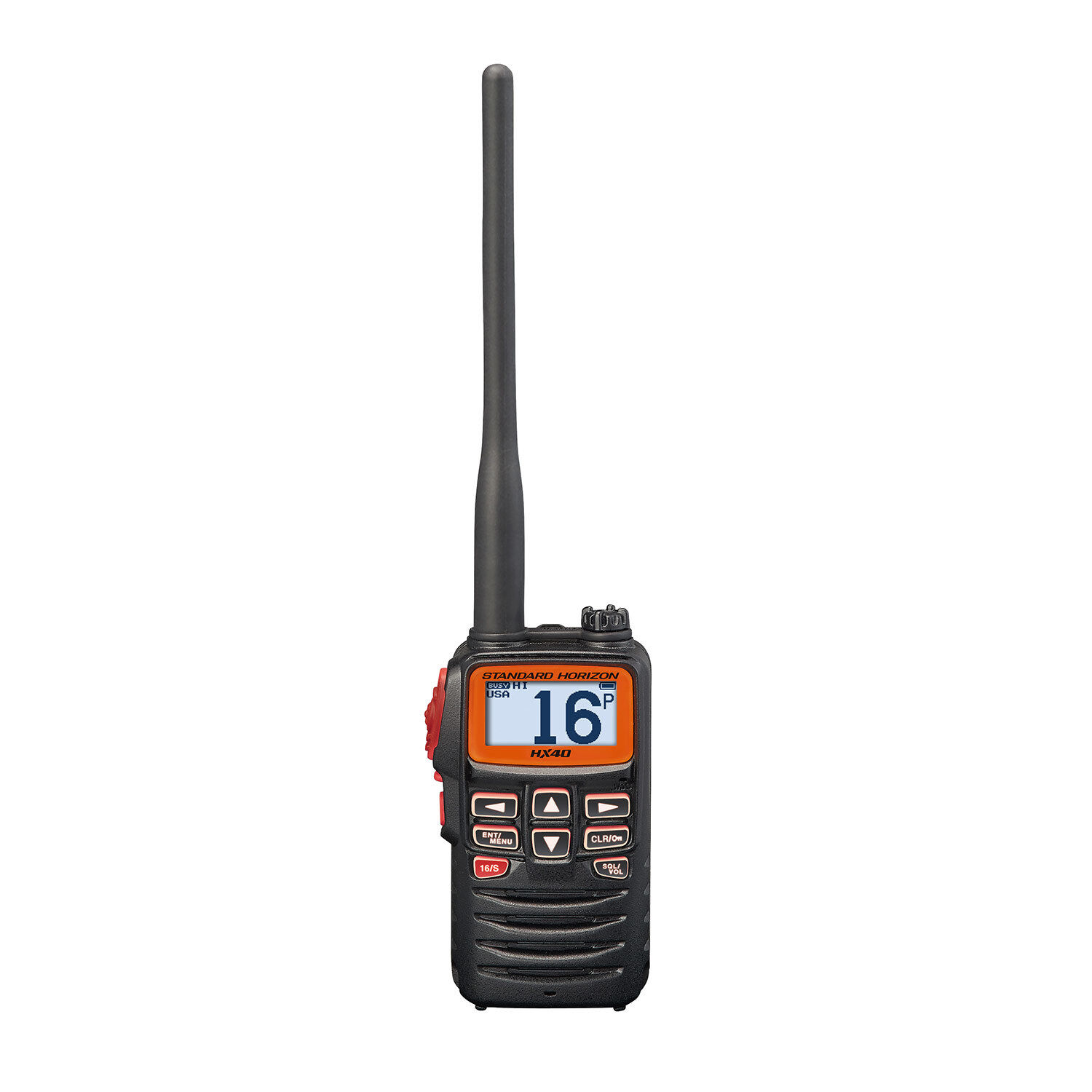
    Standard Horizon HX40 ultra-compact handheld VHF marine radio
    Standard Horizon’s HX40 is one of the smallest full-power handheld VHF radios currently available.

    Best Overall: Standard Horizon HX40

    The Standard Horizon HX40 Ultra-Compact Handheld VHF Radio ($179.99) packs full 5W-class output, a submersible rating, and NOAA weather-alert monitoring into one of the smallest bodies on the market — a strong everyday-carry choice for boaters who want a radio small enough to clip on and forget about until they need it.

    Best Value: Icom IC-M25

    The Icom IC-M25 Handheld VHF Marine Radio ($129.99) delivers Icom’s build quality and a floating, submersible design at a noticeably lower price than flagship handhelds — a smart pick for a second radio, dinghy use, or a crew member’s personal unit.

    Best for Man-Overboard Peace of Mind: Cobra MR HH350 FLT

    The Cobra MR HH350 FLT Floating Handheld VHF Marine Radio ($139.95) is built to float and flash if it goes overboard, which matters more than most buyers expect — a dropped handheld that sinks is a dropped handheld you don’t get back.

    Best Submersible Budget Pick: Uniden MHS75

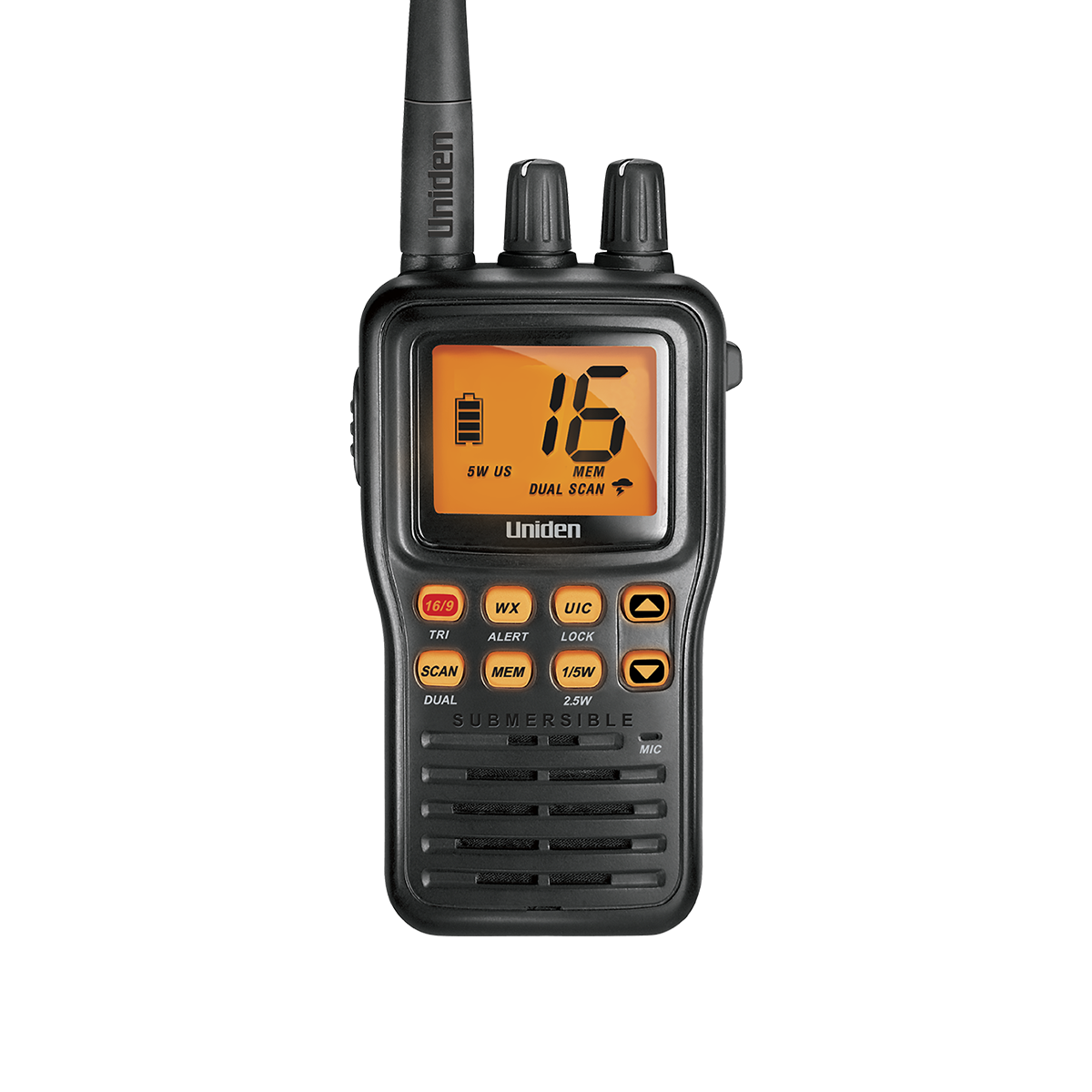
    The Uniden MHS75 Submersible Handheld VHF Marine Radio ($119.99) covers the essentials — full power output, weather channel access, and a submersible housing — at one of the lower prices in the dedicated marine VHF category, making it a solid backup radio to keep in a ditch bag or glove box.

    Best Feature-Rich Option: Uniden Atlantis 155

    The Uniden Atlantis 155 Handheld Floating VHF Marine Radio rounds out the lineup with a floating design and a built-in flashlight, useful for boaters who want one radio to double as basic emergency gear.

    Frequently Asked Questions

    Do I need DSC on a handheld, or is that only for fixed-mount radios?
    DSC is increasingly available on handhelds too, and it’s worth having if your budget allows — it lets you send a one-button distress alert with position data even if you’re not near the boat’s fixed-mount unit.

    Is a floating radio worth paying extra for?
    For most boaters, yes. A radio that sinks when dropped overboard is gone for good, and the cost premium for a floating design is usually modest compared to the radio’s total price.

    How is a handheld different from the fixed VHF radio already on my boat?
    A fixed-mount unit transmits at higher power with a permanently mounted antenna for maximum range; a handheld is your backup if the boat loses power, your go-to for a dinghy or kayak, and what you’d grab in an abandon-ship situation. Most serious boaters carry both.

    What should I check before buying any of these?
    Confirm the battery type and expected runtime, submersible vs. floating rating, and whether it includes NOAA weather-channel monitoring — all the models above include weather channels, but battery life and floating capability vary by model.

    Want the background on VHF channels before you buy? Read our VHF marine radio channels explained guide, or browse the full VHF radio collection.

  • VHF Marine Radio Channels Explained: What to Monitor and When

    A marine VHF radio is only as useful as your understanding of what’s actually happening on each channel. Unlike a general-purpose walkie talkie, VHF marine channels are internationally regulated and each one has a specific, expected use — get it wrong and you’re either missing a call for help or clogging a channel other boaters depend on. Here’s what you actually need to know.

    Channel 16: The One Channel Everyone Must Know

    Channel 16 (156.800 MHz) is the international distress, safety, and calling frequency. Every fixed and handheld marine VHF radio monitors it, and the U.S. Coast Guard maintains a continuous listening watch. The rule is simple: keep Channel 16 as your default/standby channel any time you’re underway, use it only to initiate a distress call or to hail another vessel briefly before switching to a working channel, and never use it for ongoing conversation. This is different from FRS/GMRS radios like a Motorola Talkabout T802, which share no channels with marine VHF at all and aren’t monitored by the Coast Guard.

    Distress, Safety, and Working Channels

    Beyond Channel 16, a handful of channels matter most for recreational boaters:

    Channel 9 is a secondary hailing channel used in many U.S. recreational boating areas to keep routine calling traffic off 16. Channels 68, 69, 71, 72, and 78A are common non-commercial working channels for boat-to-boat conversation once you’ve made contact. Channel 22A is used by the Coast Guard to broadcast safety and weather-related information and to switch distress traffic off of 16 for follow-up communication. Channels 13 and 67 are bridge-to-bridge channels used near locks, bridges, and in some commercial traffic areas.

    Uniden MHS75 submersible handheld VHF marine radio
    A dedicated handheld VHF radio monitors Channel 16 and gives you real Coast Guard-monitored emergency communication, unlike a consumer walkie talkie.

    Weather Channels (WX1–WX10)

    NOAA Weather Radio broadcasts continuous forecasts and alerts on a dedicated set of weather channels (WX1 through WX10) that most marine VHF radios, including budget handhelds, tune separately from the standard ship channels. Checking the weather channel before heading out, and leaving a radio’s weather-alert function enabled while underway, is one of the simplest habits that separates prepared boaters from everyone else.

    DSC: Digital Selective Calling

    Modern fixed-mount and many handheld VHF radios include DSC (Digital Selective Calling), which lets you send an automated distress alert — including your GPS position, if the radio is connected to or has a built-in GPS — with a single button press, broadcast simultaneously to the Coast Guard and any DSC-equipped vessels in range. If your radio has DSC, register it for a free MMSI number before you need it; an unregistered DSC radio can still send an alert, but responders won’t have your vessel information on file.

    Frequently Asked Questions

    Can I use a regular walkie talkie instead of a marine VHF radio on the water?
    You can carry one as a backup for boat-to-boat chatter at close range, but it isn’t monitored by the Coast Guard and doesn’t reach shore stations or other vessels the way marine VHF does — it shouldn’t be your only communication device offshore or on open water.

    Do I need a license to operate a marine VHF radio?
    Recreational boaters in the U.S. operating domestically generally don’t need an individual license, but a vessel traveling internationally or carrying certain commercial/DSC equipment may need a Ship Station License — check current FCC requirements for your specific situation.

    What’s the difference between a handheld and a fixed-mount VHF radio?
    Fixed-mount radios run on the boat’s power, connect to a permanently mounted antenna, and transmit at higher wattage (typically 25W) for longer range; handhelds like the Standard Horizon HX40 are battery-powered, portable, and usually cap around 5-6W — ideal as a backup, for smaller boats, or for going ashore in a dinghy.

    How far does a handheld VHF radio actually reach?
    Range depends heavily on antenna height on both ends since VHF is line-of-sight — a handheld talking to another handheld at water level might only reach 2-5 miles, while a handheld talking to a tall shore station or another boat’s mast-mounted antenna can reach considerably farther.

    Ready to pick a specific radio? See our top handheld VHF radios for boaters comparison, or browse the full VHF radio collection. If you’re deciding between VHF and a consumer two-way radio for a specific use case, our VHF vs. two-way radio guide covers that comparison directly.

🎁 10% OFF