Tag: down imaging sonar

  • Humminbird XPLORE 10 CMSI+ Fish Finder Review: Specs, Price and Where to Buy

    Humminbird XPLORE 10 CMSI+ Fish Finder Review: Specs, Price and Where to Buy

    Considering the Humminbird XPLORE 10 CMSI+ Fish Finder? This Humminbird XPLORE 10 CMSI+ Fish Finder review covers the key features, who it suits and how to buy it from Pro Marine Electronics, currently priced at $2,299.99.

    What is the Humminbird XPLORE 10 CMSI+ Fish Finder?

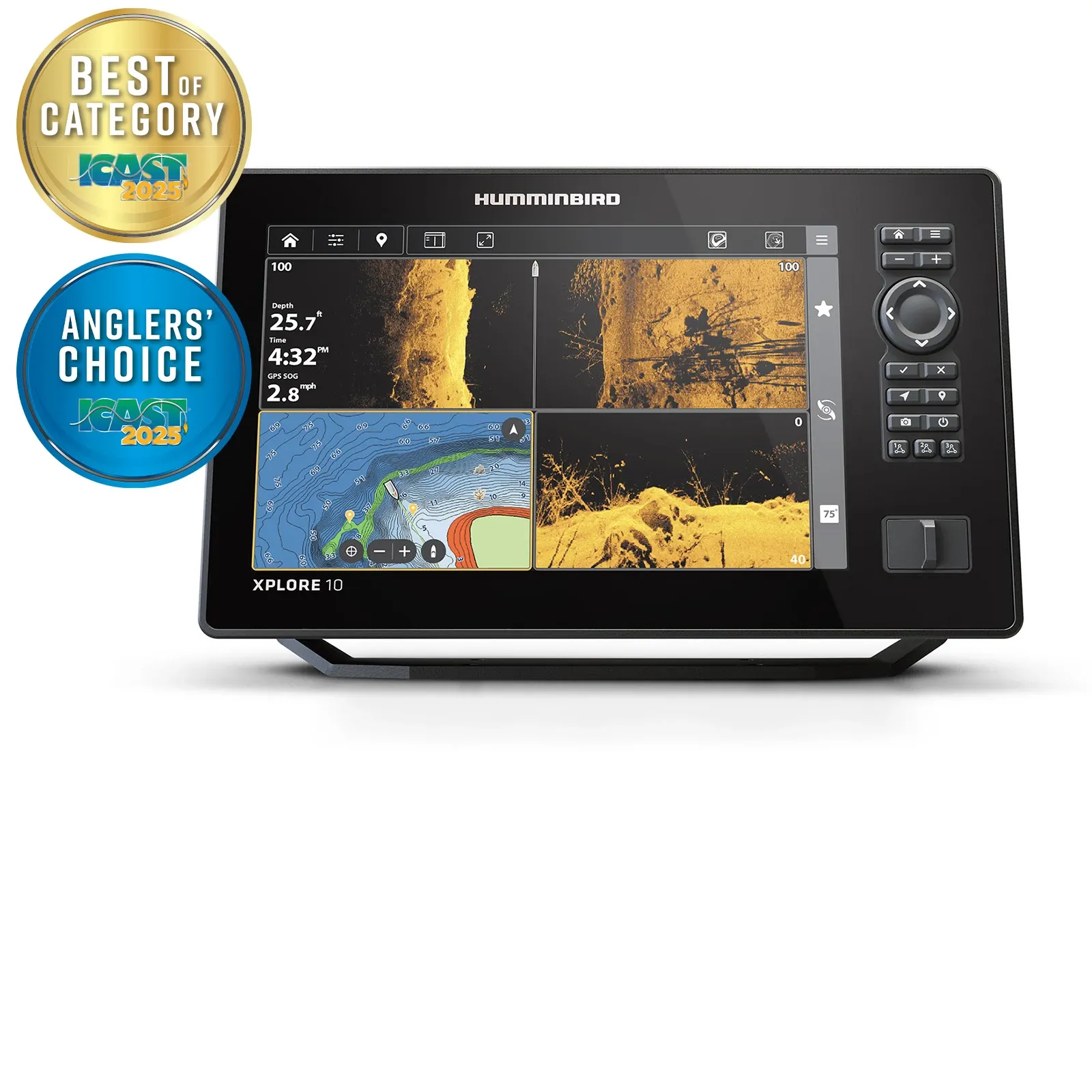
    The Humminbird XPLORE 10″ CMSI+ is the next-gen fish finder built for serious anglers who want it all — touchscreen + keypad Cross Touch interface, MEGA Side Imaging+, MEGA Down Imaging+, Dual Spectrum CHIRP, and LakeMaster & CoastMaster maps included right out of the box. MEGA Live 2 compatible. 3-Year Warranty. It is sold by Pro Marine Electronics as a genuine product with manufacturer warranty.

    Humminbird XPLORE 10 CMSI+ Fish Finder specs and key features

    • Cross Touch Interface — Control by touchscreen OR keypad, whichever you prefer. Lightning-fast, intuitive, and easy to operate with wet hands or gloves
    • MEGA Side Imaging+ — Crystal-clear views out to 200 feet on either side — 20% more detail and 60% more range than standard MEGA Side Imaging
    • MEGA Down Imaging+ — Unprecedented clarity down to 200 feet directly below the boat
    • Dual Spectrum CHIRP Sonar — Wide Mode for maximum bottom coverage, Narrow Mode for pinpoint fish arches
    • LakeMaster & CoastMaster VX Maps Included — Over 13,000 lakes, waterways, and coastal waters pre-loaded. 1-foot contours, depth highlights, SmartStrike built-in — no extra card to buy
    • SmartStrike Built-In — Highlights the best fishing spots based on real-time conditions right from your map card
    • Advanced Waypoint Management — Store 10,000 waypoints, sync with your smartphone via One-Boat App, tag with custom colors and icons
    • AutoChart Live — Create real-time depth maps with 8 hours of built-in recording

    Always confirm the exact specification on the Humminbird XPLORE 10 CMSI+ Fish Finder product page before you order.

    Who is the Humminbird XPLORE 10 CMSI+ Fish Finder for?

    Anglers and boaters who want clearer sonar imagery and dependable navigation will get the most from a unit like this.

    Before you buy, run through this short checklist:

    • Check the screen size against the space at your helm
    • Confirm which transducer you need and whether it is included
    • Choose the charts for the waters you actually fish or cruise

    Humminbird XPLORE 10 CMSI+ Fish Finder price and delivery

    The Humminbird XPLORE 10 CMSI+ Fish Finder is priced at $2,299.99 at Pro Marine Electronics. Orders placed before 2PM EST ship the same day, and shipping is free on orders over $1,300. We ship worldwide.

    Buy the Humminbird XPLORE 10 CMSI+ Fish Finder now.

    Similar Fish Finders & Chartplotters products to consider

    Frequently asked questions

    How much does the Humminbird XPLORE 10 CMSI+ Fish Finder cost?

    It is currently $2,299.99 at Pro Marine Electronics.

    Do you ship the Humminbird XPLORE 10 CMSI+ Fish Finder quickly?

    Orders placed before 2PM EST ship the same day, and shipping is free on orders over $1,300. We ship worldwide.

    Is it a genuine product?

    Yes. Pro Marine Electronics supplies genuine products with manufacturer warranty. If you have a compatibility question, contact us before you order.
  • Minn Kota Ultrex Quest 90/115 Spot-Lock Trolling Motor Review: Specs, Price and Where to Buy

    Minn Kota Ultrex Quest 90/115 Spot-Lock Trolling Motor Review: Specs, Price and Where to Buy

    Considering the Minn Kota Ultrex Quest 90/115 Spot-Lock Trolling Motor — Dual Spectrum CHIRP Sonar? This Minn Kota Ultrex Quest 90/115 Spot-Lock Trolling Motor review covers the key features, who it suits and how to buy it from Pro Marine Electronics, currently priced at $2,899.99.

    What is the Minn Kota Ultrex Quest 90/115 Spot-Lock Trolling Motor — Dual Spectrum CHIRP Sonar?

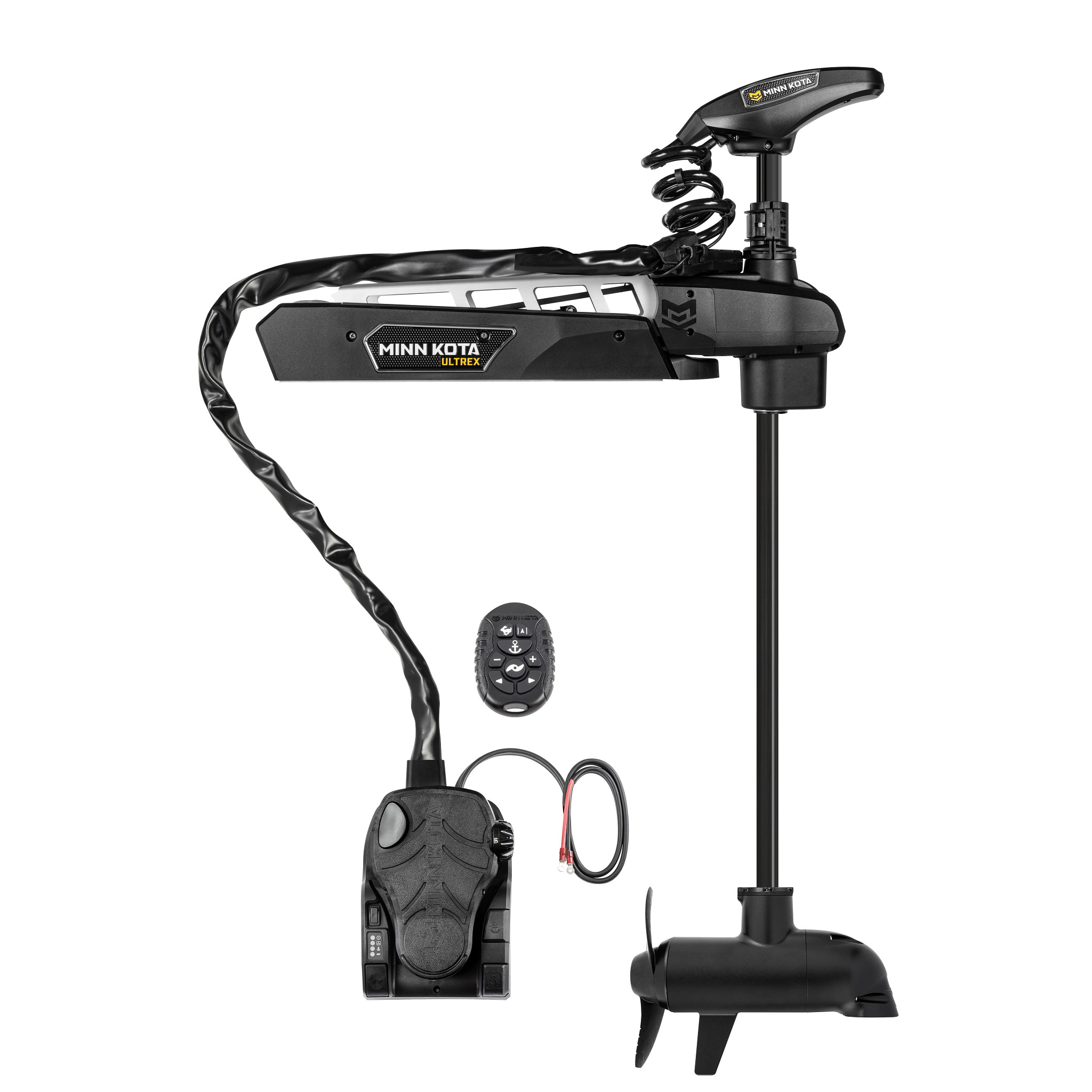
    The flagship of the Ultrex Quest line — dual-voltage 90/115 lb thrust, pinpoint GPS Spot-Lock anchoring, and built-in Dual Spectrum CHIRP sonar in one brushless motor. Ships fast with nationwide delivery. In stock and ready to dispatch. It is sold by Pro Marine Electronics as a genuine product with manufacturer warranty.

    Minn Kota Ultrex Quest 90/115 Spot-Lock Trolling Motor specs and key features

    • Genuine Minn Kota product, sourced through official channels
    • Dual-voltage brushless motor — 90 lb thrust (24V) or 115 lb thrust (36V)
    • GPS Spot-Lock, Jog/Wireless remote compatibility and programmable foot pedal
    • Fast nationwide shipping
    • Backed by Minn Kota’s manufacturer warranty — see our warranty page for full terms
    • US-based support if you have questions before or after you buy

    Always confirm the exact specification on the Minn Kota Ultrex Quest 90/115 Spot-Lock Trolling Motor — Dual Spectrum CHIRP Sonar product page before you order.

    Who is the Minn Kota Ultrex Quest 90/115 Spot-Lock Trolling Motor for?

    Anglers who want quiet, precise boat control while they fish will find a trolling motor like this a useful upgrade.

    Before you buy, run through this short checklist:

    • Match thrust to the weight of your boat
    • Check the shaft length against your bow height
    • Confirm the battery voltage your boat supports

    Minn Kota Ultrex Quest 90/115 Spot-Lock Trolling Motor price and delivery

    The Minn Kota Ultrex Quest 90/115 Spot-Lock Trolling Motor — Dual Spectrum CHIRP Sonar is priced at $2,899.99 at Pro Marine Electronics. Orders placed before 2PM EST ship the same day, and shipping is free on orders over $1,300. We ship worldwide.

    Buy the Minn Kota Ultrex Quest 90/115 Spot-Lock Trolling Motor — Dual Spectrum CHIRP Sonar now.

    Similar Trolling Motors products to consider

    Frequently asked questions

    How much does the Minn Kota Ultrex Quest 90/115 Spot-Lock Trolling Motor cost?

    It is currently $2,899.99 at Pro Marine Electronics.

    Do you ship the Minn Kota Ultrex Quest 90/115 Spot-Lock Trolling Motor quickly?

    Orders placed before 2PM EST ship the same day, and shipping is free on orders over $1,300. We ship worldwide.

    Is it a genuine product?

    Yes. Pro Marine Electronics supplies genuine products with manufacturer warranty. If you have a compatibility question, contact us before you order.
  • Best Trolling Motors for Bass Fishing

    Best Trolling Motors for Bass Fishing

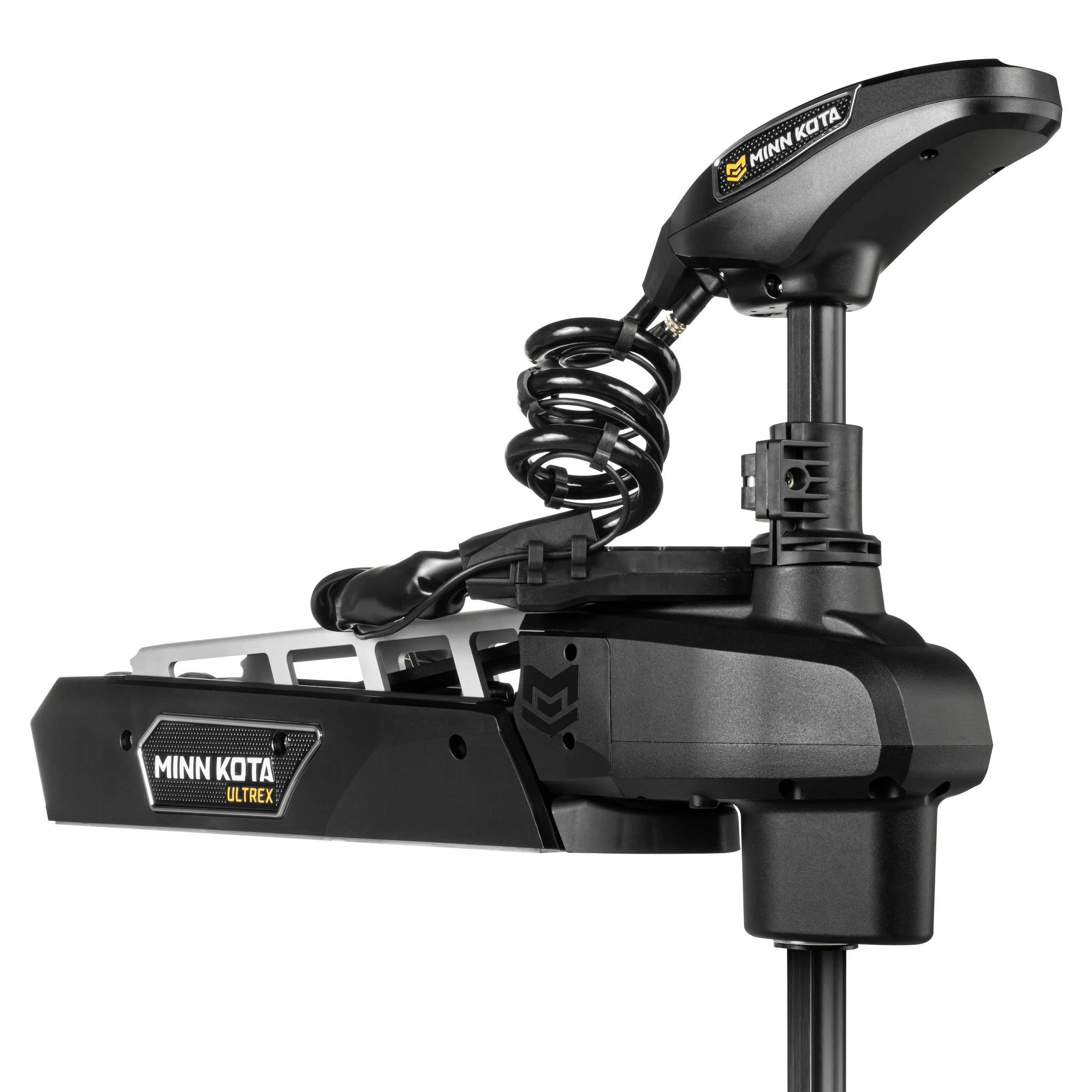
    Bass fishing puts unique demands on a trolling motor — precise boat control around cover, enough thrust to hold position in wind, and increasingly, integrated GPS and sonar. Here are the models worth your money at each level, from tournament-grade to budget-conscious.

    Minn Kota Ultrex Quest trolling motor mounted on a bass boat bow
    Bow-mount motors with GPS anchor-lock dominate the serious bass fishing category.

    Best Overall: Minn Kota Ultrex Quest 90/115

    The Minn Kota Ultrex Quest 90/115 with Dual Spectrum CHIRP Sonar ($2,899.99) tops the lineup for a reason: 90-115 lbs of thrust covers everything up to a fully rigged bass boat, Spot-Lock GPS anchoring keeps you locked on structure in wind, and the integrated CHIRP sonar means you’re scanning the water right from the bow. It’s the motor most tournament anglers land on when budget isn’t the deciding factor.

    Best for Sonar-Assisted Fishing: Ultrex 80 Quest with MEGA DI+

    The Minn Kota Ultrex 80 Quest with MEGA Down Imaging Plus ($2,499.99) pairs 80 lbs of thrust with a 45-inch shaft and Humminbird’s down imaging built into the motor head — a strong pick if you fish shallow cover and want a real-time picture of what’s under the bow as you idle in.

    Best Mid-Range: Minn Kota Terrova 80 i-Pilot GPS

    The Minn Kota Terrova 80 i-Pilot GPS Trolling Motor ($1,549.99) delivers the GPS anchor-lock and route-recording features tournament anglers rely on at a noticeably lower price than the Quest line, with a 60-inch shaft suited to larger boats. A great balance of capability and cost for club-level and weekend tournament anglers.

    Best Value: Minn Kota Ultrex 52 80lb Quest

    The Minn Kota Ultrex 52 80lb Quest with Spot-Lock ($2,299.99) keeps Spot-Lock GPS anchoring while trimming shaft length and a few premium features, landing at a lower price point than the flagship Quest 90/115 without giving up the core boat-control technology bass anglers actually use.

    Best Budget Transom Option: Minn Kota Endura Max 55

    Fishing from a smaller boat or jon boat and don’t need bow-mount GPS features? The Minn Kota Endura Max 55 Freshwater Transom Motor ($349.99) is a reliable, no-frills hand-tiller option that covers most small-boat bass fishing without the bow-mount price tag.

    Frequently Asked Questions

    Is Spot-Lock worth the extra cost for bass fishing specifically?
    For most tournament and serious weekend anglers, yes — holding a precise position on structure or a dock without constantly repositioning translates directly into more casts at productive water.

    What thrust do I need for a typical bass boat?
    Most fully-rigged 17–20 foot bass boats land in the 80–115 lb thrust range; see our full guide to choosing a trolling motor for the exact sizing math based on your boat’s weight.

    Do I need built-in sonar on the trolling motor if I already have a bow-mounted fish finder transducer?
    Not strictly, but a motor-integrated transducer gives you a second sonar view exactly where you’re steering, which many anglers find complements a stern or separate bow unit rather than duplicating it.

    How long do these motors typically last with regular tournament use?
    Well-maintained Minn Kota units commonly run for many seasons; the main wear points are the prop, cables, and battery connections, so rinsing after saltwater or brackish use and checking connections each season goes a long way.

    Not sure which thrust and shaft length fits your boat? Start with our trolling motor buying guide, or browse the full trolling motor collection.

  • How to Read a Fish Finder Screen Like a Pro

    How to Read a Fish Finder Screen Like a Pro

    Buying a good fish finder is only half the battle — the other half is actually knowing what you’re looking at once it’s mounted and running. Here’s how to make sense of the screen instead of just staring at colorful noise.

    Arches, Blobs, and Dots: Reading Fish Targets

    On traditional 2D sonar, a fish swimming through the transducer’s cone shows up as an arch — the fish enters the edge of the cone (further away, weaker signal), passes under the center (closest, strongest signal), then exits the other edge. A full, symmetrical arch usually means a fish swam directly under the boat; a half-arch means it clipped the edge of the cone. On down imaging and side imaging, fish usually appear as bright dots, dashes, or small fish-shaped marks rather than arches, since those modes render a photo-like image instead of a traditional sonar return.

    Reading the Bottom

    The bottom shows up as a thick, continuous line across the screen. A hard bottom (rock, sand) returns a strong, sharp, often doubled line (the “second echo” as the pulse bounces bottom-surface-bottom again). A soft bottom (mud, silt) returns a thinner, fuzzier line since the sound energy absorbs into it rather than bouncing back cleanly. Learning to read bottom hardness matters for both fishing (many species prefer specific bottom types) and simply understanding what your anchor will grab.

    Understanding Side Imaging Layout

    Side imaging splits the screen into left and right halves, with the boat’s track running down the center. Distance from center represents actual distance from the boat — features closer to the centerline are closer to your hull. Brighter returns mean harder, denser objects (rock, wood, metal); darker areas are softer bottom or open water. Shadows behind objects (just like a shadow cast by sunlight) tell you the object has real height — a stump or rock pile casts a visible shadow, while a flat depth change doesn’t.

    Color Palettes: Does It Matter Which One You Use?

    Most fish finders offer several color palettes (blue, white, amber, etc.) purely for screen visibility in different lighting — amber and high-contrast palettes are often easier to read in direct sunlight, while blue palettes feel more natural in low light. The palette doesn’t change what the sonar is detecting, only how it’s displayed, so pick whatever’s easiest for your eyes on the water.

    Split Screens: What’s Worth Running at Once

    Most anglers settle into one of two layouts: sonar + chartplotter side by side (so you always know your location while watching sonar), or down imaging + side imaging together (for actively searching structure). Running three or four panels at once on anything smaller than a 9″ screen usually makes everything too small to read quickly — better to cycle between two clean views than cram in extra data you’ll ignore anyway.

    Frequently Asked Questions

    Why do I see fish arches sometimes but only dots other times?
    This is usually a difference between 2D sonar view (arches) and down/side imaging view (dots and marks) — they’re different rendering modes of the same underlying sonar data, not a malfunction.

    Why does the bottom depth jump around or disappear at speed?
    At higher boat speeds, especially in choppy water, the transducer can lose a clean read on the bottom. This is normal and usually resolves once you slow down; if it happens constantly at low speed, check your transducer mounting angle and depth.

    Should I adjust sensitivity manually or leave it on auto?
    Auto mode works well for most conditions on modern units. Manual sensitivity is worth learning if you fish very deep water (turn it up) or very shallow, clear water with excess surface clutter (turn it down).

    How long does it actually take to get comfortable reading a fish finder?
    Most anglers get a working intuition within a handful of outings once they stop trying to read every detail and instead learn to recognize the handful of patterns above — arches, hard vs. soft bottom, and shadows on side imaging.

    New to fish finders entirely? Start with our how fish finders actually work guide, or browse the best fish finders by budget if you’re still shopping.

🎁 10% OFF