Category: Fish Finders & Chartplotters

  • Chartplotter vs. Phone GPS Apps: Do You Need a Dedicated Unit?

    Chartplotter vs. Phone GPS Apps: Do You Need a Dedicated Unit?

    Your phone already has GPS, a mapping app, and a bigger app ecosystem than any marine electronics company will ever build. So why do serious boaters still spend hundreds to thousands of dollars on a dedicated chartplotter? The answer comes down to reliability, integration, and a few capabilities phone apps fundamentally can’t match on the water.

    What a Phone GPS App Does Well

    Apps like Navionics Boating or similar marine navigation apps are genuinely good for casual, close-to-shore boating — they’re inexpensive, the charts are regularly updated, and most boaters already know how to use a phone interface. For a weekend on a familiar lake or a short coastal run with cell coverage nearby, a phone app is a perfectly reasonable primary tool, and even boaters with a full chartplotter often keep one installed as a backup.

    Where Phone Apps Fall Short

    The gap shows up in conditions that matter most: direct sunlight readability (marine displays are built for full-sun visibility; phone screens generally aren’t), waterproofing (a chartplotter is rated for spray and rain; a phone in a case is a compromise), and battery life (a chartplotter runs off the boat’s power system all day; a phone burns through its battery fast with GPS and screen-on navigation running continuously). More importantly, a dedicated unit like the Raymarine Axiom Pro 9 S integrates directly with your boat’s sonar, radar, and autopilot over a single network — a phone app operates in isolation from all of that.
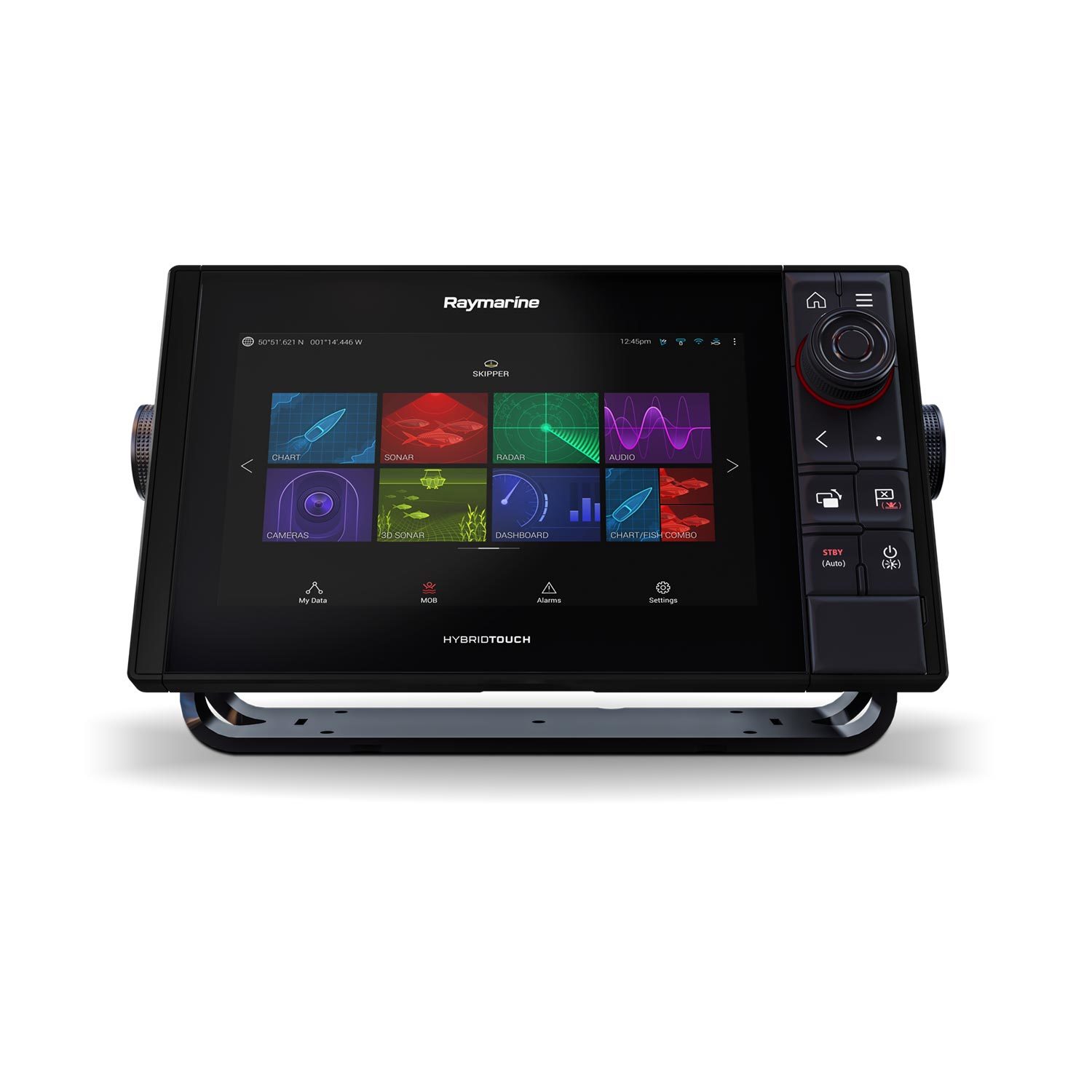
    Raymarine Axiom Pro chartplotter mounted at the helm
    A helm-mounted chartplotter integrates sonar, radar, and autopilot data that a phone app can’t reach.

    Signal and Cell Coverage

    This is the dealbreaker for many boaters: most phone navigation apps rely at least partly on cell data for map tiles, live weather, and AIS traffic overlays, even if base charts are cached offline. Once you’re a few miles offshore or in a coverage dead zone, that functionality can degrade exactly when you need it most. A standalone chartplotter’s charts, GPS, and (if equipped) radar and AIS all run independently of cell signal.

    Integration With Sonar and Radar

    If you already run a fish finder or are considering marine radar, a combo chartplotter/sonar unit or a networked MFD system shares one screen and one set of controls for everything — overlaying your route on the same display as your sonar returns or radar picture. Our guide to how fish finders work covers how the sonar side of that integration functions.

    Frequently Asked Questions

    Can I use a phone app as my only navigation on the water?
    For casual, near-shore boating in good conditions, many boaters do. For anything offshore, in variable weather, or where reliability genuinely matters, most experienced boaters treat a phone app as a backup to a dedicated chartplotter, not a replacement.

    Do I need a chartplotter if I already have a fish finder with GPS?
    Many combo fish finder/chartplotter units already include full navigation charting — check whether your unit has chartplotting built in before assuming you need a separate dedicated MFD.

    What size chartplotter display should I buy?
    Bigger is almost always better for on-water readability, especially if you’ll split the screen between charts and sonar or radar — 9-inch units like the Axiom+ 9 are a common sweet spot, while serious offshore setups often run 12-16 inches, like the Garmin GPSMAP 8616.

    Does a chartplotter need an internet connection to work?
    No — charts are stored on the unit or a memory card, and GPS positioning doesn’t require cell or internet signal at all, which is the core reliability advantage over a phone app.

    Ready to compare actual chartplotter models? See our best marine chartplotters compared guide, or browse the full fish finder & chartplotter collection.
  • How to Read a Fish Finder Screen Like a Pro

    How to Read a Fish Finder Screen Like a Pro

    Buying a good fish finder is only half the battle — the other half is actually knowing what you’re looking at once it’s mounted and running. Here’s how to make sense of the screen instead of just staring at colorful noise.

    Arches, Blobs, and Dots: Reading Fish Targets

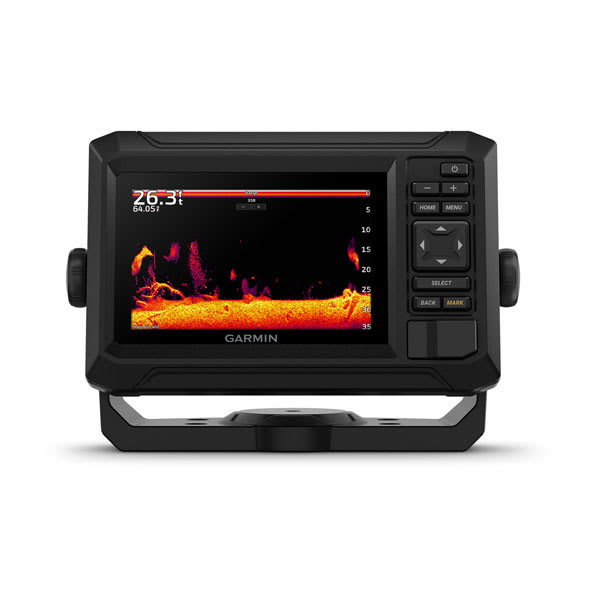
    On traditional 2D sonar, a fish swimming through the transducer’s cone shows up as an arch — the fish enters the edge of the cone (further away, weaker signal), passes under the center (closest, strongest signal), then exits the other edge. A full, symmetrical arch usually means a fish swam directly under the boat; a half-arch means it clipped the edge of the cone. On down imaging and side imaging, fish usually appear as bright dots, dashes, or small fish-shaped marks rather than arches, since those modes render a photo-like image instead of a traditional sonar return.

    Reading the Bottom

    The bottom shows up as a thick, continuous line across the screen. A hard bottom (rock, sand) returns a strong, sharp, often doubled line (the “second echo” as the pulse bounces bottom-surface-bottom again). A soft bottom (mud, silt) returns a thinner, fuzzier line since the sound energy absorbs into it rather than bouncing back cleanly. Learning to read bottom hardness matters for both fishing (many species prefer specific bottom types) and simply understanding what your anchor will grab.

    Understanding Side Imaging Layout

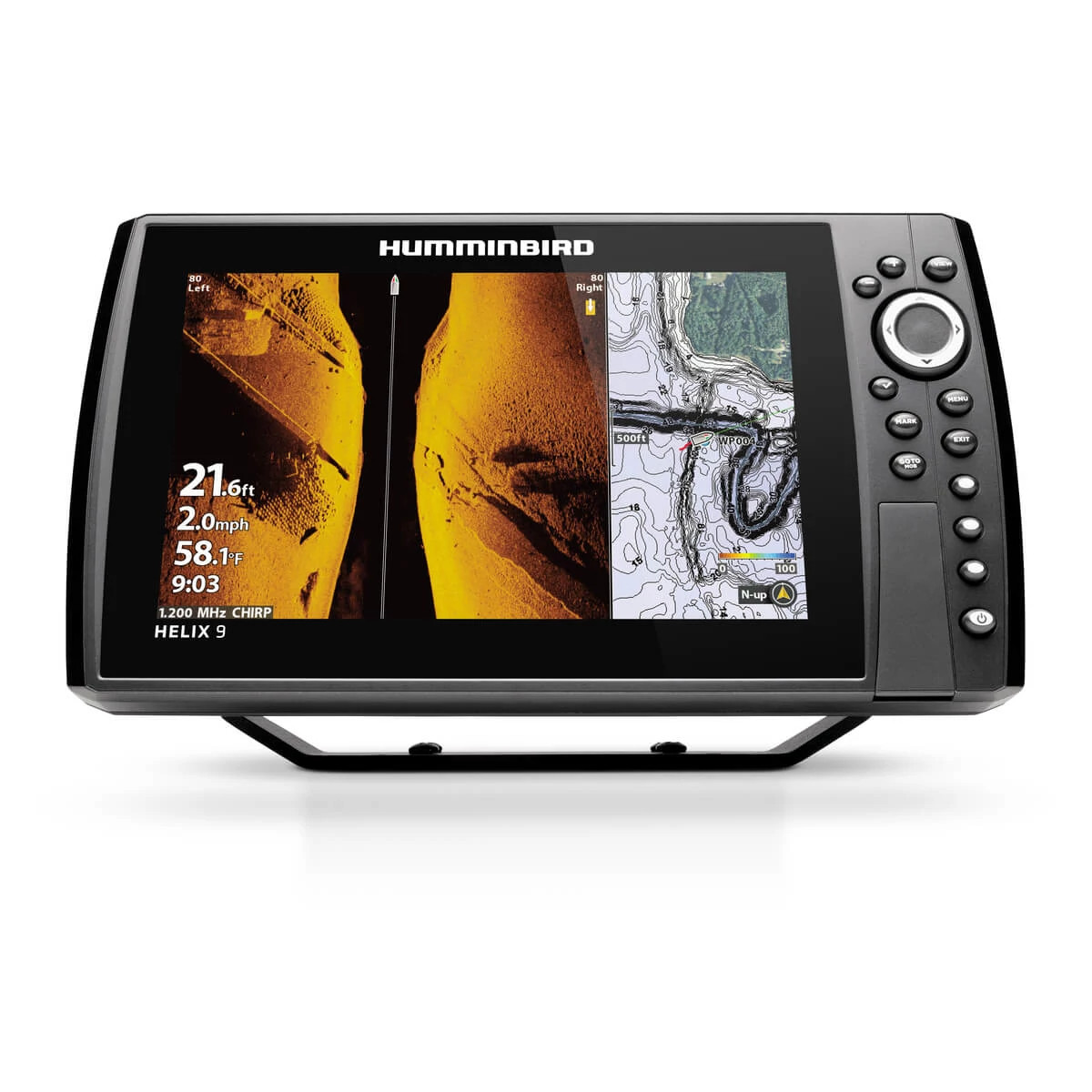
    Side imaging splits the screen into left and right halves, with the boat’s track running down the center. Distance from center represents actual distance from the boat — features closer to the centerline are closer to your hull. Brighter returns mean harder, denser objects (rock, wood, metal); darker areas are softer bottom or open water. Shadows behind objects (just like a shadow cast by sunlight) tell you the object has real height — a stump or rock pile casts a visible shadow, while a flat depth change doesn’t.

    Color Palettes: Does It Matter Which One You Use?

    Most fish finders offer several color palettes (blue, white, amber, etc.) purely for screen visibility in different lighting — amber and high-contrast palettes are often easier to read in direct sunlight, while blue palettes feel more natural in low light. The palette doesn’t change what the sonar is detecting, only how it’s displayed, so pick whatever’s easiest for your eyes on the water.

    Split Screens: What’s Worth Running at Once

    Most anglers settle into one of two layouts: sonar + chartplotter side by side (so you always know your location while watching sonar), or down imaging + side imaging together (for actively searching structure). Running three or four panels at once on anything smaller than a 9″ screen usually makes everything too small to read quickly — better to cycle between two clean views than cram in extra data you’ll ignore anyway.

    Frequently Asked Questions

    Why do I see fish arches sometimes but only dots other times?
    This is usually a difference between 2D sonar view (arches) and down/side imaging view (dots and marks) — they’re different rendering modes of the same underlying sonar data, not a malfunction.

    Why does the bottom depth jump around or disappear at speed?
    At higher boat speeds, especially in choppy water, the transducer can lose a clean read on the bottom. This is normal and usually resolves once you slow down; if it happens constantly at low speed, check your transducer mounting angle and depth.

    Should I adjust sensitivity manually or leave it on auto?
    Auto mode works well for most conditions on modern units. Manual sensitivity is worth learning if you fish very deep water (turn it up) or very shallow, clear water with excess surface clutter (turn it down).

    How long does it actually take to get comfortable reading a fish finder?
    Most anglers get a working intuition within a handful of outings once they stop trying to read every detail and instead learn to recognize the handful of patterns above — arches, hard vs. soft bottom, and shadows on side imaging.

    New to fish finders entirely? Start with our how fish finders actually work guide, or browse the best fish finders by budget if you’re still shopping.

  • Garmin vs. Lowrance vs. Humminbird: Which Fish Finder Brand Is Right for You?

    Garmin vs. Lowrance vs. Humminbird: Which Fish Finder Brand Is Right for You?

    Garmin, Lowrance, and Humminbird dominate the fish finder market for good reason — all three make genuinely excellent electronics. But they have real differences in ecosystem, imaging technology, and mapping that matter more than most spec sheets let on. Here’s how they actually compare.

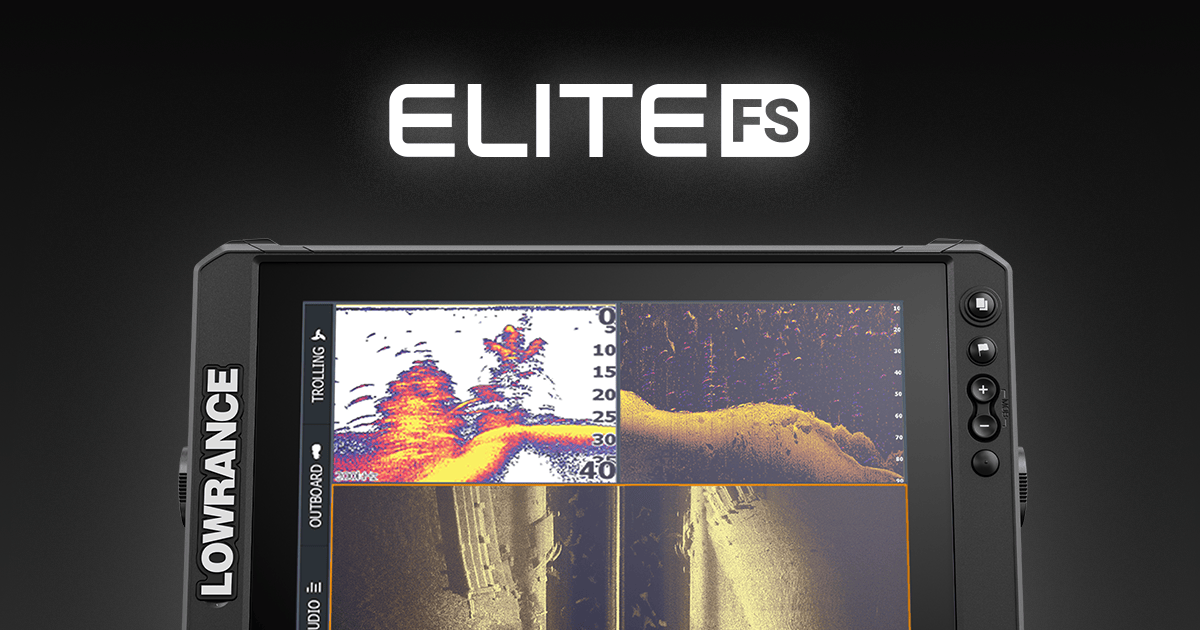
    Lowrance Elite FS fish finder display showing sonar and mapping

    Garmin: Best Ecosystem Integration

    Garmin’s biggest advantage is how well its electronics talk to each other and to the rest of your boat — autopilots, trolling motors (Garmin owns Force and Ulterra), and handheld GPS units all share the same Garmin ActiveCaptain app and account. Quickdraw Contours lets you build your own bathymetric maps in real time, which is a genuine advantage on small or poorly-charted lakes. Panoptix LiveScope, Garmin’s forward-facing live sonar, is widely considered the sharpest image quality in the category. Start with the Garmin ECHOMAP UHD2 73cv if you want to see what the ecosystem feels like without a flagship price tag.

    Lowrance: Best for Serious & Tournament Anglers

    Lowrance’s HDS PRO and Elite FS lines lean hard into speed and screen brightness — both matter more than people expect once you’re actually on the water in direct sun trying to read a screen at 40mph. ActiveTarget, their live sonar system, is a favorite among tournament bass anglers specifically for its wide field of view. Lowrance also has arguably the deepest built-in mapping options through C-MAP. The Lowrance Elite FS 9 is a strong mid-range entry into the brand.

    Humminbird: Best Imaging Detail

    Humminbird’s MEGA Imaging (MEGA Down Imaging and MEGA Side Imaging) is widely regarded as producing the clearest, most photo-realistic structure and fish detail of the three brands, especially at mid-range price points. AutoChart Live builds detailed depth maps as you fish, similar in spirit to Garmin’s Quickdraw. If side imaging clarity is your top priority, the Humminbird HELIX 9 MEGA SI is one of the strongest values in the whole market.

    So Which One Should You Actually Buy?

    Honestly, all three will serve you well — the differences are real but secondary to picking the right size and feature tier for your budget (see our best fish finders by budget guide for that). The tie-breakers that actually matter: if you already own other electronics from one of these brands (trolling motor, autopilot, handheld GPS), staying in that ecosystem usually pays off in integration. If side-imaging clarity is your single biggest priority, lean Humminbird. If you want the deepest mapping and fastest live sonar refresh for tournament fishing, lean Lowrance. If you want the most polished all-around ecosystem and might add an autopilot or trolling motor later, lean Garmin.

    Frequently Asked Questions

    Which brand has the best live sonar?
    All three (Garmin LiveScope, Lowrance ActiveTarget, Humminbird MEGA Live) are excellent and closely matched. Garmin is often cited for image sharpness, Lowrance for field of view, Humminbird for value.

    Can I mix brands — a Garmin fish finder with a non-Garmin trolling motor?
    Yes, mechanically it will work fine. You just lose the deeper software integration (like controlling trolling motor steering from the fish finder screen) that same-brand pairings offer.

    Is one brand more reliable than the others?
    All three are established, reputable marine electronics manufacturers with strong track records. Reliability differences between them are minor compared to differences in how well you maintain and install the unit.

    Do transducers transfer between brands?
    No — transducers are brand- and often model-specific. Factor this in if you’re upgrading a display and hoping to reuse an existing transducer.

  • Best Fish Finders for Every Budget (2026 Buying Guide)

    Best Fish Finders for Every Budget (2026 Buying Guide)

    The right fish finder depends far more on your budget and how you fish than on chasing the newest flagship. Here’s a real, no-nonsense breakdown of solid picks at every price point — not a list of every unit we sell, just the ones worth your money at each tier.

    Humminbird HELIX 9 fish finder chartplotter on a boat console

    Budget: Under $600

    Lowrance HOOK Reveal 5 TripleShot — $249.99. A genuinely capable entry point: CHIRP sonar, DownScan imaging, and a built-in GPS chartplotter on a 5″ display. It won’t wow you with screen real estate, but for a kayak, jon boat, or as a simple backup unit, it does everything most casual anglers need.

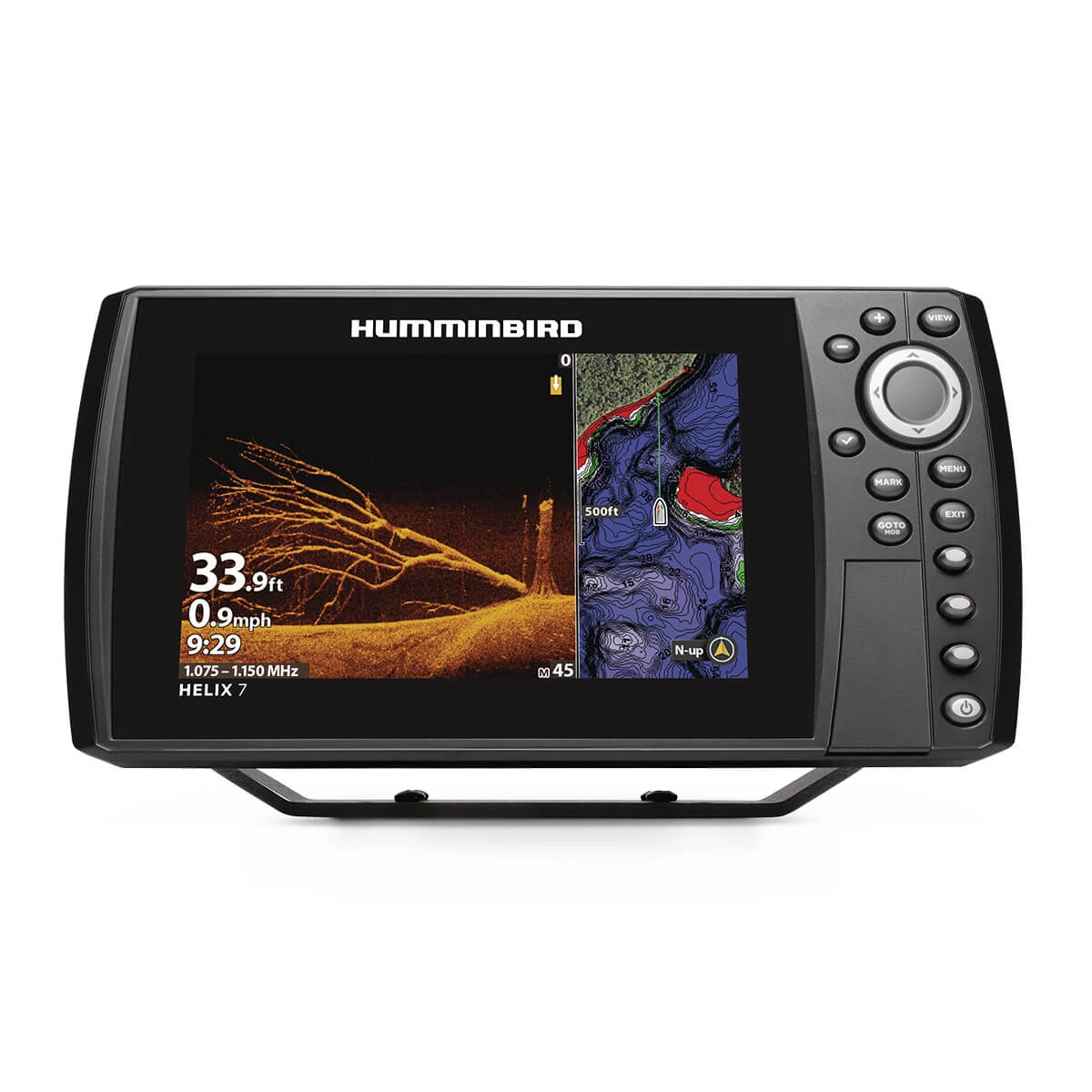
    Humminbird HELIX 7 CHIRP MEGA DI GPS G4N — $549.99. Steps up to a 7″ display with MEGA Down Imaging, which produces noticeably crisper structure detail than standard down imaging. This is the size most people actually wish they’d bought instead of a 5″.

    Mid-Range: $600–$1,100

    Garmin ECHOMAP UHD2 73cv — $649.99. Garmin’s UHD2 line packs a sharper display and built-in Quickdraw Contours mapping that lets you create your own high-detail lake maps as you fish — genuinely useful on smaller or less-charted waters.

    Humminbird HELIX 9 CHIRP MEGA SI GPS G4N — $999.99. This is where MEGA Side Imaging enters the picture — scanning a wide corridor to either side of the boat so you can find brush piles and schools without running over them first. A 9″ screen is also large enough to comfortably split sonar and mapping views.

    Premium: $1,200+

    Raymarine Axiom+ 9 RV — $1,199.99. RealVision 3D sonar renders the bottom and structure as an actual three-dimensional picture rather than a flat scroll, and the Axiom+ line runs on the same LightHouse chart ecosystem used on much larger offshore helms — useful if you think you’ll ever upgrade boats.

    Lowrance HDS PRO 9 — $1,999.99. The HDS PRO series is built for anglers who live on the water: faster processors, brighter high-contrast displays for direct sunlight, and full compatibility with Lowrance’s ActiveTarget live sonar system if you want to add it later.

    How to Actually Pick Between Them

    If you’re not sure where to start, work backward from how you fish rather than the spec sheet. Casual weekend angler on a small lake? Budget tier is genuinely enough. Fishing tournaments or unfamiliar water regularly? The mapping and side-imaging features in the mid-range tier pay for themselves fast. Chasing suspended fish in open water or fishing offshore structure? That’s when premium sonar resolution and live sonar compatibility start to matter. For the mechanics behind CHIRP, down imaging, and side imaging referenced above, see our guide on how fish finders actually work.

    Frequently Asked Questions

    Is it worth paying extra for a bigger screen?
    Usually yes, if your budget allows it. Once you start splitting the screen between sonar and mapping (which most anglers do), anything under 7″ feels cramped fast.

    Do I need a separate GPS unit if I buy a fish finder?
    No — virtually every fish finder sold today, including every unit above, is a combo unit with a built-in GPS chartplotter.

    What’s the single best upgrade from a budget unit?
    Side imaging. It fundamentally changes how you locate fish and structure compared to only having a down-facing cone, more than any other single spec.

    Should I buy based on brand or on the specific model?
    Model, every time. Garmin, Lowrance, and Humminbird all make excellent units across every price tier — see our Garmin vs. Lowrance vs. Humminbird comparison if brand loyalty or existing accessories (transducers, mounts) are a factor for you.

  • How Does a Fish Finder Actually Work?

    How Does a Fish Finder Actually Work?

    Walk into any tackle shop and ask “what fish finder should I buy?” and you’ll get a wall of jargon back — CHIRP, down imaging, side imaging, transducer frequency, beam angle. None of it makes sense until you understand what a fish finder is actually doing underneath your boat. Once you get the fundamentals, choosing between models (and reading the screen once you’re on the water) gets a lot easier.

    The Basic Idea: Sound, Not Sight

    A fish finder doesn’t “see” anything. It sends a pulse of sound energy down through the water from a transducer mounted on your hull or transom, and listens for the echo bouncing back. The time it takes for that echo to return tells the unit how far away an object is; the strength and shape of the echo tells it roughly what that object is — the bottom, a school of baitfish, structure, or a single big fish suspended in the water column. Your display just translates thousands of these echoes per second into a scrolling picture.

    CHIRP vs. Traditional Sonar

    Older, single-frequency sonar sends one pitch of sound (say, 200kHz) and reads the echo. CHIRP (Compressed High-Intensity Radiated Pulse) sends a sweep across a range of frequencies in every ping, which returns far more detail and separates targets that would blur together on traditional sonar — two fish holding close together, or a fish sitting right on the bottom. Nearly every fish finder worth buying today runs CHIRP as standard, including budget units like the Lowrance HOOK Reveal 5.

    Down Imaging, Side Imaging, and Live Sonar

    Traditional 2D sonar shows a cone-shaped slice directly under the boat. Down imaging uses a wider, flatter beam to produce a near-photographic picture of what’s directly below — brush piles, stumps, and individual fish show up as sharp, recognizable shapes rather than arches. Side imaging aims that same flat beam out to the sides, letting you scan a corridor 100–200+ feet wide without moving the boat, which is how experienced anglers find structure and schools without blind-casting the whole lake.

    The newest step up is forward-facing live sonar (Garmin LiveScope, Lowrance ActiveTarget, Humminbird MEGA Live) which updates in real time instead of scrolling historically, so you can literally watch your bait fall past a fish and see it react. We cover the difference in more depth in our live sonar vs. traditional sonar guide.

    Garmin ECHOMAP fish finder and chartplotter combo display
    A combo fish finder/chartplotter display like the Garmin ECHOMAP UHD2 shares sonar and GPS map data on one screen.

    Why Transducer Placement Matters

    A high-end display is only as good as the transducer feeding it. Transom-mount transducers are the easiest DIY install and fine for most recreational use; thru-hull transducers sit flush with the hull for cleaner readings at higher speed; trolling-motor-mounted transducers (common with side and live imaging) move with the bow of the boat so you’re always scanning where you’re actually pointed. If you’re mounting your own, our fish finder & chartplotter collection lists the transducer each unit ships with so you know what you’re getting before it arrives.

    GPS and Chartplotting: The Other Half of the Screen

    Almost every fish finder sold today is really a combo unit — sonar plus a GPS chartplotter sharing one screen. The GPS side lets you drop waypoints on productive spots, follow contour lines that reveal drop-offs and ledges, and in many cases overlay lake maps or coastal charts. If you’re trying to decide whether you even need a dedicated unit instead of a phone app, that’s a separate question we answer directly in chartplotter vs. phone GPS apps.

    Frequently Asked Questions

    Do I need CHIRP, or is traditional sonar fine?
    CHIRP costs little to nothing extra on current-generation units and gives meaningfully better target separation, so there’s rarely a reason to buy traditional-only sonar today.

    What frequency should I look for?
    Lower frequencies (50kHz) penetrate deeper water and cover a wider cone; higher frequencies (200kHz+) give sharper detail in shallower water. Most CHIRP units sweep a range and let the software pick the best return, so this matters less than it used to — but if you fish deep offshore water regularly, check that the transducer is rated for it.

    Does a bigger screen actually help?
    Yes, more than most people expect. Side-by-side split screens (sonar + chartplotter, or down + side imaging) eat screen space fast, and a 5″ display gets cramped quickly if you run more than one view. Most serious anglers land on 7″ to 9″ as the sweet spot.

    Can I add live sonar to a unit I already own?
    Sometimes. Garmin LiveScope and Lowrance ActiveTarget systems can often be added as a second transducer feeding into a compatible existing display — check your specific model’s compatibility before buying the add-on system.

    Ready to compare actual models instead of specs sheets? Our best fish finders by budget guide breaks down real picks at every price point, and if you’re torn between brands, see Garmin vs. Lowrance vs. Humminbird.

  • Best Garmin ECHOMAP Ultra 2 166sv with GT54UHD-TM Transducer + Navionics+ Bundle Review 2025: Features, Specs & Buying Guide

    # Best Garmin ECHOMAP Ultra 2 166sv with GT54UHD-TM Transducer + Navionics+ Bundle Review: Is This the Right Fish Finder for You? (2025 Guide)

    Picking the wrong fish finder wastes money and kills tournament days. The Garmin ECHOMAP Ultra 2 166sv with GT54UHD-TM Transducer + Navionics+ Bundle is designed for anglers who need precision imaging, fast GPS, and reliable sonar in one compact package — but is it the right fit for your boat and budget?

    **TL;DR:** The Garmin ECHOMAP Ultra 2 166sv with GT54UHD-TM Transducer + Navionics+ Bundle delivers exceptional MEGA Imaging clarity, accurate GPS chartplotting, and a bright sunlight-readable display. It is an ideal choice for bass, walleye, and offshore anglers who want professional-level sonar without requiring a custom installation.

    —

    > ### 🎣 Featured Solution: Garmin ECHOMAP Ultra 2 166sv with GT54UHD-TM Transducer + Navionics+ Bundle
    > **Best For:** Bass, walleye, and inshore saltwater anglers who need MEGA Imaging + GPS in one unit
    > **Why We Recommend It:** Outstanding MEGA Side and Down Imaging with a bright, sunlight-readable display and seamless NMEA 2000 networking.
    > **Price:** $1,249.99 | **SKU:** GMN-ECHOMAP-U2-166SV-GT54
    >
    > 🛒 **[View Garmin ECHOMAP Ultra 2 166sv with GT54UHD-TM Transducer + Navionics+ Bundle Details & Pricing](https://promarineelectronics.com/product/garmin-echomap-ultra-2-166sv-navionics-bundle/)**

    —

    ## Who Should Buy the Garmin ECHOMAP Ultra 2 166sv with GT54UHD-TM Transducer + Navionics+ Bundle?

    The Garmin ECHOMAP Ultra 2 166sv with GT54UHD-TM Transducer + Navionics+ Bundle is built for serious anglers — whether you fish tournaments, structure fish on large impoundments, or run inshore saltwater. The MEGA Imaging technology produces a near-photographic picture of the bottom, suspended fish, and structure at speeds where competing units struggle to keep up.

    For anglers upgrading from a basic sonar or a unit more than three years old, the jump in image quality is immediately noticeable. The integrated GPS with AutoChart Live lets you map your own lake in real time, building hyper-accurate depth maps that no preloaded chart can replicate.

    ## Key Features That Set the Garmin ECHOMAP Ultra 2 166sv with GT54UHD-TM Transducer + Navionics+ Bundle Apart

    The unit’s CHIRP sonar provides the widest frequency range available, separating fish from bottom clutter in ways that single-frequency sonar cannot. The built-in GPS is accurate to within three feet under open sky, making it reliable for navigating unfamiliar lakes and offshore waypoints alike.

    Networking capability via Ethernet and NMEA 2000 means the [Garmin ECHOMAP Ultra 2 166sv with GT54UHD-TM Transducer + Navionics+ Bundle](https://promarineelectronics.com/product/garmin-echomap-ultra-2-166sv-navionics-bundle/) can talk to your trolling motor, share sonar data across multiple displays, and even sync with compatible radar if your vessel is rigged for it.

    ### Feature Comparison

    | Feature | Garmin ECHOMAP Ultra 2 166sv with GT54UHD-TM Transducer + Navionics+ Bundle | Mid-Range Competitor | Budget Unit |
    |—|—|—|—|
    | Imaging Technology | MEGA Imaging | HD-ID Sonar | Standard 2D |
    | GPS Accuracy | ±3 ft | ±5 ft | ±10 ft |
    | Networking | Ethernet + NMEA 2000 | NMEA 2000 Only | None |

    ## Installation and Setup

    Most anglers complete the installation in under two hours. The unit ships with a tilt/swivel mount and a transducer matched to the display. Wiring is straightforward — power, ground, and transducer — with optional network cable if you are integrating with a second unit or trolling motor.

    For boat-specific wiring questions, the team at [Pro Marine Electronics](https://promarineelectronics.com/contact/) is available Monday–Friday 9AM–6PM and Saturday 10AM–3PM EST.

    —

    ## Frequently Asked Questions

    ### Does the Garmin ECHOMAP Ultra 2 166sv with GT54UHD-TM Transducer + Navionics+ Bundle work for saltwater fishing?
    Yes. The Garmin ECHOMAP Ultra 2 166sv with GT54UHD-TM Transducer + Navionics+ Bundle is fully sealed and rated for saltwater exposure. It excels in both inshore and nearshore offshore applications, with transducers available for deep-water deployment.

    ### Can the Garmin ECHOMAP Ultra 2 166sv with GT54UHD-TM Transducer + Navionics+ Bundle network with a Minn Kota trolling motor?
    Yes. Via NMEA 2000 or Ethernet (model-dependent), the unit can sync with compatible Minn Kota and Garmin trolling motors for spot-lock GPS sharing and waypoint transfer.

    ### What transducer comes with the Garmin ECHOMAP Ultra 2 166sv with GT54UHD-TM Transducer + Navionics+ Bundle?
    The Garmin ECHOMAP Ultra 2 166sv with GT54UHD-TM Transducer + Navionics+ Bundle ships with a matched transom-mount transducer optimized for its imaging frequencies. Upgrade transducers for specific hull types or deployment methods are available separately.

    —
    *Pro Marine Electronics — Authorized Dealer | 1234 Marina Bay Drive, Fort Lauderdale, FL 33316 | contact@promarineelectronics.com | Mon–Fri 9AM–6PM, Sat 10AM–3PM EST*

  • Best Lowrance HDS PRO 12 with ActiveTarget 2 Live Sonar Bundle — 12″ SolarMAX HD Chartplotter + Real-Time Live Sonar System Review 2025: Features, Specs & Buying Guide

    # Best Lowrance HDS PRO 12 with ActiveTarget 2 Live Sonar Bundle — 12" SolarMAX HD Chartplotter + Real-Time Live Sonar System Review: Is This the Right Fish Finder for You? (2025 Guide)

    Picking the wrong fish finder wastes money and kills tournament days. The Lowrance HDS PRO 12 with ActiveTarget 2 Live Sonar Bundle — 12" SolarMAX HD Chartplotter + Real-Time Live Sonar System is designed for anglers who need precision imaging, fast GPS, and reliable sonar in one compact package — but is it the right fit for your boat and budget?

    **TL;DR:** The Lowrance HDS PRO 12 with ActiveTarget 2 Live Sonar Bundle — 12" SolarMAX HD Chartplotter + Real-Time Live Sonar System delivers exceptional MEGA Imaging clarity, accurate GPS chartplotting, and a bright sunlight-readable display. It is an ideal choice for bass, walleye, and offshore anglers who want professional-level sonar without requiring a custom installation.

    —

    > ### 🎣 Featured Solution: Lowrance HDS PRO 12 with ActiveTarget 2 Live Sonar Bundle — 12" SolarMAX HD Chartplotter + Real-Time Live Sonar System
    > **Best For:** Bass, walleye, and inshore saltwater anglers who need MEGA Imaging + GPS in one unit
    > **Why We Recommend It:** Outstanding MEGA Side and Down Imaging with a bright, sunlight-readable display and seamless NMEA 2000 networking.
    > **Price:** $2,899.99 | **SKU:** LWR-HDS-PRO-12-AT2-BUNDLE
    >
    > 🛒 **[View Lowrance HDS PRO 12 with ActiveTarget 2 Live Sonar Bundle — 12" SolarMAX HD Chartplotter + Real-Time Live Sonar System Details & Pricing](https://promarineelectronics.com/product/lowrance-hds-pro-12-activetarget-2-bundle/)**

    —

    ## Who Should Buy the Lowrance HDS PRO 12 with ActiveTarget 2 Live Sonar Bundle — 12" SolarMAX HD Chartplotter + Real-Time Live Sonar System?

    The Lowrance HDS PRO 12 with ActiveTarget 2 Live Sonar Bundle — 12" SolarMAX HD Chartplotter + Real-Time Live Sonar System is built for serious anglers — whether you fish tournaments, structure fish on large impoundments, or run inshore saltwater. The MEGA Imaging technology produces a near-photographic picture of the bottom, suspended fish, and structure at speeds where competing units struggle to keep up.

    For anglers upgrading from a basic sonar or a unit more than three years old, the jump in image quality is immediately noticeable. The integrated GPS with AutoChart Live lets you map your own lake in real time, building hyper-accurate depth maps that no preloaded chart can replicate.

    ## Key Features That Set the Lowrance HDS PRO 12 with ActiveTarget 2 Live Sonar Bundle — 12" SolarMAX HD Chartplotter + Real-Time Live Sonar System Apart

    The unit’s CHIRP sonar provides the widest frequency range available, separating fish from bottom clutter in ways that single-frequency sonar cannot. The built-in GPS is accurate to within three feet under open sky, making it reliable for navigating unfamiliar lakes and offshore waypoints alike.

    Networking capability via Ethernet and NMEA 2000 means the [Lowrance HDS PRO 12 with ActiveTarget 2 Live Sonar Bundle — 12" SolarMAX HD Chartplotter + Real-Time Live Sonar System](https://promarineelectronics.com/product/lowrance-hds-pro-12-activetarget-2-bundle/) can talk to your trolling motor, share sonar data across multiple displays, and even sync with compatible radar if your vessel is rigged for it.

    ### Feature Comparison

    | Feature | Lowrance HDS PRO 12 with ActiveTarget 2 Live Sonar Bundle — 12" SolarMAX HD Chartplotter + Real-Time Live Sonar System | Mid-Range Competitor | Budget Unit |
    |—|—|—|—|
    | Imaging Technology | MEGA Imaging | HD-ID Sonar | Standard 2D |
    | GPS Accuracy | ±3 ft | ±5 ft | ±10 ft |
    | Networking | Ethernet + NMEA 2000 | NMEA 2000 Only | None |

    ## Installation and Setup

    Most anglers complete the installation in under two hours. The unit ships with a tilt/swivel mount and a transducer matched to the display. Wiring is straightforward — power, ground, and transducer — with optional network cable if you are integrating with a second unit or trolling motor.

    For boat-specific wiring questions, the team at [Pro Marine Electronics](https://promarineelectronics.com/contact/) is available Monday–Friday 9AM–6PM and Saturday 10AM–3PM EST.

    —

    ## Frequently Asked Questions

    ### Does the Lowrance HDS PRO 12 with ActiveTarget 2 Live Sonar Bundle — 12" SolarMAX HD Chartplotter + Real-Time Live Sonar System work for saltwater fishing?
    Yes. The Lowrance HDS PRO 12 with ActiveTarget 2 Live Sonar Bundle — 12" SolarMAX HD Chartplotter + Real-Time Live Sonar System is fully sealed and rated for saltwater exposure. It excels in both inshore and nearshore offshore applications, with transducers available for deep-water deployment.

    ### Can the Lowrance HDS PRO 12 with ActiveTarget 2 Live Sonar Bundle — 12" SolarMAX HD Chartplotter + Real-Time Live Sonar System network with a Minn Kota trolling motor?
    Yes. Via NMEA 2000 or Ethernet (model-dependent), the unit can sync with compatible Minn Kota and Garmin trolling motors for spot-lock GPS sharing and waypoint transfer.

    ### What transducer comes with the Lowrance HDS PRO 12 with ActiveTarget 2 Live Sonar Bundle — 12" SolarMAX HD Chartplotter + Real-Time Live Sonar System?
    The Lowrance HDS PRO 12 with ActiveTarget 2 Live Sonar Bundle — 12" SolarMAX HD Chartplotter + Real-Time Live Sonar System ships with a matched transom-mount transducer optimized for its imaging frequencies. Upgrade transducers for specific hull types or deployment methods are available separately.

    —
    *Pro Marine Electronics — Authorized Dealer | 1234 Marina Bay Drive, Fort Lauderdale, FL 33316 | contact@promarineelectronics.com | Mon–Fri 9AM–6PM, Sat 10AM–3PM EST*

  • Garmin LiveScope Plus System — LVS34 Transducer & GLS10 Black Box Combo — Real-Time Forward & Down Live Sonar Review: Real-Time Live Sonar for Serious Anglers (2025)

    # Garmin LiveScope Plus System — LVS34 Transducer & GLS10 Black Box Combo — Real-Time Forward & Down Live Sonar Review 2025: Is This Live Sonar Worth the Investment?

    Live sonar has fundamentally changed competitive fishing — but not every unit delivers on its promises. If you are weighing whether the Garmin LiveScope Plus System — LVS34 Transducer & GLS10 Black Box Combo — Real-Time Forward & Down Live Sonar is the right choice over competing live sonar systems, this breakdown covers everything you need to make a confident decision.

    **TL;DR:** The Garmin LiveScope Plus System — LVS34 Transducer & GLS10 Black Box Combo — Real-Time Forward & Down Live Sonar provides real-time, high-definition sonar imaging that lets you watch fish react to your presentation live. It integrates seamlessly with compatible displays and is the preferred choice of professional bass tournament anglers nationwide.

    —

    > ### 🎣 Featured Solution: Garmin LiveScope Plus System — LVS34 Transducer & GLS10 Black Box Combo — Real-Time Forward & Down Live Sonar
    > **Best For:** Competitive bass anglers, structure fishermen, and tournament pros who want real-time fish tracking
    > **Why We Recommend It:** Industry-leading target separation, ultra-smooth frame rate, and pinpoint accuracy at ranges up to 200 feet.
    > **Price:** $1,299.99 | **SKU:** GMN-LIVESCOPE-PLUS-LVS34-GLS10
    >
    > 🛒 **[View Garmin LiveScope Plus System — LVS34 Transducer & GLS10 Black Box Combo — Real-Time Forward & Down Live Sonar Details & Pricing](https://promarineelectronics.com/product/garmin-livescope-plus-lvs34-gls10-system/)**

    —

    ## What Makes Live Sonar a Game Changer?

    Traditional sonar shows you a historical record — what was under your boat 30 seconds ago. Live sonar like the Garmin LiveScope Plus System — LVS34 Transducer & GLS10 Black Box Combo — Real-Time Forward & Down Live Sonar shows you what is happening right now. You can watch a bass move from a brush pile, track it rising to follow your bait, and see the exact moment it commits — or turns away.

    For tournament anglers, this translates directly to more fish in the boat. For recreational anglers, it makes fishing more engaging and more educational — you learn how fish actually behave in different conditions.

    ## Performance: Range, Clarity, and Frame Rate

    The Garmin LiveScope Plus System — LVS34 Transducer & GLS10 Black Box Combo — Real-Time Forward & Down Live Sonar delivers exceptional target separation, distinguishing individual fish even in tight schools. The frame rate is smooth enough to track fast-moving targets without blur, which competing units at lower price points often struggle with.

    Range performance holds up well past 100 feet in forward-facing mode, giving you a substantial window to work structure before moving the boat. The [Garmin LiveScope Plus System — LVS34 Transducer & GLS10 Black Box Combo — Real-Time Forward & Down Live Sonar](https://promarineelectronics.com/product/garmin-livescope-plus-lvs34-gls10-system/) pairs with compatible Humminbird displays using standard Ethernet, and installation takes under 45 minutes for most setups.

    ### Feature Comparison

    | Spec | Garmin LiveScope Plus System — LVS34 Transducer & GLS10 Black Box Combo — Real-Time Forward & Down Live Sonar | Competing Live Sonar A | Competing Live Sonar B |
    |—|—|—|—|
    | Max Range (Forward) | 200 ft | 150 ft | 125 ft |
    | Frame Rate | High | Medium | Medium |
    | Compatible Displays | Humminbird HELIX / SOLIX | Garmin ECHOMAP | Lowrance HDS |

    ## Setup and Compatibility

    The Garmin LiveScope Plus System — LVS34 Transducer & GLS10 Black Box Combo — Real-Time Forward & Down Live Sonar mounts on a standard trolling motor arm or a dedicated transducer arm. It connects via Ethernet cable to a compatible display. Scanning modes include Forward, Down, and Perspective depending on firmware version.

    For setup help or compatibility questions, contact [Pro Marine Electronics](https://promarineelectronics.com/contact/) directly — our team has hands-on experience with every live sonar unit we sell.

    —

    ## Frequently Asked Questions

    ### Does the Garmin LiveScope Plus System — LVS34 Transducer & GLS10 Black Box Combo — Real-Time Forward & Down Live Sonar work in saltwater?
    Yes. The Garmin LiveScope Plus System — LVS34 Transducer & GLS10 Black Box Combo — Real-Time Forward & Down Live Sonar is fully sealed and operates reliably in both freshwater and saltwater environments. It is commonly used for inshore snook, redfish, and flounder fishing.

    ### Which display does the Garmin LiveScope Plus System — LVS34 Transducer & GLS10 Black Box Combo — Real-Time Forward & Down Live Sonar require?
    The Garmin LiveScope Plus System — LVS34 Transducer & GLS10 Black Box Combo — Real-Time Forward & Down Live Sonar is compatible with Humminbird HELIX G4N and SOLIX series displays that have an Ethernet port and current firmware. Check compatibility with your specific model before purchasing.

    ### How is the Garmin LiveScope Plus System — LVS34 Transducer & GLS10 Black Box Combo — Real-Time Forward & Down Live Sonar mounted on the trolling motor?
    The Garmin LiveScope Plus System — LVS34 Transducer & GLS10 Black Box Combo — Real-Time Forward & Down Live Sonar mounts using a universal transducer arm that clamps onto most trolling motor shafts. It can also be mounted on a dedicated pole or trolling motor arm for optimized viewing angles.

    —
    *Pro Marine Electronics — Authorized Dealer | 1234 Marina Bay Drive, Fort Lauderdale, FL 33316 | contact@promarineelectronics.com | Mon–Fri 9AM–6PM, Sat 10AM–3PM EST*

  • Best Garmin ECHOMAP Ultra 2 126sv with GT56UHD Transducer & Navionics+ Bundle — 12″ LiveScope-Ready Tournament Chartplotter Review 2025: Features, Specs & Buying Guide

    # Best Garmin ECHOMAP Ultra 2 126sv with GT56UHD Transducer & Navionics+ Bundle — 12" LiveScope-Ready Tournament Chartplotter Review: Is This the Right Fish Finder for You? (2025 Guide)

    Picking the wrong fish finder wastes money and kills tournament days. The Garmin ECHOMAP Ultra 2 126sv with GT56UHD Transducer & Navionics+ Bundle — 12" LiveScope-Ready Tournament Chartplotter is designed for anglers who need precision imaging, fast GPS, and reliable sonar in one compact package — but is it the right fit for your boat and budget?

    **TL;DR:** The Garmin ECHOMAP Ultra 2 126sv with GT56UHD Transducer & Navionics+ Bundle — 12" LiveScope-Ready Tournament Chartplotter delivers exceptional MEGA Imaging clarity, accurate GPS chartplotting, and a bright sunlight-readable display. It is an ideal choice for bass, walleye, and offshore anglers who want professional-level sonar without requiring a custom installation.

    —

    > ### 🎣 Featured Solution: Garmin ECHOMAP Ultra 2 126sv with GT56UHD Transducer & Navionics+ Bundle — 12" LiveScope-Ready Tournament Chartplotter
    > **Best For:** Bass, walleye, and inshore saltwater anglers who need MEGA Imaging + GPS in one unit
    > **Why We Recommend It:** Outstanding MEGA Side and Down Imaging with a bright, sunlight-readable display and seamless NMEA 2000 networking.
    > **Price:** $1,099.99 | **SKU:** GMN-ECHOMAP-U2-126SV-GT56-NAV
    >
    > 🛒 **[View Garmin ECHOMAP Ultra 2 126sv with GT56UHD Transducer & Navionics+ Bundle — 12" LiveScope-Ready Tournament Chartplotter Details & Pricing](https://promarineelectronics.com/product/garmin-echomap-ultra-2-126sv-navionics-bundle/)**

    —

    ## Who Should Buy the Garmin ECHOMAP Ultra 2 126sv with GT56UHD Transducer & Navionics+ Bundle — 12" LiveScope-Ready Tournament Chartplotter?

    The Garmin ECHOMAP Ultra 2 126sv with GT56UHD Transducer & Navionics+ Bundle — 12" LiveScope-Ready Tournament Chartplotter is built for serious anglers — whether you fish tournaments, structure fish on large impoundments, or run inshore saltwater. The MEGA Imaging technology produces a near-photographic picture of the bottom, suspended fish, and structure at speeds where competing units struggle to keep up.

    For anglers upgrading from a basic sonar or a unit more than three years old, the jump in image quality is immediately noticeable. The integrated GPS with AutoChart Live lets you map your own lake in real time, building hyper-accurate depth maps that no preloaded chart can replicate.

    ## Key Features That Set the Garmin ECHOMAP Ultra 2 126sv with GT56UHD Transducer & Navionics+ Bundle — 12" LiveScope-Ready Tournament Chartplotter Apart

    The unit’s CHIRP sonar provides the widest frequency range available, separating fish from bottom clutter in ways that single-frequency sonar cannot. The built-in GPS is accurate to within three feet under open sky, making it reliable for navigating unfamiliar lakes and offshore waypoints alike.

    Networking capability via Ethernet and NMEA 2000 means the [Garmin ECHOMAP Ultra 2 126sv with GT56UHD Transducer & Navionics+ Bundle — 12" LiveScope-Ready Tournament Chartplotter](https://promarineelectronics.com/product/garmin-echomap-ultra-2-126sv-navionics-bundle/) can talk to your trolling motor, share sonar data across multiple displays, and even sync with compatible radar if your vessel is rigged for it.

    ### Feature Comparison

    | Feature | Garmin ECHOMAP Ultra 2 126sv with GT56UHD Transducer & Navionics+ Bundle — 12" LiveScope-Ready Tournament Chartplotter | Mid-Range Competitor | Budget Unit |
    |—|—|—|—|
    | Imaging Technology | MEGA Imaging | HD-ID Sonar | Standard 2D |
    | GPS Accuracy | ±3 ft | ±5 ft | ±10 ft |
    | Networking | Ethernet + NMEA 2000 | NMEA 2000 Only | None |

    ## Installation and Setup

    Most anglers complete the installation in under two hours. The unit ships with a tilt/swivel mount and a transducer matched to the display. Wiring is straightforward — power, ground, and transducer — with optional network cable if you are integrating with a second unit or trolling motor.

    For boat-specific wiring questions, the team at [Pro Marine Electronics](https://promarineelectronics.com/contact/) is available Monday–Friday 9AM–6PM and Saturday 10AM–3PM EST.

    —

    ## Frequently Asked Questions

    ### Does the Garmin ECHOMAP Ultra 2 126sv with GT56UHD Transducer & Navionics+ Bundle — 12" LiveScope-Ready Tournament Chartplotter work for saltwater fishing?
    Yes. The Garmin ECHOMAP Ultra 2 126sv with GT56UHD Transducer & Navionics+ Bundle — 12" LiveScope-Ready Tournament Chartplotter is fully sealed and rated for saltwater exposure. It excels in both inshore and nearshore offshore applications, with transducers available for deep-water deployment.

    ### Can the Garmin ECHOMAP Ultra 2 126sv with GT56UHD Transducer & Navionics+ Bundle — 12" LiveScope-Ready Tournament Chartplotter network with a Minn Kota trolling motor?
    Yes. Via NMEA 2000 or Ethernet (model-dependent), the unit can sync with compatible Minn Kota and Garmin trolling motors for spot-lock GPS sharing and waypoint transfer.

    ### What transducer comes with the Garmin ECHOMAP Ultra 2 126sv with GT56UHD Transducer & Navionics+ Bundle — 12" LiveScope-Ready Tournament Chartplotter?
    The Garmin ECHOMAP Ultra 2 126sv with GT56UHD Transducer & Navionics+ Bundle — 12" LiveScope-Ready Tournament Chartplotter ships with a matched transom-mount transducer optimized for its imaging frequencies. Upgrade transducers for specific hull types or deployment methods are available separately.

    —
    *Pro Marine Electronics — Authorized Dealer | 1234 Marina Bay Drive, Fort Lauderdale, FL 33316 | contact@promarineelectronics.com | Mon–Fri 9AM–6PM, Sat 10AM–3PM EST*

  • Best Humminbird SOLIX 12 CHIRP MEGA SI+ G3 — 12.1″ Flagship Tournament Chartplotter with MEGA Live Review 2025: Features, Specs & Buying Guide

    # Best Humminbird SOLIX 12 CHIRP MEGA SI+ G3 — 12.1" Flagship Tournament Chartplotter with MEGA Live Review: Is This the Right Fish Finder for You? (2025 Guide)

    Picking the wrong fish finder wastes money and kills tournament days. The Humminbird SOLIX 12 CHIRP MEGA SI+ G3 — 12.1" Flagship Tournament Chartplotter with MEGA Live is designed for anglers who need precision imaging, fast GPS, and reliable sonar in one compact package — but is it the right fit for your boat and budget?

    **TL;DR:** The Humminbird SOLIX 12 CHIRP MEGA SI+ G3 — 12.1" Flagship Tournament Chartplotter with MEGA Live delivers exceptional MEGA Imaging clarity, accurate GPS chartplotting, and a bright sunlight-readable display. It is an ideal choice for bass, walleye, and offshore anglers who want professional-level sonar without requiring a custom installation.

    —

    > ### 🎣 Featured Solution: Humminbird SOLIX 12 CHIRP MEGA SI+ G3 — 12.1" Flagship Tournament Chartplotter with MEGA Live
    > **Best For:** Bass, walleye, and inshore saltwater anglers who need MEGA Imaging + GPS in one unit
    > **Why We Recommend It:** Outstanding MEGA Side and Down Imaging with a bright, sunlight-readable display and seamless NMEA 2000 networking.
    > **Price:** $2,499.99 | **SKU:** HB-SOLIX12-MEGA-SI-G3
    >
    > 🛒 **[View Humminbird SOLIX 12 CHIRP MEGA SI+ G3 — 12.1" Flagship Tournament Chartplotter with MEGA Live Details & Pricing](https://promarineelectronics.com/product/humminbird-solix-12-chirp-mega-si-g3-12-1-flagship-tournament-chartplotter-with-mega-live/)**

    —

    ## Who Should Buy the Humminbird SOLIX 12 CHIRP MEGA SI+ G3 — 12.1" Flagship Tournament Chartplotter with MEGA Live?

    The Humminbird SOLIX 12 CHIRP MEGA SI+ G3 — 12.1" Flagship Tournament Chartplotter with MEGA Live is built for serious anglers — whether you fish tournaments, structure fish on large impoundments, or run inshore saltwater. The MEGA Imaging technology produces a near-photographic picture of the bottom, suspended fish, and structure at speeds where competing units struggle to keep up.

    For anglers upgrading from a basic sonar or a unit more than three years old, the jump in image quality is immediately noticeable. The integrated GPS with AutoChart Live lets you map your own lake in real time, building hyper-accurate depth maps that no preloaded chart can replicate.

    ## Key Features That Set the Humminbird SOLIX 12 CHIRP MEGA SI+ G3 — 12.1" Flagship Tournament Chartplotter with MEGA Live Apart

    The unit’s CHIRP sonar provides the widest frequency range available, separating fish from bottom clutter in ways that single-frequency sonar cannot. The built-in GPS is accurate to within three feet under open sky, making it reliable for navigating unfamiliar lakes and offshore waypoints alike.

    Networking capability via Ethernet and NMEA 2000 means the [Humminbird SOLIX 12 CHIRP MEGA SI+ G3 — 12.1" Flagship Tournament Chartplotter with MEGA Live](https://promarineelectronics.com/product/humminbird-solix-12-chirp-mega-si-g3-12-1-flagship-tournament-chartplotter-with-mega-live/) can talk to your trolling motor, share sonar data across multiple displays, and even sync with compatible radar if your vessel is rigged for it.

    ### Feature Comparison

    | Feature | Humminbird SOLIX 12 CHIRP MEGA SI+ G3 — 12.1" Flagship Tournament Chartplotter with MEGA Live | Mid-Range Competitor | Budget Unit |
    |—|—|—|—|
    | Imaging Technology | MEGA Imaging | HD-ID Sonar | Standard 2D |
    | GPS Accuracy | ±3 ft | ±5 ft | ±10 ft |
    | Networking | Ethernet + NMEA 2000 | NMEA 2000 Only | None |

    ## Installation and Setup

    Most anglers complete the installation in under two hours. The unit ships with a tilt/swivel mount and a transducer matched to the display. Wiring is straightforward — power, ground, and transducer — with optional network cable if you are integrating with a second unit or trolling motor.

    For boat-specific wiring questions, the team at [Pro Marine Electronics](https://promarineelectronics.com/contact/) is available Monday–Friday 9AM–6PM and Saturday 10AM–3PM EST.

    —

    ## Frequently Asked Questions

    ### Does the Humminbird SOLIX 12 CHIRP MEGA SI+ G3 — 12.1" Flagship Tournament Chartplotter with MEGA Live work for saltwater fishing?
    Yes. The Humminbird SOLIX 12 CHIRP MEGA SI+ G3 — 12.1" Flagship Tournament Chartplotter with MEGA Live is fully sealed and rated for saltwater exposure. It excels in both inshore and nearshore offshore applications, with transducers available for deep-water deployment.

    ### Can the Humminbird SOLIX 12 CHIRP MEGA SI+ G3 — 12.1" Flagship Tournament Chartplotter with MEGA Live network with a Minn Kota trolling motor?
    Yes. Via NMEA 2000 or Ethernet (model-dependent), the unit can sync with compatible Minn Kota and Garmin trolling motors for spot-lock GPS sharing and waypoint transfer.

    ### What transducer comes with the Humminbird SOLIX 12 CHIRP MEGA SI+ G3 — 12.1" Flagship Tournament Chartplotter with MEGA Live?
    The Humminbird SOLIX 12 CHIRP MEGA SI+ G3 — 12.1" Flagship Tournament Chartplotter with MEGA Live ships with a matched transom-mount transducer optimized for its imaging frequencies. Upgrade transducers for specific hull types or deployment methods are available separately.

    —
    *Pro Marine Electronics — Authorized Dealer | 1234 Marina Bay Drive, Fort Lauderdale, FL 33316 | contact@promarineelectronics.com | Mon–Fri 9AM–6PM, Sat 10AM–3PM EST*

🎁 10% OFF