Choosing a radar for fog and long-range target tracking means balancing antenna size, beamwidth, transmission technology and Doppler tracking, not just buying the biggest scanner you can afford. In poor visibility you need a radar that separates two close targets, keeps small returns visible in sea clutter and flags approaching vessels. This guide compares the five radar families that dominate the offshore market, explains beamwidth and bearing resolution in plain numbers, and walks through installation and tuning the way an installer does it.
The five radar families worth comparing
| Family | Technology | Standout feature | Typical antenna |
|---|---|---|---|
| Garmin Fantom | Solid-state pulse compression | MotionScope Doppler on selected models | Open array or radome |
| Furuno NXT | Solid-state Doppler | Target analyzer highlights approaching targets | Open array or radome |
| Simrad / Lowrance HALO | Pulse compression | Close-range clarity and dual-range | Radome and open array |
| Raymarine Quantum | Solid-state Doppler | Easy installation, radome-focused | Radome |
| Traditional open-array magnetron | Pulse magnetron | Proven long range at lower cost | Open array 4 to 6 ft |
Model lineups change, so confirm specifications for the exact unit and check compatibility with your display before ordering.
Solid-state pulse compression vs magnetron
Traditional magnetron radars send a short, high-power pulse and need warm-up time. Solid-state radars use lower peak power, spread over a longer pulse that is compressed in the receiver, giving instant-on operation, better short-range resolution and lower emissions. For small-boat fog work, solid-state radars show close-in targets such as buoys and small boats more clearly, while open-array magnetrons can still be strong at long range. Doppler (Furuno NXT, Garmin MotionScope, Raymarine Quantum) adds the ability to color-code targets moving toward you.
Antenna size and beamwidth: the numbers
A longer antenna produces a narrower horizontal beam, which improves bearing resolution: the ability to separate two targets side by side. Approximate figures:
| Antenna | Approx. horizontal beamwidth | Resolves two targets at 1 nm if separated by about |
|---|---|---|
| 18 inch radome | About 5 degrees | About 530 ft (160 m) |
| 24 inch radome | About 4 degrees | About 430 ft (130 m) |
| 4 ft open array | About 2 degrees | About 210 ft (64 m) |
| 6 ft open array | About 1.2 degrees | About 130 ft (40 m) |
The separation column uses 1 nautical mile (6,076 ft) times the tangent of the beamwidth, so it is approximate and depends on target size, sea state and settings. The point is clear: a 4 ft array roughly halves the minimum separation of a 24 inch radome, which matters when picking out a small boat beside a larger vessel in fog.
Fog and target tracking: how to use the radar
Set gain, sea and rain controls in order
Start in auto, then switch to manual. Increase gain until faint speckle appears, then back off slightly. Next adjust sea clutter until close-range waves just disappear without removing small buoys, then rain clutter only when needed. In fog, do not suppress close returns too much; fishing boats and buoys are the targets you most need to see.
Use dual range and trails
Run a short range for close targets and a longer range for traffic, and turn on target trails to see relative motion. Combine radar with AIS: radar shows everything, AIS shows identity and course for equipped vessels, and a target with no AIS in fog deserves extra caution.
Installer Tip: Check the radar early in a trip, in clear weather. Identify known targets (buoys, headlands, other boats) and make sure bearing and range match the chart. A radar tuned for the first time in fog is a radar tuned badly.
Installation: height, power and cable
- Mounting height: mount the scanner high enough to clear obstructions, but note that higher is not always better; a high antenna extends range but loses close-range targets in the sea clutter and increases pitching error.
- Clear view: avoid masts, arches and bimini frames blocking the beam; use sector blanking for unavoidable blind spots.
- Power: use a dedicated fused supply, tinned wire and short runs. A 12 V radar can draw several amps in transmit; check the manual and keep voltage drop under 3%.
- Cable: keep radar cables separate from VHF coax and power cables, and avoid tight bends that damage network conductors.
Troubleshooting radar interference and ghost targets
| Symptom | Likely cause | Fix |
|---|---|---|
| Speckle across the screen | Gain too high or poor power | Reduce gain; check voltage at the scanner |
| Spoke or ring patterns | Interference from another radar | Enable interference rejection |
| Ghost targets near the boat | Side lobes or reflections from the mast or arch | Raise the scanner; use sector blanking |
| Sea clutter close in | Waves reflecting radar energy | Adjust the sea control or use a harbor/offshore mode |
| Weak long-range returns | Low power or cable loss | Check voltage, connectors and cable |
Which radar should you choose?
For coastal fishing and cruising, a 18 to 24 inch radome from the same maker as your display is the sensible default. For offshore work, fog and long-range tracking, a 4 ft open array with Doppler gives the best bearing resolution and the clearest picture of approaching traffic. Match the radar to your display and network, and plan the power and cable runs before you drill.
Shop radar and get help matching it to your display
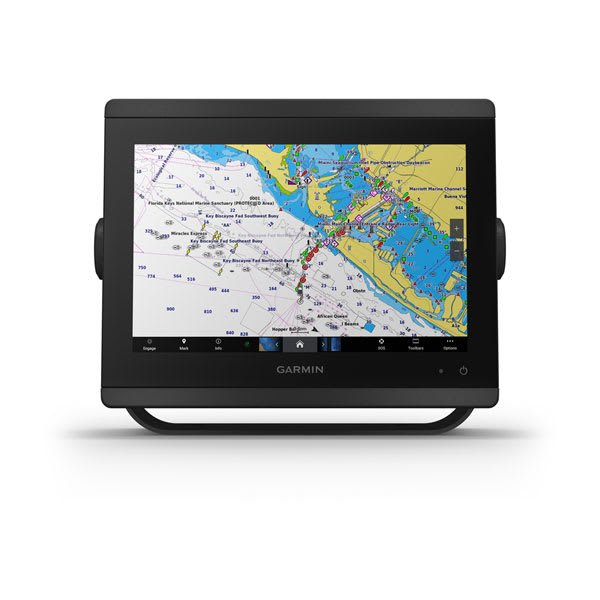
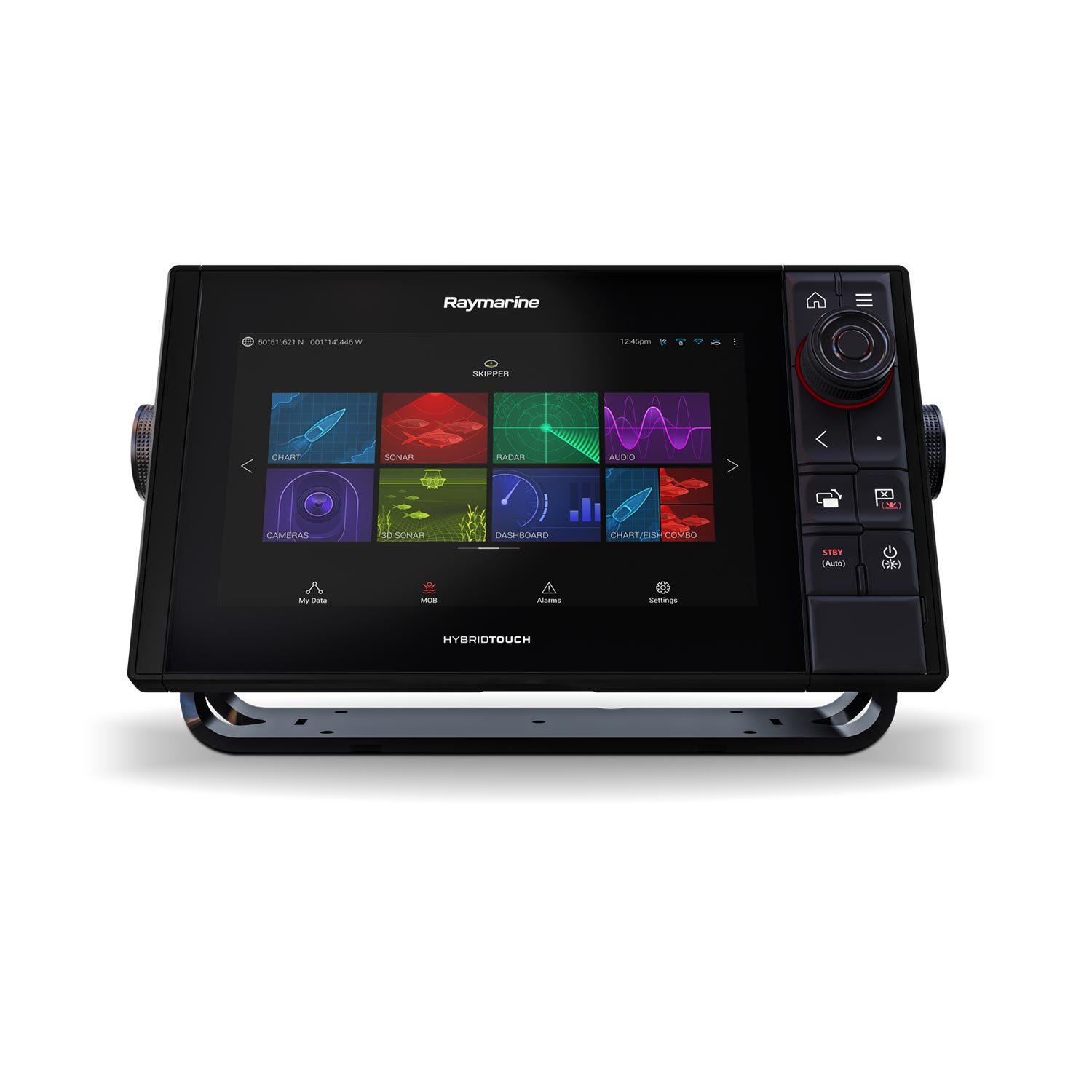
Browse our marine radar systems and chartplotters, and read our radar interference troubleshooting guide if you already have a system. Ask us for help matching a scanner to your display.
Choosing by boat type and use
| Boat and use | Priority | Radar type to favor |
|---|---|---|
| Center console, coastal fishing | Compact, low power draw | Radome with pulse compression |
| Express cruiser or sportfisher, offshore | Range and target separation | Larger radome or 4 ft open array |
| Large sportfisher or yacht | Maximum range, small target detection | Open array, 6 ft or larger |
| Fog-prone coastal waters | Close-range clarity and tracking | Solid-state with MARPA/ARPA and good short-range pulses |
Understanding range, resolution and power draw
Radar range depends on antenna height, power and target size. The horizon limits the practical range: with an antenna 4 m (13 ft) above the water, the radar horizon is roughly 4.5 nautical miles, and a large ship may be visible beyond that because its height extends the line of sight. Resolution depends on beamwidth, which narrows as the antenna gets longer. A 4 ft open array has a beamwidth around 1.8 degrees, while a 24-inch radome is closer to 5 degrees, so the open array separates two close targets that a radome would merge.
Power draw also matters on smaller boats. Solid-state radars commonly draw less than magnetron radars, particularly in standby, and warm up quickly, which matters when fog rolls in. Check the datasheet for transmit and standby current and add it to your power budget.
Using ARPA and MARPA in fog
- Acquire targets manually or set auto-acquisition within a guard zone.
- Check vectors: a target’s relative vector shows closest point of approach (CPA) and time (TCPA).
- Set CPA and TCPA alarms to suit your speed, for example 0.5 nautical miles and 10 minutes.
- Cross-check radar with AIS and a lookout; small boats and floating debris may not show on either.
- Reduce speed and sound signals as required by the collision regulations.
Installer Tip: Radar is an aid, not a substitute for a lookout. Always combine radar with visual watch, AIS, sound signals and a safe speed in restricted visibility.
Budget and maintenance
Plan on a clean, dry cable run with sealed connectors, and wash the antenna with fresh water after each trip. Check mounting bolts for tightness at the start of each season, since vibration loosens fasteners over time. Keep the firmware updated, and replace the cable if you see signs of chafe or corrosion. A well-maintained scanner will last for many seasons.
Radar buying checklist
- Match the radar to the display brand and check the network connection type.
- Check the supply voltage and current draw, and confirm you can power it from a fused feed.
- Measure the mounting area and the arch or mast strength for the antenna weight.
- Check cable length and whether the supplied cable reaches without a join.
- Confirm which features, such as target tracking or doppler, need extra licences or firmware.
- Plan the antenna height and clear sectors before you drill.
Take your time with the mounting plan. A radar mounted a few feet higher and in the clear will often outperform a larger radar mounted low and obstructed.
Frequently asked questions
What is the best radar for fog and long-range tracking?
An open-array radar with a narrow beamwidth and Doppler tracking is best for fog and long-range tracking. For coastal use, a quality 18 to 24 inch radome from the same maker as your display is usually enough.
What is beamwidth and why does it matter?
Beamwidth is the horizontal angle of the radar beam. A narrower beam, from a longer antenna, separates close targets more clearly, which helps in fog and busy traffic.
Is solid-state radar better than magnetron?
Solid-state radars give instant-on use, lower emissions and clearer short-range detail, while magnetron open arrays remain strong at long range. The right choice depends on your use.
Do I need Doppler on a marine radar?
Doppler helps by color-coding approaching targets and filtering clutter. It is not required, but it is valuable for offshore and fog work.
Leave a Reply