Tag: transducer mount

  • Kayak Fishing Electronics 101

    Kayak Fishing Electronics 101

    Kayak fishing has its own electronics rules — limited deck space, no dedicated power system, and a hull that needs a clean, non-invasive mounting approach. The good news is you can build a genuinely capable setup without the budget or complexity of a full boat rig. Here’s where to start.

    Power: The First Thing to Solve

    Unlike a boat, a kayak has no engine charging a battery bank, so every electronic device draws down a dedicated, portable power source. A small 12V sealed lead-acid or lithium battery in a waterproof box is the standard setup for a fish finder and any accessories; size it to your unit’s draw and typical time on the water, and always carry it in a way that keeps connections dry. This is the first budget line to plan for — a great fish finder with no reliable power is dead weight.

    Choosing a Fish Finder for a Kayak

    Compact displays built for small craft, like the Garmin Striker Vivid 4cv, hit the sweet spot of a small footprint, low power draw, and real CHIRP/ClearVu sonar with built-in GPS — more than enough for most kayak anglers without the size or cost of a full boat-class unit. If you want a step up in screen size and still-modest power draw, the Humminbird HELIX 5 CHIRP GPS G3 is a popular mid-tier choice. For the fundamentals of how any of these units actually work, see our how fish finders work guide.
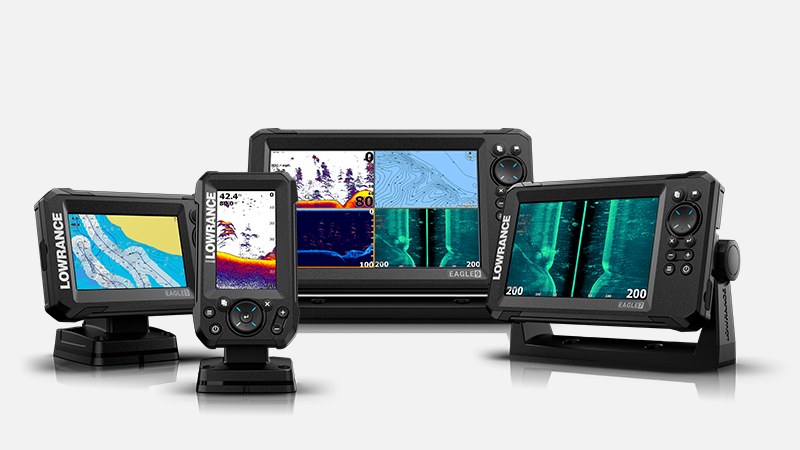
    Compact fish finder mounted on a kayak
    Compact displays like the Lowrance Eagle series are built for the limited space and power budget of a kayak.

    A Castable Option Worth Knowing About

    If you’d rather skip permanent mounting and wiring entirely, castable sonar units like the Deeper PRO+ 2 Smart Sonar pair a floating, throwable sonar ball with your phone over WiFi — no battery installation, no transducer mount, and it works from a kayak, the bank, or ice. It trades some of the screen size and features of a mounted unit for genuine simplicity.

    Mounting Without Drilling

    Many kayak anglers avoid permanent hull penetrations by using a transducer arm or scupper-hole mount that clamps to the kayak rather than requiring thru-hull installation, along with track-mount systems (RAM mounts and similar) that let you add and reposition a display without new holes each time you upgrade gear.

    Adding a Trolling Motor and Live Sonar

    Once the basics are dialed in, many kayak anglers add a small trolling motor like the Bixpy K-1 Outboard Motor Kit for hands-free positioning, and increasingly, kayak-compatible live sonar via mounts like the Power-Pole Micro Anchor for instant-hold shallow anchoring. Our live sonar vs. traditional sonar guide covers whether that upgrade makes sense for your fishing style.

    Frequently Asked Questions

    How much should I budget for a basic kayak fish finder setup?
    A capable entry unit, a small dedicated battery, and basic mounting hardware typically runs a few hundred dollars total — considerably less than a boat-class setup while still giving you real CHIRP sonar and GPS.

    Do I need to drill into my kayak to mount electronics?
    No — scupper-hole and clamp-on transducer mounts, along with track-mount display arms, let most anglers add a full fish finder setup without any permanent hull modification.

    Is a castable sonar as good as a mounted fish finder?
    It trades some screen size and continuous power for simplicity — a castable unit like the Deeper PRO+ 2 is a strong choice if you want zero installation, but a mounted display generally offers a larger, easier-to-read screen on the water.

    How do I keep electronics dry on a kayak?
    Use waterproof battery boxes, marine-rated connectors, and mount displays above expected spray lines; even “waterproof” units benefit from keeping wiring connections out of standing water in the hull.

    Ready to see specific kayak-friendly fish finders side by side? See our best kayak fish finders guide, or browse the full kayak & small boat electronics collection.
  • Best Shallow Water Anchors

    Best Shallow Water Anchors

    From budget-friendly traditional anchors to Bluetooth-controlled shallow water spikes, here’s how the current lineup breaks down for flats, bay, and small-boat anglers.

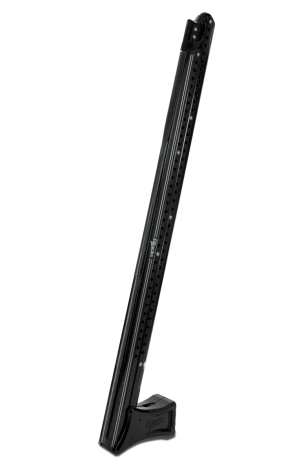
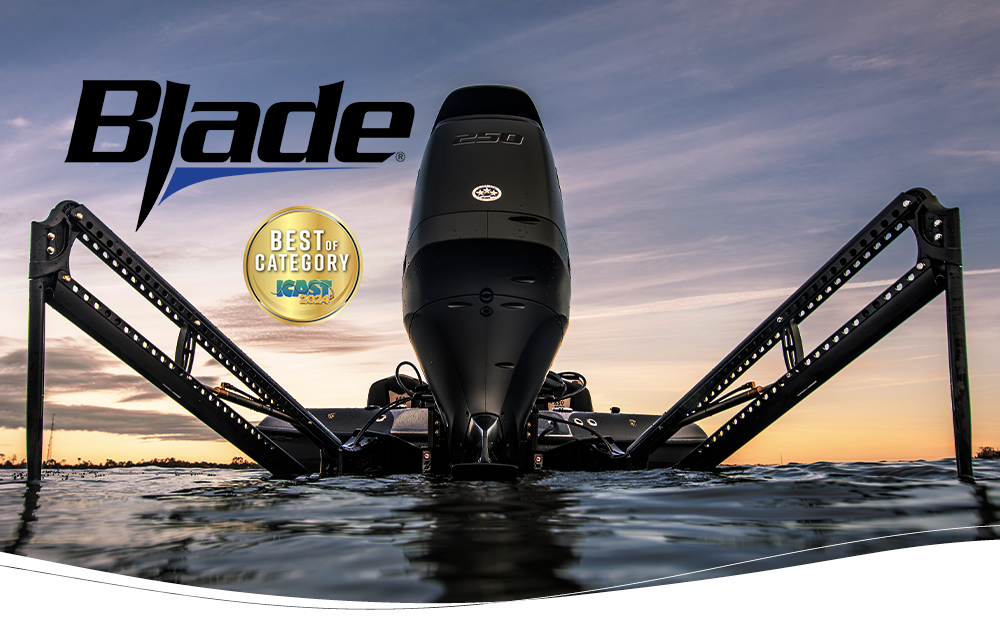
    Power-Pole Blade Series shallow water anchor deployed off a boat
    Power-Pole’s Blade Series is one of the most established names in shallow water anchoring.

    Best Overall: Minn Kota Raptor 8ft

    The Minn Kota Raptor 8ft Bluetooth Shallow Water Anchor ($799.99) leads the category with a 135 lb hold rating, auto-depth sensing, and a genuinely quiet “Silent Deploy” mechanism — the current benchmark most flats and bay boat anglers compare everything else against.

    Best for Maximum Depth: Power-Pole Blade Series 10ft

    The Power-Pole Blade Series Shallow Water Anchor (10ft) ($699.99) reaches deeper water than most competitors, a strong choice if you fish marsh or flats with more depth variation and don’t want to be limited by a shorter spike.

    Best Value Power-Pole: Blade Series 8ft

    The Power-Pole Blade Series Shallow Water Anchor (8ft) ($649.99) delivers the same Bluetooth-controlled Blade technology at a slightly lower price than the 10ft version, ideal if your typical fishing depth doesn’t call for the extra reach.

    Best for Kayaks and Small Boats: Power-Pole Micro Anchor

    The Power-Pole Micro Anchor ($699.99) brings the same Bluetooth hydraulic deploy technology to a universal mount built specifically for kayaks and small boats — there’s genuinely no comparable option at this size.

    Best Traditional Backup Anchor: Fortress FX-11

    Every shallow water spike still benefits from a proper traditional anchor for deeper water or overnight use. The Fortress FX-11 Aluminum Anchor ($139.99) is lightweight, corrosion-proof, and rated for boats up to 28ft — a smart, affordable pairing alongside any shallow water anchor.

    Frequently Asked Questions

    Do I need both a shallow water anchor and a traditional anchor?
    Most flats and bay boat owners carry both — the shallow water anchor for quick, repeated stops in skinny water, and a traditional anchor and rode for deeper water or overnight anchoring.

    Is a longer spike always better?
    Not necessarily — a longer spike reaches deeper water but isn’t needed if you consistently fish shallower flats; match spike length to the depths you actually fish rather than buying maximum length by default.

    How much boat can these anchors handle?
    Check each model’s rated hold and boat-length compatibility before buying — the Minn Kota Raptor’s 135 lb hold rating and the Power-Pole Blade series are both built for typical bay and flats boats up to the mid-20-foot range; very large or heavy boats may need to consult manufacturer specs.

    New to shallow water anchors?
    Read our full shallow water anchors explained guide first to understand how spike anchors work and where they fit alongside a traditional anchor.

    Browse the complete shallow water anchor collection.

  • Shallow Water Anchors Explained: How Spike Anchors Work

    Shallow Water Anchors Explained: How Spike Anchors Work

    Anyone who fishes flats, marsh, or shallow backwater eventually runs into the same problem: a traditional anchor and rode is slow, noisy, and awkward in two feet of water, and it can drag or foul on grass and structure. Shallow water anchors (often called “shallow water spikes” or “stake anchors”) solve this with a completely different mechanism. Here’s how they work and how to choose one.

    How a Shallow Water Anchor Works

    Instead of a traditional fluke anchor and rode, a shallow water anchor mounts to the transom or bow and drives a fiberglass spike (or in some cases a blade-shaped pole) straight down into the bottom using hydraulic, electric, or manual power. Deploy it and the boat is pinned in place almost instantly; retract it and you’re moving again in seconds — no pulling anchor line, no coiling rode, no risk of a fouled anchor stuck on structure.

    Depth Range and Hold

    Shallow water anchors are purpose-built for skinny water — typically effective from a few inches down to 8-10+ feet depending on the spike length, with units like the Power-Pole Blade Series 10ft reaching deeper flats and marsh water than shorter spikes. Holding power comes from the spike’s penetration into the bottom rather than weight or fluke design, which is why they excel in mud, sand, and grass but aren’t a substitute for a real anchor in open, deep water.

    Power-Pole Blade Series shallow water anchor mounted on a boat transom
    A shallow water anchor deploys and retracts in seconds, holding the boat by driving a spike into the bottom.

    Bluetooth and Remote Control

    Most current-generation shallow water anchors, including the Minn Kota Raptor and Power-Pole’s Blade and Micro lines, offer Bluetooth app control and wireless remotes, letting you deploy or retract from anywhere in the boat — genuinely useful when you’re mid-cast and need to stop quickly without walking to a switch.

    Kayak and Small Boat Options

    Shallow water anchors aren’t just for bay boats — the Power-Pole Micro Anchor is purpose-built with a universal mount for kayaks and small boats, bringing the same instant-deploy convenience to craft that would otherwise rely on a drift sock or a simple stake tied off by hand.

    When You Still Need a Traditional Anchor

    Shallow water anchors don’t replace a traditional anchor entirely — for open water, deeper anchoring, or overnight security, a proper fluke or plow anchor like a Fortress FX-11 with adequate rode is still the right tool. Most flats and bay boat owners carry both: a shallow water anchor for quick, repeated stops while sight-fishing or working structure, and a traditional anchor for deeper or overnight anchoring.

    Frequently Asked Questions

    What depth is too deep for a shallow water anchor?
    Most spikes top out around 8-10 feet of effective depth; beyond that, holding power and structural stress become issues, and a traditional anchor and rode is the right choice.

    Do shallow water anchors work in mud and grass, or just sand?
    They’re actually most popular specifically because they hold well in mud, sand, and grass bottoms where a traditional anchor tends to drag or foul — hard rock or shell bottom is where they perform worst.

    Are these anchors noisy when deploying?
    Older hydraulic units could be noticeable; current models, including the Minn Kota Raptor’s “Silent Deploy” feature, are specifically engineered to minimize noise so you don’t spook fish in shallow water.

    Can I mount a shallow water anchor on a small boat or kayak?
    Yes — the Power-Pole Micro Anchor is designed specifically for kayak and small-boat universal mounting, bringing the same technology to smaller craft.

    Ready to compare specific models? See our best shallow water anchors roundup, or browse the full shallow water anchor collection.

  • Top Handheld VHF Radios for Boaters

    A dedicated marine VHF handheld is one of the cheapest pieces of real safety gear you can buy for a boat, and the current lineup ranges from ultra-compact backups to full-featured units with GPS and DSC. Here’s what stands out at each price point.

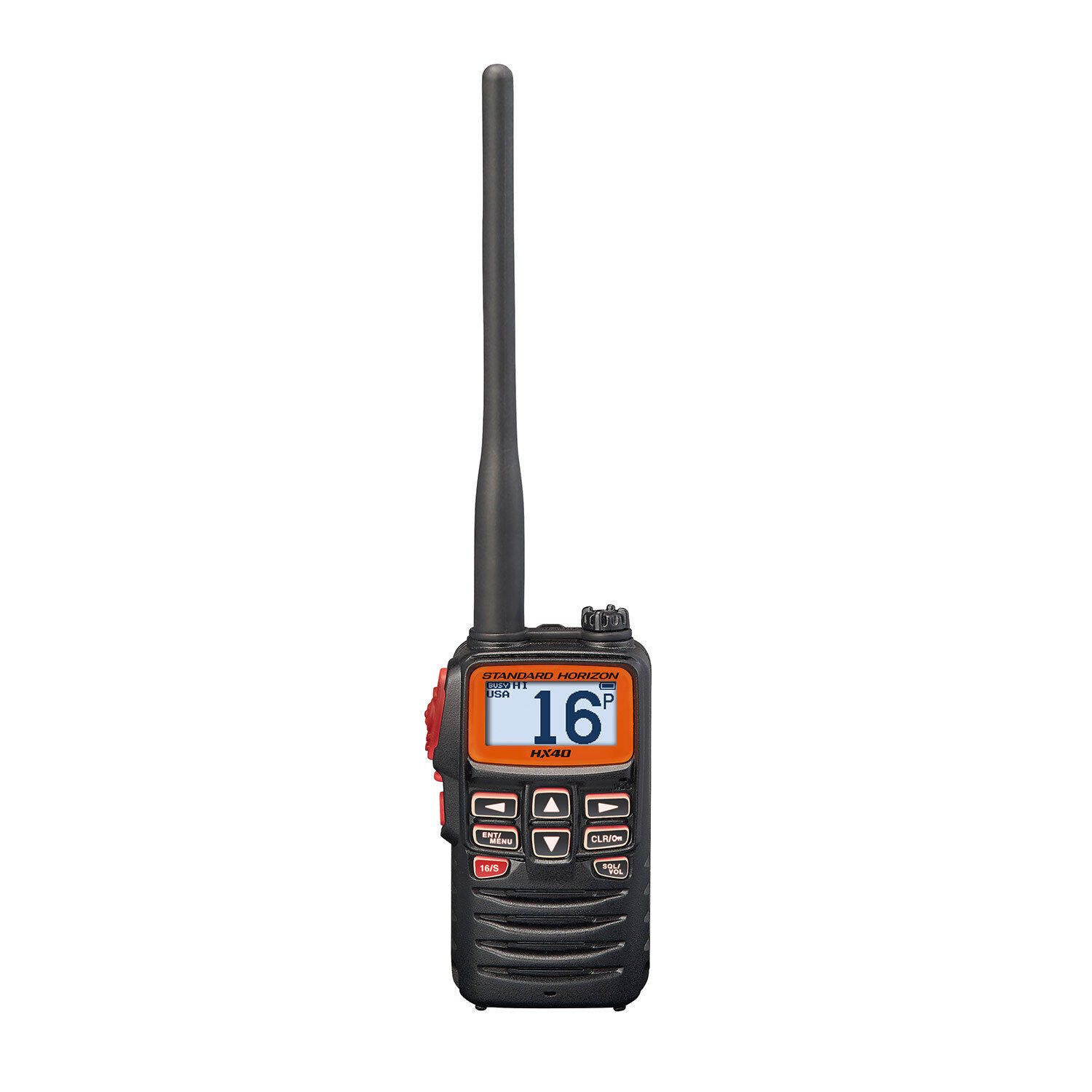
    Standard Horizon HX40 ultra-compact handheld VHF marine radio
    Standard Horizon’s HX40 is one of the smallest full-power handheld VHF radios currently available.

    Best Overall: Standard Horizon HX40

    The Standard Horizon HX40 Ultra-Compact Handheld VHF Radio ($179.99) packs full 5W-class output, a submersible rating, and NOAA weather-alert monitoring into one of the smallest bodies on the market — a strong everyday-carry choice for boaters who want a radio small enough to clip on and forget about until they need it.

    Best Value: Icom IC-M25

    The Icom IC-M25 Handheld VHF Marine Radio ($129.99) delivers Icom’s build quality and a floating, submersible design at a noticeably lower price than flagship handhelds — a smart pick for a second radio, dinghy use, or a crew member’s personal unit.

    Best for Man-Overboard Peace of Mind: Cobra MR HH350 FLT

    The Cobra MR HH350 FLT Floating Handheld VHF Marine Radio ($139.95) is built to float and flash if it goes overboard, which matters more than most buyers expect — a dropped handheld that sinks is a dropped handheld you don’t get back.

    Best Submersible Budget Pick: Uniden MHS75

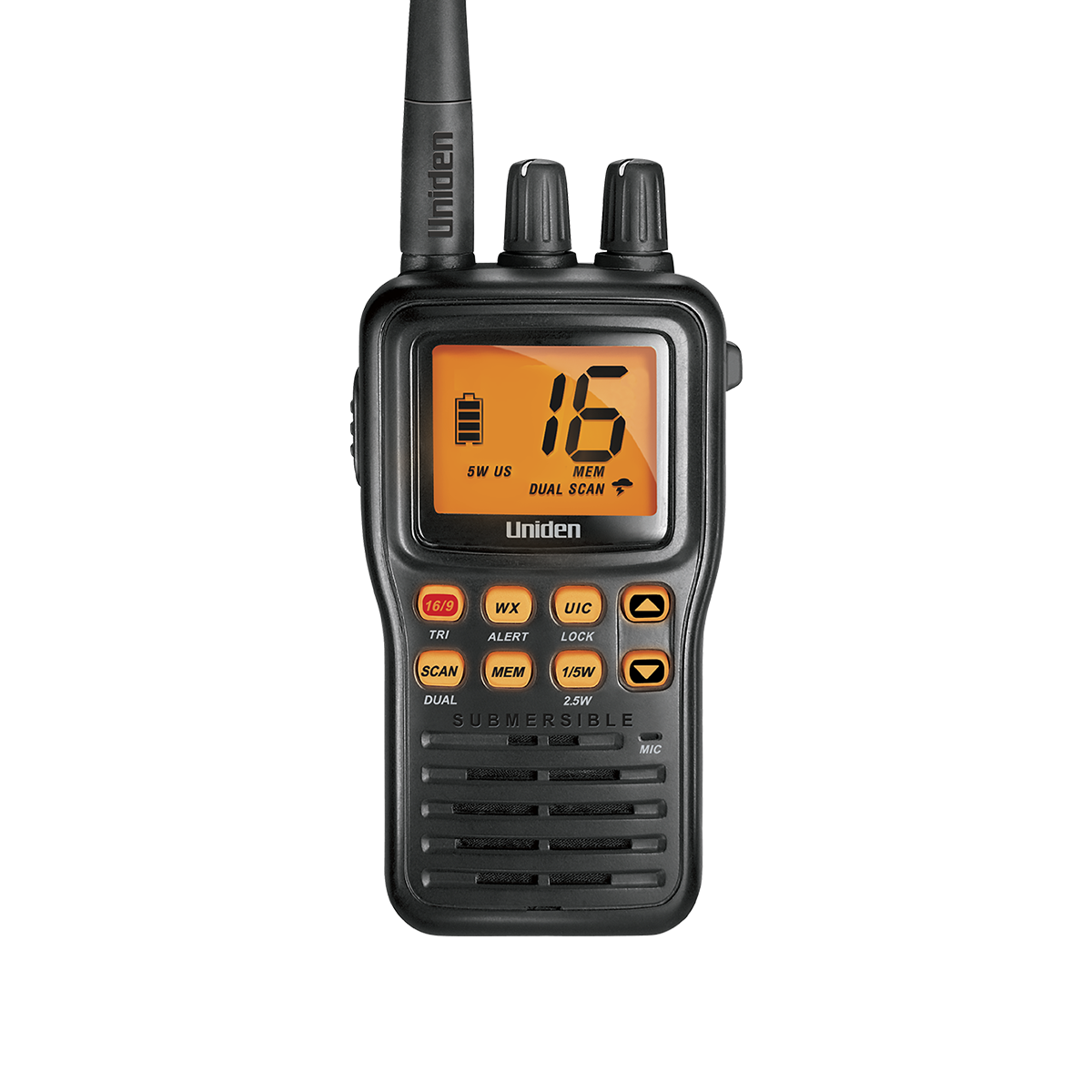
    The Uniden MHS75 Submersible Handheld VHF Marine Radio ($119.99) covers the essentials — full power output, weather channel access, and a submersible housing — at one of the lower prices in the dedicated marine VHF category, making it a solid backup radio to keep in a ditch bag or glove box.

    Best Feature-Rich Option: Uniden Atlantis 155

    The Uniden Atlantis 155 Handheld Floating VHF Marine Radio rounds out the lineup with a floating design and a built-in flashlight, useful for boaters who want one radio to double as basic emergency gear.

    Frequently Asked Questions

    Do I need DSC on a handheld, or is that only for fixed-mount radios?
    DSC is increasingly available on handhelds too, and it’s worth having if your budget allows — it lets you send a one-button distress alert with position data even if you’re not near the boat’s fixed-mount unit.

    Is a floating radio worth paying extra for?
    For most boaters, yes. A radio that sinks when dropped overboard is gone for good, and the cost premium for a floating design is usually modest compared to the radio’s total price.

    How is a handheld different from the fixed VHF radio already on my boat?
    A fixed-mount unit transmits at higher power with a permanently mounted antenna for maximum range; a handheld is your backup if the boat loses power, your go-to for a dinghy or kayak, and what you’d grab in an abandon-ship situation. Most serious boaters carry both.

    What should I check before buying any of these?
    Confirm the battery type and expected runtime, submersible vs. floating rating, and whether it includes NOAA weather-channel monitoring — all the models above include weather channels, but battery life and floating capability vary by model.

    Want the background on VHF channels before you buy? Read our VHF marine radio channels explained guide, or browse the full VHF radio collection.

  • VHF Marine Radio Channels Explained: What to Monitor and When

    A marine VHF radio is only as useful as your understanding of what’s actually happening on each channel. Unlike a general-purpose walkie talkie, VHF marine channels are internationally regulated and each one has a specific, expected use — get it wrong and you’re either missing a call for help or clogging a channel other boaters depend on. Here’s what you actually need to know.

    Channel 16: The One Channel Everyone Must Know

    Channel 16 (156.800 MHz) is the international distress, safety, and calling frequency. Every fixed and handheld marine VHF radio monitors it, and the U.S. Coast Guard maintains a continuous listening watch. The rule is simple: keep Channel 16 as your default/standby channel any time you’re underway, use it only to initiate a distress call or to hail another vessel briefly before switching to a working channel, and never use it for ongoing conversation. This is different from FRS/GMRS radios like a Motorola Talkabout T802, which share no channels with marine VHF at all and aren’t monitored by the Coast Guard.

    Distress, Safety, and Working Channels

    Beyond Channel 16, a handful of channels matter most for recreational boaters:

    Channel 9 is a secondary hailing channel used in many U.S. recreational boating areas to keep routine calling traffic off 16. Channels 68, 69, 71, 72, and 78A are common non-commercial working channels for boat-to-boat conversation once you’ve made contact. Channel 22A is used by the Coast Guard to broadcast safety and weather-related information and to switch distress traffic off of 16 for follow-up communication. Channels 13 and 67 are bridge-to-bridge channels used near locks, bridges, and in some commercial traffic areas.

    Uniden MHS75 submersible handheld VHF marine radio
    A dedicated handheld VHF radio monitors Channel 16 and gives you real Coast Guard-monitored emergency communication, unlike a consumer walkie talkie.

    Weather Channels (WX1–WX10)

    NOAA Weather Radio broadcasts continuous forecasts and alerts on a dedicated set of weather channels (WX1 through WX10) that most marine VHF radios, including budget handhelds, tune separately from the standard ship channels. Checking the weather channel before heading out, and leaving a radio’s weather-alert function enabled while underway, is one of the simplest habits that separates prepared boaters from everyone else.

    DSC: Digital Selective Calling

    Modern fixed-mount and many handheld VHF radios include DSC (Digital Selective Calling), which lets you send an automated distress alert — including your GPS position, if the radio is connected to or has a built-in GPS — with a single button press, broadcast simultaneously to the Coast Guard and any DSC-equipped vessels in range. If your radio has DSC, register it for a free MMSI number before you need it; an unregistered DSC radio can still send an alert, but responders won’t have your vessel information on file.

    Frequently Asked Questions

    Can I use a regular walkie talkie instead of a marine VHF radio on the water?
    You can carry one as a backup for boat-to-boat chatter at close range, but it isn’t monitored by the Coast Guard and doesn’t reach shore stations or other vessels the way marine VHF does — it shouldn’t be your only communication device offshore or on open water.

    Do I need a license to operate a marine VHF radio?
    Recreational boaters in the U.S. operating domestically generally don’t need an individual license, but a vessel traveling internationally or carrying certain commercial/DSC equipment may need a Ship Station License — check current FCC requirements for your specific situation.

    What’s the difference between a handheld and a fixed-mount VHF radio?
    Fixed-mount radios run on the boat’s power, connect to a permanently mounted antenna, and transmit at higher wattage (typically 25W) for longer range; handhelds like the Standard Horizon HX40 are battery-powered, portable, and usually cap around 5-6W — ideal as a backup, for smaller boats, or for going ashore in a dinghy.

    How far does a handheld VHF radio actually reach?
    Range depends heavily on antenna height on both ends since VHF is line-of-sight — a handheld talking to another handheld at water level might only reach 2-5 miles, while a handheld talking to a tall shore station or another boat’s mast-mounted antenna can reach considerably farther.

    Ready to pick a specific radio? See our top handheld VHF radios for boaters comparison, or browse the full VHF radio collection. If you’re deciding between VHF and a consumer two-way radio for a specific use case, our VHF vs. two-way radio guide covers that comparison directly.

🎁 10% OFF