Not every on-water communication need calls for a marine VHF radio. Crew-to-crew chatter, docking directions, fishing tournament coordination, and shore-to-boat contact within a mile or two are all jobs a consumer two-way radio handles well — often more simply and cheaply than VHF. Here’s how the current lineup compares.
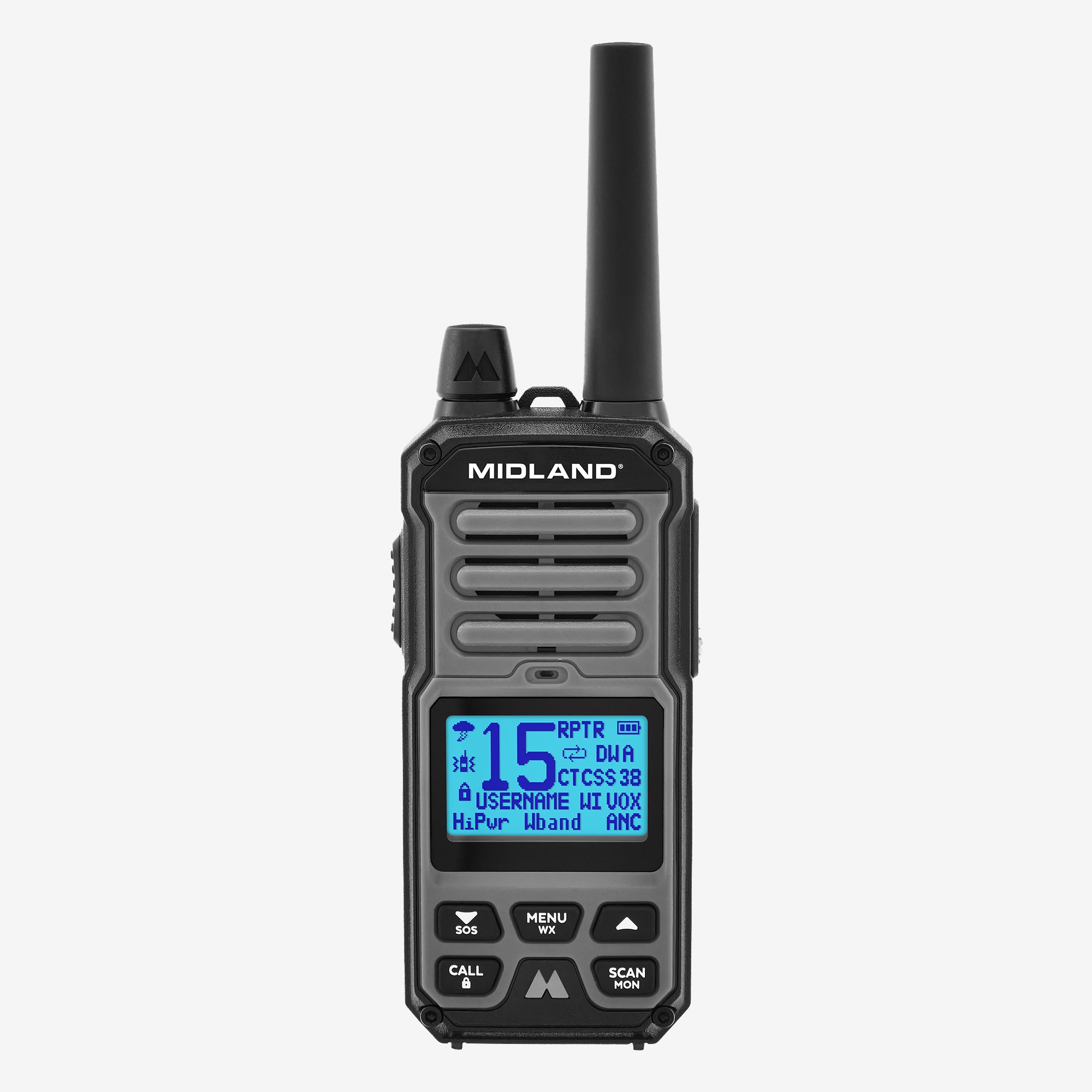
Best Overall: Midland GXT67 PRO
The Midland GXT67 PRO 5-Watt GMRS Two-Way Radio ($219.99) leads with genuine 5-watt GMRS output for real range, well beyond basic FRS radios — a strong choice for boat-to-boat or boat-to-shore communication over open water where distance matters.
Best Value Pair: Motorola TALKABOUT T802
The Motorola TALKABOUT T802 Two-Way Radio (2-Pack) ($105.00) is a reliable, no-fuss FRS/GMRS pair well suited to crew communication around the boat, docking guidance, or keeping in touch with someone on shore at closer range.
Best Waterproof Option: Cobra ACXT645
The Cobra ACXT645 Waterproof Walkie Talkies (2-Pack) ($89.95) is built specifically to handle spray and splash, making it a smart pick for anyone regularly near the water’s edge — wakeboarding, tubing, or dinghy trips where a standard radio would be a liability.
Best for Simple, Reliable Business-Grade Use: Motorola CLS1110
The Motorola CLS1110 1-Channel Business Two-Way Radio ($197.00) is a rugged, single-channel unit built for business/commercial use — a good fit for charter operations, marinas, or fleet crews who want dead-simple, dependable one-channel communication without menus to navigate.
Best Budget/Hobbyist Pick: BaoFeng UV-5R
The BaoFeng UV-5R Dual-Band Handheld Radio ($22.99) is the least expensive option here by a wide margin, popular with hobbyists comfortable programming a dual-band radio themselves — note that, unlike the FRS/GMRS radios above, operating on many of its available frequencies requires an amateur (ham) radio license.
Frequently Asked Questions
Can I use a two-way radio instead of a marine VHF radio?
Not for real marine safety communication — two-way radios aren’t monitored by the Coast Guard and don’t share channels with marine VHF. See our VHF marine radio channels guide for why a dedicated VHF radio still matters for safety.
What’s the difference between FRS and GMRS radios?
FRS (Family Radio Service) requires no license and is limited in power/range; GMRS (General Mobile Radio Service) allows higher power and longer range but technically requires an FCC license per household in the US — check current requirements for your specific radio and planned use.
Do I need a license for the BaoFeng UV-5R?
For its full frequency range, yes — an amateur radio (ham) license is generally required to legally transmit outside the FRS-only frequencies; it’s a popular choice specifically among licensed hobbyists.
How far do these radios actually reach on the water?
Real-world range is usually well under advertised figures and depends heavily on terrain and antenna height — expect a mile or two in typical on-water conditions, more in open water with no obstructions, less in marinas or around structures.
Need real Coast Guard-monitored marine communication instead? See our top handheld VHF radios for boaters guide, or browse the full VHF & radio collection.
Leave a Reply