A marine VHF radio is only as useful as your understanding of what’s actually happening on each channel. Unlike a general-purpose walkie talkie, VHF marine channels are internationally regulated and each one has a specific, expected use — get it wrong and you’re either missing a call for help or clogging a channel other boaters depend on. Here’s what you actually need to know.
Channel 16: The One Channel Everyone Must Know
Channel 16 (156.800 MHz) is the international distress, safety, and calling frequency. Every fixed and handheld marine VHF radio monitors it, and the U.S. Coast Guard maintains a continuous listening watch. The rule is simple: keep Channel 16 as your default/standby channel any time you’re underway, use it only to initiate a distress call or to hail another vessel briefly before switching to a working channel, and never use it for ongoing conversation. This is different from FRS/GMRS radios like a Motorola Talkabout T802, which share no channels with marine VHF at all and aren’t monitored by the Coast Guard.
Distress, Safety, and Working Channels
Beyond Channel 16, a handful of channels matter most for recreational boaters:
Channel 9 is a secondary hailing channel used in many U.S. recreational boating areas to keep routine calling traffic off 16. Channels 68, 69, 71, 72, and 78A are common non-commercial working channels for boat-to-boat conversation once you’ve made contact. Channel 22A is used by the Coast Guard to broadcast safety and weather-related information and to switch distress traffic off of 16 for follow-up communication. Channels 13 and 67 are bridge-to-bridge channels used near locks, bridges, and in some commercial traffic areas.
Weather Channels (WX1–WX10)
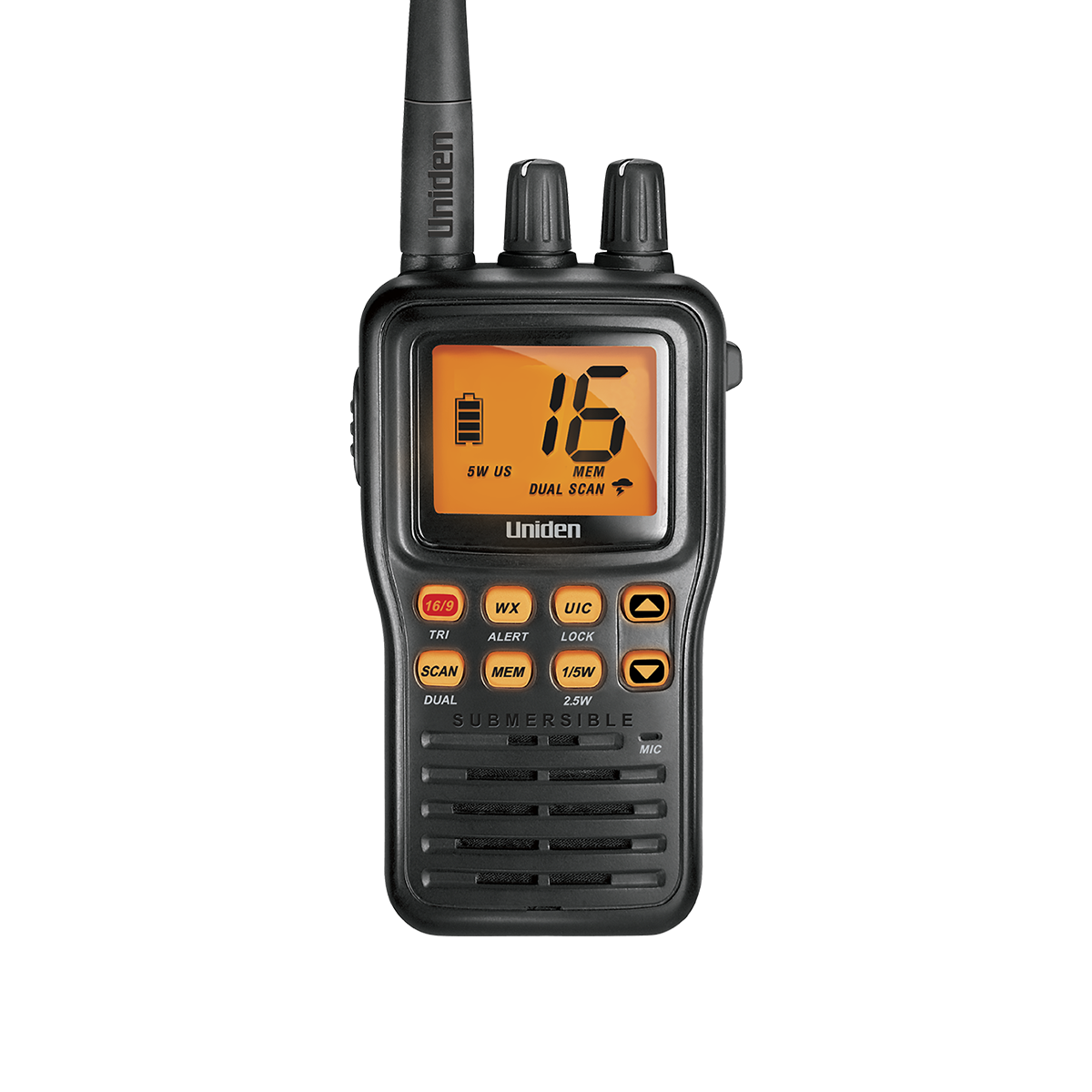
NOAA Weather Radio broadcasts continuous forecasts and alerts on a dedicated set of weather channels (WX1 through WX10) that most marine VHF radios, including budget handhelds, tune separately from the standard ship channels. Checking the weather channel before heading out, and leaving a radio’s weather-alert function enabled while underway, is one of the simplest habits that separates prepared boaters from everyone else.
DSC: Digital Selective Calling
Modern fixed-mount and many handheld VHF radios include DSC (Digital Selective Calling), which lets you send an automated distress alert — including your GPS position, if the radio is connected to or has a built-in GPS — with a single button press, broadcast simultaneously to the Coast Guard and any DSC-equipped vessels in range. If your radio has DSC, register it for a free MMSI number before you need it; an unregistered DSC radio can still send an alert, but responders won’t have your vessel information on file.
Frequently Asked Questions
Can I use a regular walkie talkie instead of a marine VHF radio on the water?
You can carry one as a backup for boat-to-boat chatter at close range, but it isn’t monitored by the Coast Guard and doesn’t reach shore stations or other vessels the way marine VHF does — it shouldn’t be your only communication device offshore or on open water.
Do I need a license to operate a marine VHF radio?
Recreational boaters in the U.S. operating domestically generally don’t need an individual license, but a vessel traveling internationally or carrying certain commercial/DSC equipment may need a Ship Station License — check current FCC requirements for your specific situation.
What’s the difference between a handheld and a fixed-mount VHF radio?
Fixed-mount radios run on the boat’s power, connect to a permanently mounted antenna, and transmit at higher wattage (typically 25W) for longer range; handhelds like the Standard Horizon HX40 are battery-powered, portable, and usually cap around 5-6W — ideal as a backup, for smaller boats, or for going ashore in a dinghy.
How far does a handheld VHF radio actually reach?
Range depends heavily on antenna height on both ends since VHF is line-of-sight — a handheld talking to another handheld at water level might only reach 2-5 miles, while a handheld talking to a tall shore station or another boat’s mast-mounted antenna can reach considerably farther.
Ready to pick a specific radio? See our top handheld VHF radios for boaters comparison, or browse the full VHF radio collection. If you’re deciding between VHF and a consumer two-way radio for a specific use case, our VHF vs. two-way radio guide covers that comparison directly.
Leave a Reply