The right fish finder depends far more on your budget and how you fish than on chasing the newest flagship. Here’s a real, no-nonsense breakdown of solid picks at every price point — not a list of every unit we sell, just the ones worth your money at each tier.
Budget: Under $600
Lowrance HOOK Reveal 5 TripleShot — $249.99. A genuinely capable entry point: CHIRP sonar, DownScan imaging, and a built-in GPS chartplotter on a 5″ display. It won’t wow you with screen real estate, but for a kayak, jon boat, or as a simple backup unit, it does everything most casual anglers need.
Humminbird HELIX 7 CHIRP MEGA DI GPS G4N — $549.99. Steps up to a 7″ display with MEGA Down Imaging, which produces noticeably crisper structure detail than standard down imaging. This is the size most people actually wish they’d bought instead of a 5″.
Mid-Range: $600–$1,100
Garmin ECHOMAP UHD2 73cv — $649.99. Garmin’s UHD2 line packs a sharper display and built-in Quickdraw Contours mapping that lets you create your own high-detail lake maps as you fish — genuinely useful on smaller or less-charted waters.
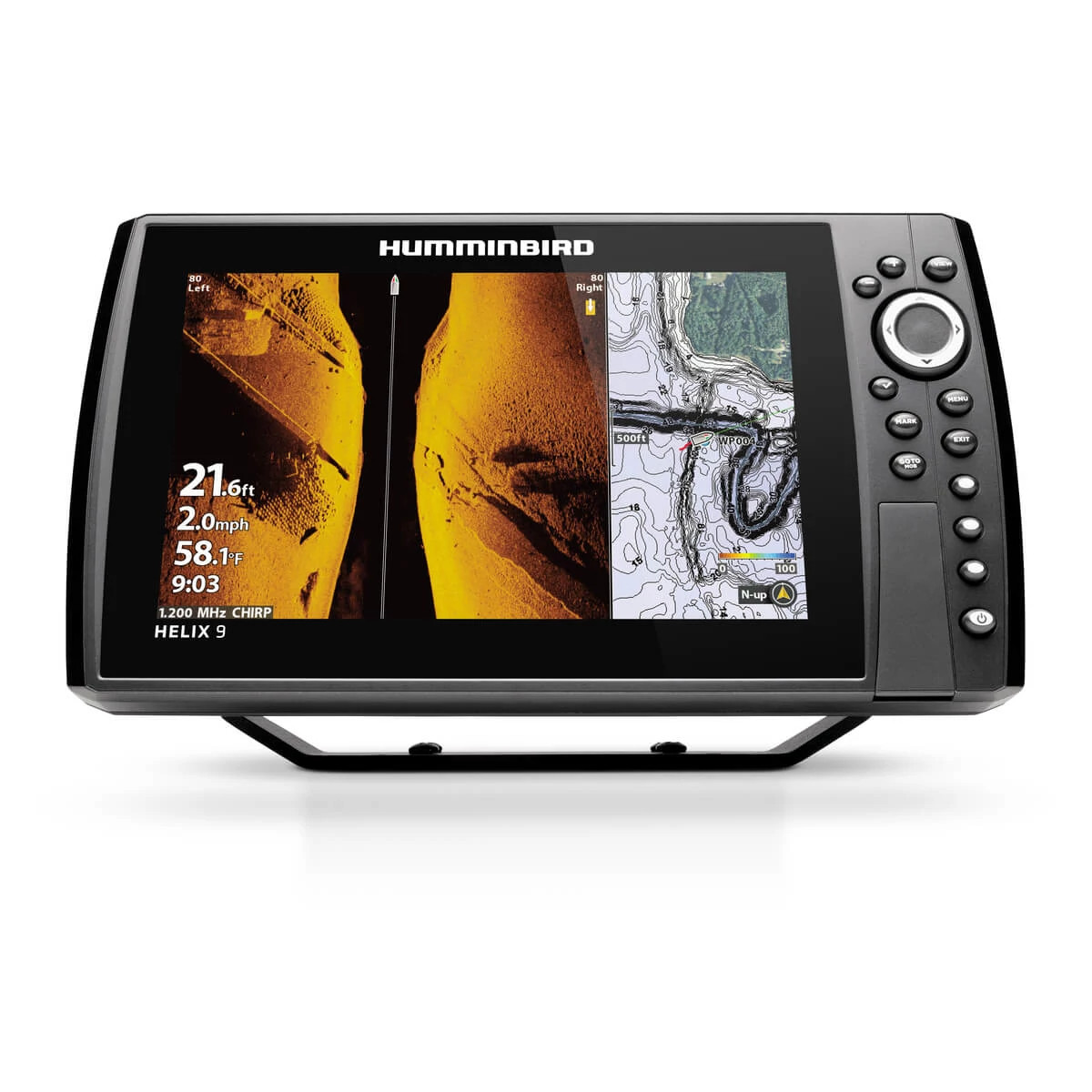
Humminbird HELIX 9 CHIRP MEGA SI GPS G4N — $999.99. This is where MEGA Side Imaging enters the picture — scanning a wide corridor to either side of the boat so you can find brush piles and schools without running over them first. A 9″ screen is also large enough to comfortably split sonar and mapping views.
Premium: $1,200+
Raymarine Axiom+ 9 RV — $1,199.99. RealVision 3D sonar renders the bottom and structure as an actual three-dimensional picture rather than a flat scroll, and the Axiom+ line runs on the same LightHouse chart ecosystem used on much larger offshore helms — useful if you think you’ll ever upgrade boats.
Lowrance HDS PRO 9 — $1,999.99. The HDS PRO series is built for anglers who live on the water: faster processors, brighter high-contrast displays for direct sunlight, and full compatibility with Lowrance’s ActiveTarget live sonar system if you want to add it later.
How to Actually Pick Between Them
If you’re not sure where to start, work backward from how you fish rather than the spec sheet. Casual weekend angler on a small lake? Budget tier is genuinely enough. Fishing tournaments or unfamiliar water regularly? The mapping and side-imaging features in the mid-range tier pay for themselves fast. Chasing suspended fish in open water or fishing offshore structure? That’s when premium sonar resolution and live sonar compatibility start to matter. For the mechanics behind CHIRP, down imaging, and side imaging referenced above, see our guide on how fish finders actually work.
Frequently Asked Questions
Is it worth paying extra for a bigger screen?
Usually yes, if your budget allows it. Once you start splitting the screen between sonar and mapping (which most anglers do), anything under 7″ feels cramped fast.
Do I need a separate GPS unit if I buy a fish finder?
No — virtually every fish finder sold today, including every unit above, is a combo unit with a built-in GPS chartplotter.
What’s the single best upgrade from a budget unit?
Side imaging. It fundamentally changes how you locate fish and structure compared to only having a down-facing cone, more than any other single spec.
Should I buy based on brand or on the specific model?
Model, every time. Garmin, Lowrance, and Humminbird all make excellent units across every price tier — see our Garmin vs. Lowrance vs. Humminbird comparison if brand loyalty or existing accessories (transducers, mounts) are a factor for you.
Leave a Reply