Tag: VHF radio

  • Buy Garmin Rino 750 Handheld GPS: In Stock, Best Price

    Buy Garmin Rino 750 Handheld GPS: In Stock, Best Price

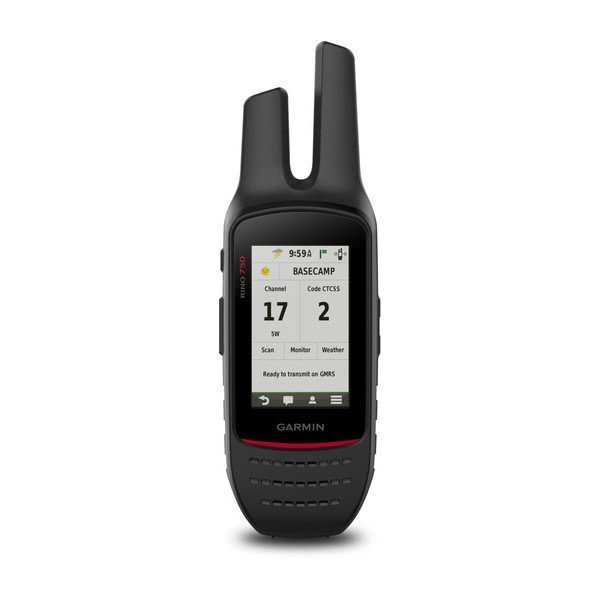
    Rugged handheld GPS/GLONASS navigator with an integrated GMRS/FRS 2-way radio — share your position with the crew while you talk.

    [BUY NOW: Check Garmin Rino 750 Handheld GPS Stock & Direct Pricing]

    Garmin Rino 750 Handheld GPS with 2-Way Radio – $549.99 – in stock
    Check Availability & Order Direct →

    Garmin Rino 750 Handheld GPS handheld radio
    Garmin Rino 750 Handheld GPS with 2-Way Radio

    Garmin Rino 750 Handheld GPS: Key Features & Specifications

    • Integrated GPS/GLONASS navigation with touchscreen
    • Built-in 2-way GMRS/FRS radio
    • Position-sharing between paired Rino radios
    • Preloaded worldwide basemap
    • Rugged, water-resistant handheld design
    • Useful for dinghy trips, tenders, and shore parties

    Price: $549.99  |  Availability: in stock. Confirm compatibility with your boat and existing equipment before you order.

    Why Choose the Garmin Rino 750 Handheld GPS?

    A reliable radio is a safety essential on the water. The Garmin Rino 750 Handheld GPS gives you a way to stay in contact with other boats, marinas and, where applicable, rescue services.

    Check whether you need a marine VHF or a general-purpose two-way radio, and look at water resistance and battery life before you choose. For more help deciding, read our top handheld VHF radios, VHF channels explained, VHF vs two-way radios guide.

    How It Compares

    Product Price Details
    Garmin Rino 750 Handheld GPS $549.99 View this product
    Midland GXT67 PRO 5-Watt GMRS Two-Way Radio $219.99 View product
    Motorola CLS1110 1-Channel Business Two-Way R $197.00 View product
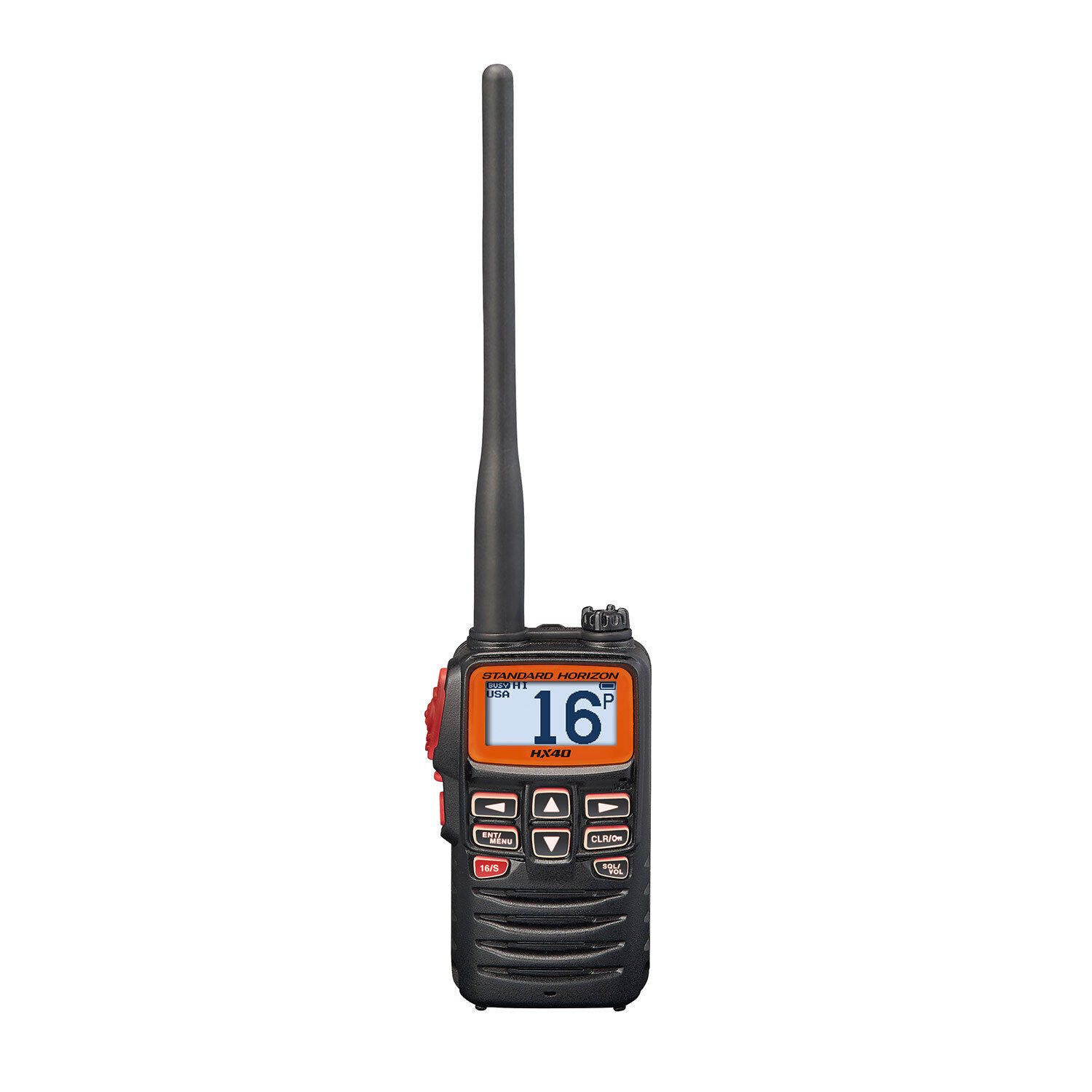
    Standard Horizon HX40 Ultra-Compact Handheld $179.99 View product

    If budget is the priority, Standard Horizon HX40 Ultra-Compact Handheld starts at $179.99. The Garmin Rino 750 Handheld GPS is the step up when you want the features listed above.

    Who Should Buy the Garmin Rino 750 Handheld GPS?

    Boaters who want a dependable backup or primary radio, kayakers and small-boat owners who need a compact unit, and anyone who wants a simple way to stay in contact on the water will find it useful. Always carry a means of calling for help.

    Before You Buy: Quick Checklist

    • Decide whether you need a marine VHF or a general-purpose two-way radio.
    • Check water resistance and whether it floats.
    • Look at battery life and charging options.
    • Check the rules that apply where you boat.

    Buyer FAQs

    Will the Garmin Rino 750 Handheld GPS work with my setup?

    Radios must suit the channels and rules that apply where you boat, so confirm which type you need. If you are unsure, contact us with your boat and equipment details and we will confirm before you order.

    How fast can I get it?

    Orders placed before 2PM EST ship the same day, and we ship worldwide. Free shipping applies on orders over $1,300. Delivery times depend on your location and the service chosen at checkout.

    Is it worth $549.99?

    A radio costs little compared with the value of being able to call for help. Compare features such as water resistance and battery life in the table above and pick the one that suits how you boat.

    Order Your Garmin Rino 750 Handheld GPS Today

    It is in stock at $549.99. Order Direct Today, or browse more in our full range. Products carry the manufacturer’s warranty. Ask us about coverage before you order.
  • Buy Cobra MR HH600 FLT BT Floating: In Stock, Best Price

    Buy Cobra MR HH600 FLT BT Floating: In Stock, Best Price

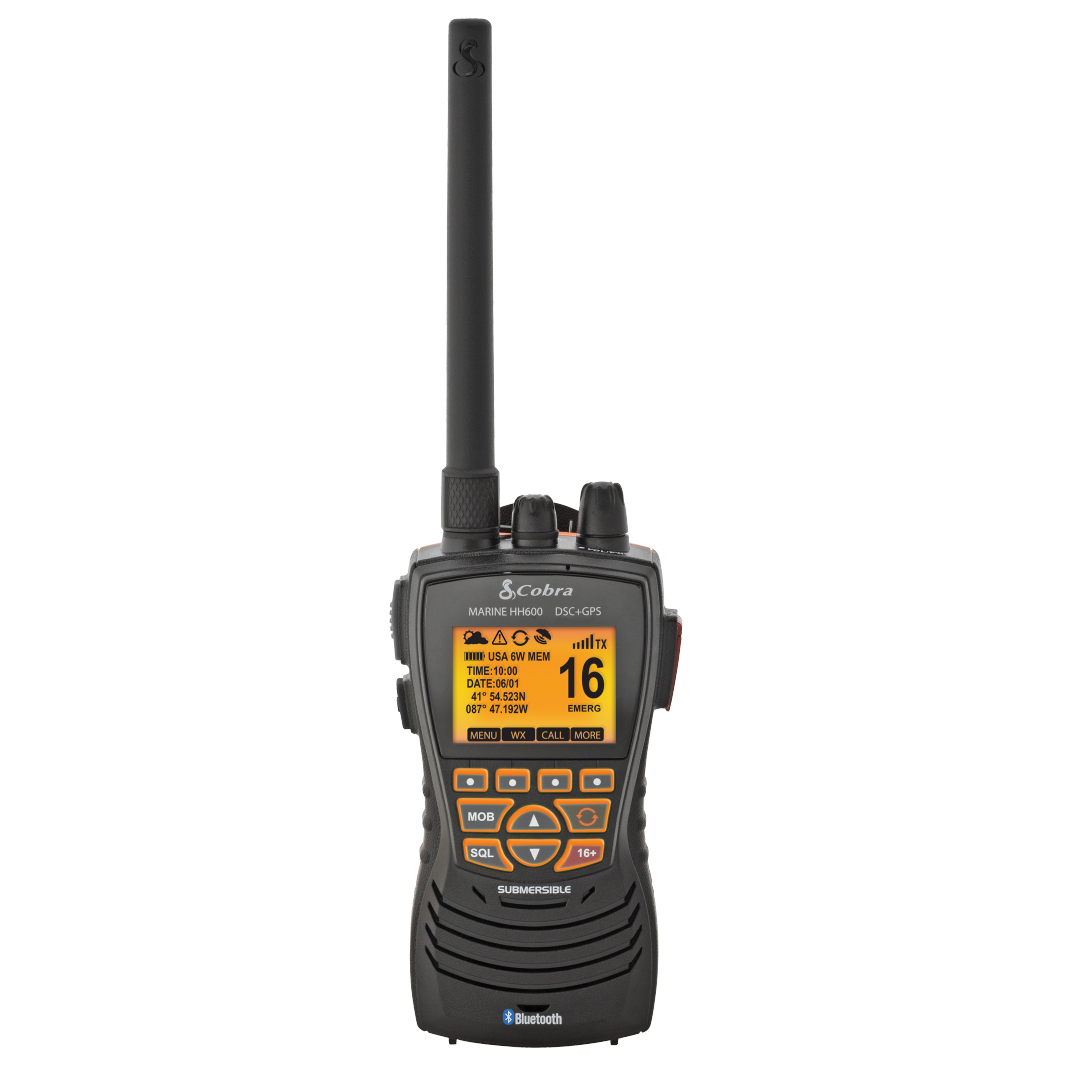
    Floating handheld VHF with Bluetooth smartphone connectivity, GPS and DSC. Connects to the Cobra Connect app for SmartNAV alerts.

    [BUY NOW: Check Cobra MR HH600 FLT BT Floating Stock & Direct Pricing]

    Cobra MR HH600 FLT BT Floating Handheld VHF Radio – Bluetooth, GPS, DSC – $129.99 – in stock

    Check Availability & Order Direct →

    Cobra MR HH600 FLT BT Floating handheld radio
    Cobra MR HH600 FLT BT Floating Handheld VHF Radio – Bluetooth, GPS, DSC

    Cobra MR HH600 FLT BT Floating: Key Features & Specifications

    • Floats and flashes if dropped overboard
    • Bluetooth: Cobra Connect app for SmartNAV alerts
    • Class D DSC with GPS position integration
    • 6W output for excellent on-water range
    • Rewind-Say-Again replays last 20 seconds of audio
    • IPX7 submersible waterproofing

    Price: $129.99  |  Availability: in stock. Confirm compatibility with your boat and existing equipment before you order.

    Why Choose the Cobra MR HH600 FLT BT Floating?

    A reliable radio is a safety essential on the water. The Cobra MR HH600 FLT BT Floating gives you a way to stay in contact with other boats, marinas and, where applicable, rescue services.

    Check whether you need a marine VHF or a general-purpose two-way radio, and look at water resistance and battery life before you choose. For more help deciding, read our top handheld VHF radios, VHF channels explained, VHF vs two-way radios guide.

    How It Compares

    Product Price Details
    Cobra MR HH600 FLT BT Floating $129.99 View this product
    Icom IC-M25 Handheld VHF Marine Radio $129.99 View product
    Cobra MR HH350 FLT Floating Handheld VHF Mari $139.95 View product
    Uniden MHS75 Submersible Handheld VHF Marine $119.99 View product

    If budget is the priority, Uniden MHS75 Submersible Handheld VHF Marine starts at $119.99. The Cobra MR HH600 FLT BT Floating is the step up when you want the features listed above.

    Who Should Buy the Cobra MR HH600 FLT BT Floating?

    Boaters who want a dependable backup or primary radio, kayakers and small-boat owners who need a compact unit, and anyone who wants a simple way to stay in contact on the water will find it useful. Always carry a means of calling for help.

    Before You Buy: Quick Checklist

    • Decide whether you need a marine VHF or a general-purpose two-way radio.
    • Check water resistance and whether it floats.
    • Look at battery life and charging options.
    • Check the rules that apply where you boat.

    Buyer FAQs

    Will the Cobra MR HH600 FLT BT Floating work with my setup?

    Radios must suit the channels and rules that apply where you boat, so confirm which type you need. If you are unsure, contact us with your boat and equipment details and we will confirm before you order.

    How fast can I get it?

    Orders placed before 2PM EST ship the same day, and we ship worldwide. Free shipping applies on orders over $1,300. Delivery times depend on your location and the service chosen at checkout.

    Is it worth $129.99?

    A radio costs little compared with the value of being able to call for help. Compare features such as water resistance and battery life in the table above and pick the one that suits how you boat.

    Order Your Cobra MR HH600 FLT BT Floating Today

    It is in stock at $129.99. Order Direct Today, or browse more in our full range. Products carry the manufacturer’s warranty. Ask us about coverage before you order.
  • Best Two-Way Radios for Boaters

    Best Two-Way Radios for Boaters

    Not every on-water communication need calls for a marine VHF radio. Crew-to-crew chatter, docking directions, fishing tournament coordination, and shore-to-boat contact within a mile or two are all jobs a consumer two-way radio handles well — often more simply and cheaply than VHF. Here’s how the current lineup compares.

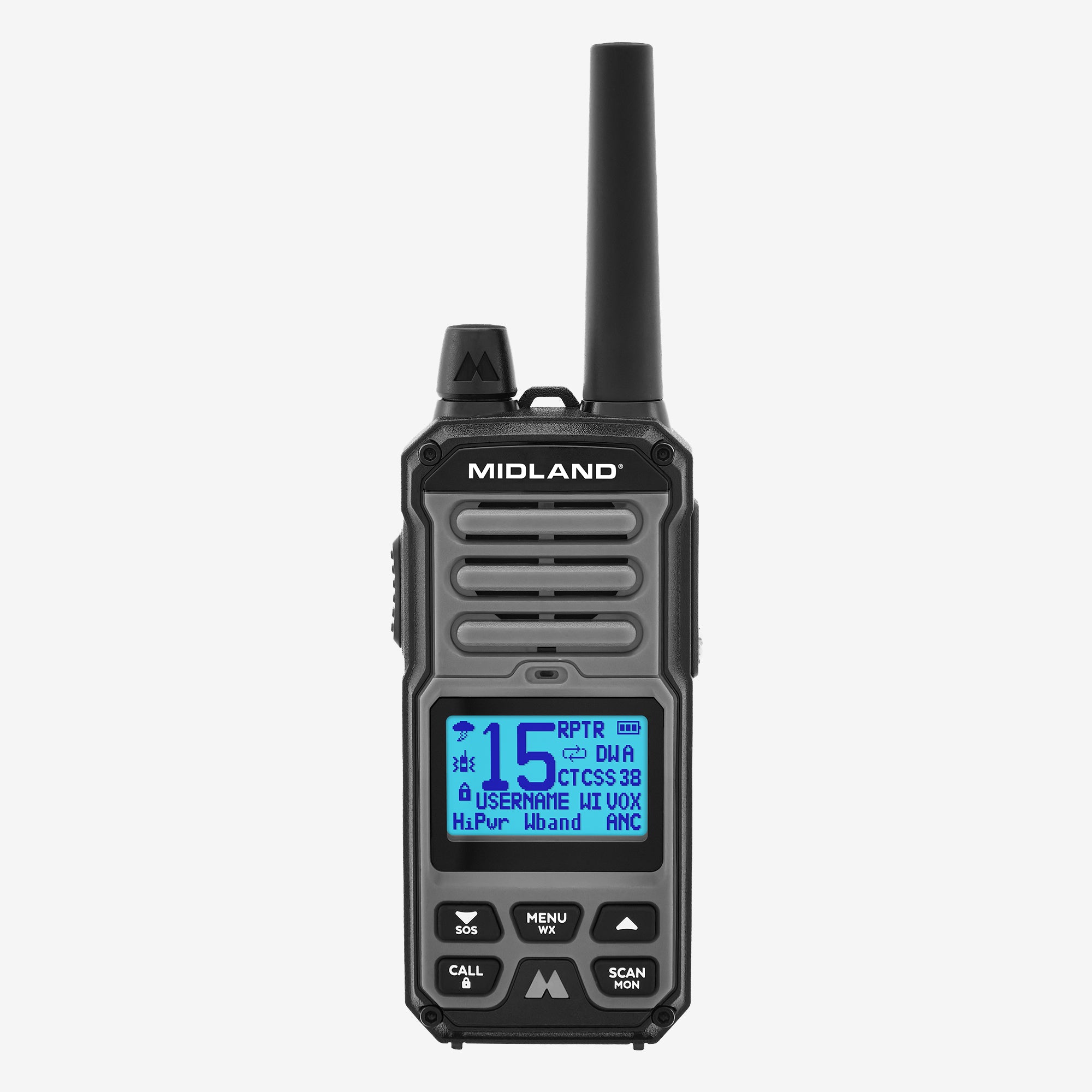
    Midland GXT67 PRO GMRS two-way radio
    GMRS radios like the Midland GXT67 PRO offer longer range than basic FRS units for crew and dock communication.

    Best Overall: Midland GXT67 PRO

    The Midland GXT67 PRO 5-Watt GMRS Two-Way Radio ($219.99) leads with genuine 5-watt GMRS output for real range, well beyond basic FRS radios — a strong choice for boat-to-boat or boat-to-shore communication over open water where distance matters.

    Best Value Pair: Motorola TALKABOUT T802

    The Motorola TALKABOUT T802 Two-Way Radio (2-Pack) ($105.00) is a reliable, no-fuss FRS/GMRS pair well suited to crew communication around the boat, docking guidance, or keeping in touch with someone on shore at closer range.

    Best Waterproof Option: Cobra ACXT645

    The Cobra ACXT645 Waterproof Walkie Talkies (2-Pack) ($89.95) is built specifically to handle spray and splash, making it a smart pick for anyone regularly near the water’s edge — wakeboarding, tubing, or dinghy trips where a standard radio would be a liability.

    Best for Simple, Reliable Business-Grade Use: Motorola CLS1110

    The Motorola CLS1110 1-Channel Business Two-Way Radio ($197.00) is a rugged, single-channel unit built for business/commercial use — a good fit for charter operations, marinas, or fleet crews who want dead-simple, dependable one-channel communication without menus to navigate.

    Best Budget/Hobbyist Pick: BaoFeng UV-5R

    The BaoFeng UV-5R Dual-Band Handheld Radio ($22.99) is the least expensive option here by a wide margin, popular with hobbyists comfortable programming a dual-band radio themselves — note that, unlike the FRS/GMRS radios above, operating on many of its available frequencies requires an amateur (ham) radio license.

    Frequently Asked Questions

    Can I use a two-way radio instead of a marine VHF radio?
    Not for real marine safety communication — two-way radios aren’t monitored by the Coast Guard and don’t share channels with marine VHF. See our VHF marine radio channels guide for why a dedicated VHF radio still matters for safety.

    What’s the difference between FRS and GMRS radios?
    FRS (Family Radio Service) requires no license and is limited in power/range; GMRS (General Mobile Radio Service) allows higher power and longer range but technically requires an FCC license per household in the US — check current requirements for your specific radio and planned use.

    Do I need a license for the BaoFeng UV-5R?
    For its full frequency range, yes — an amateur radio (ham) license is generally required to legally transmit outside the FRS-only frequencies; it’s a popular choice specifically among licensed hobbyists.

    How far do these radios actually reach on the water?
    Real-world range is usually well under advertised figures and depends heavily on terrain and antenna height — expect a mile or two in typical on-water conditions, more in open water with no obstructions, less in marinas or around structures.

    Need real Coast Guard-monitored marine communication instead? See our top handheld VHF radios for boaters guide, or browse the full VHF & radio collection.

  • Top Handheld VHF Radios for Boaters

    A dedicated marine VHF handheld is one of the cheapest pieces of real safety gear you can buy for a boat, and the current lineup ranges from ultra-compact backups to full-featured units with GPS and DSC. Here’s what stands out at each price point.

    Standard Horizon HX40 ultra-compact handheld VHF marine radio
    Standard Horizon’s HX40 is one of the smallest full-power handheld VHF radios currently available.

    Best Overall: Standard Horizon HX40

    The Standard Horizon HX40 Ultra-Compact Handheld VHF Radio ($179.99) packs full 5W-class output, a submersible rating, and NOAA weather-alert monitoring into one of the smallest bodies on the market — a strong everyday-carry choice for boaters who want a radio small enough to clip on and forget about until they need it.

    Best Value: Icom IC-M25

    The Icom IC-M25 Handheld VHF Marine Radio ($129.99) delivers Icom’s build quality and a floating, submersible design at a noticeably lower price than flagship handhelds — a smart pick for a second radio, dinghy use, or a crew member’s personal unit.

    Best for Man-Overboard Peace of Mind: Cobra MR HH350 FLT

    The Cobra MR HH350 FLT Floating Handheld VHF Marine Radio ($139.95) is built to float and flash if it goes overboard, which matters more than most buyers expect — a dropped handheld that sinks is a dropped handheld you don’t get back.

    Best Submersible Budget Pick: Uniden MHS75

    The Uniden MHS75 Submersible Handheld VHF Marine Radio ($119.99) covers the essentials — full power output, weather channel access, and a submersible housing — at one of the lower prices in the dedicated marine VHF category, making it a solid backup radio to keep in a ditch bag or glove box.

    Best Feature-Rich Option: Uniden Atlantis 155

    The Uniden Atlantis 155 Handheld Floating VHF Marine Radio rounds out the lineup with a floating design and a built-in flashlight, useful for boaters who want one radio to double as basic emergency gear.

    Frequently Asked Questions

    Do I need DSC on a handheld, or is that only for fixed-mount radios?
    DSC is increasingly available on handhelds too, and it’s worth having if your budget allows — it lets you send a one-button distress alert with position data even if you’re not near the boat’s fixed-mount unit.

    Is a floating radio worth paying extra for?
    For most boaters, yes. A radio that sinks when dropped overboard is gone for good, and the cost premium for a floating design is usually modest compared to the radio’s total price.

    How is a handheld different from the fixed VHF radio already on my boat?
    A fixed-mount unit transmits at higher power with a permanently mounted antenna for maximum range; a handheld is your backup if the boat loses power, your go-to for a dinghy or kayak, and what you’d grab in an abandon-ship situation. Most serious boaters carry both.

    What should I check before buying any of these?
    Confirm the battery type and expected runtime, submersible vs. floating rating, and whether it includes NOAA weather-channel monitoring — all the models above include weather channels, but battery life and floating capability vary by model.

    Want the background on VHF channels before you buy? Read our VHF marine radio channels explained guide, or browse the full VHF radio collection.

  • VHF Marine Radio Channels Explained: What to Monitor and When

    A marine VHF radio is only as useful as your understanding of what’s actually happening on each channel. Unlike a general-purpose walkie talkie, VHF marine channels are internationally regulated and each one has a specific, expected use — get it wrong and you’re either missing a call for help or clogging a channel other boaters depend on. Here’s what you actually need to know.

    Channel 16: The One Channel Everyone Must Know

    Channel 16 (156.800 MHz) is the international distress, safety, and calling frequency. Every fixed and handheld marine VHF radio monitors it, and the U.S. Coast Guard maintains a continuous listening watch. The rule is simple: keep Channel 16 as your default/standby channel any time you’re underway, use it only to initiate a distress call or to hail another vessel briefly before switching to a working channel, and never use it for ongoing conversation. This is different from FRS/GMRS radios like a Motorola Talkabout T802, which share no channels with marine VHF at all and aren’t monitored by the Coast Guard.

    Distress, Safety, and Working Channels

    Beyond Channel 16, a handful of channels matter most for recreational boaters:

    Channel 9 is a secondary hailing channel used in many U.S. recreational boating areas to keep routine calling traffic off 16. Channels 68, 69, 71, 72, and 78A are common non-commercial working channels for boat-to-boat conversation once you’ve made contact. Channel 22A is used by the Coast Guard to broadcast safety and weather-related information and to switch distress traffic off of 16 for follow-up communication. Channels 13 and 67 are bridge-to-bridge channels used near locks, bridges, and in some commercial traffic areas.

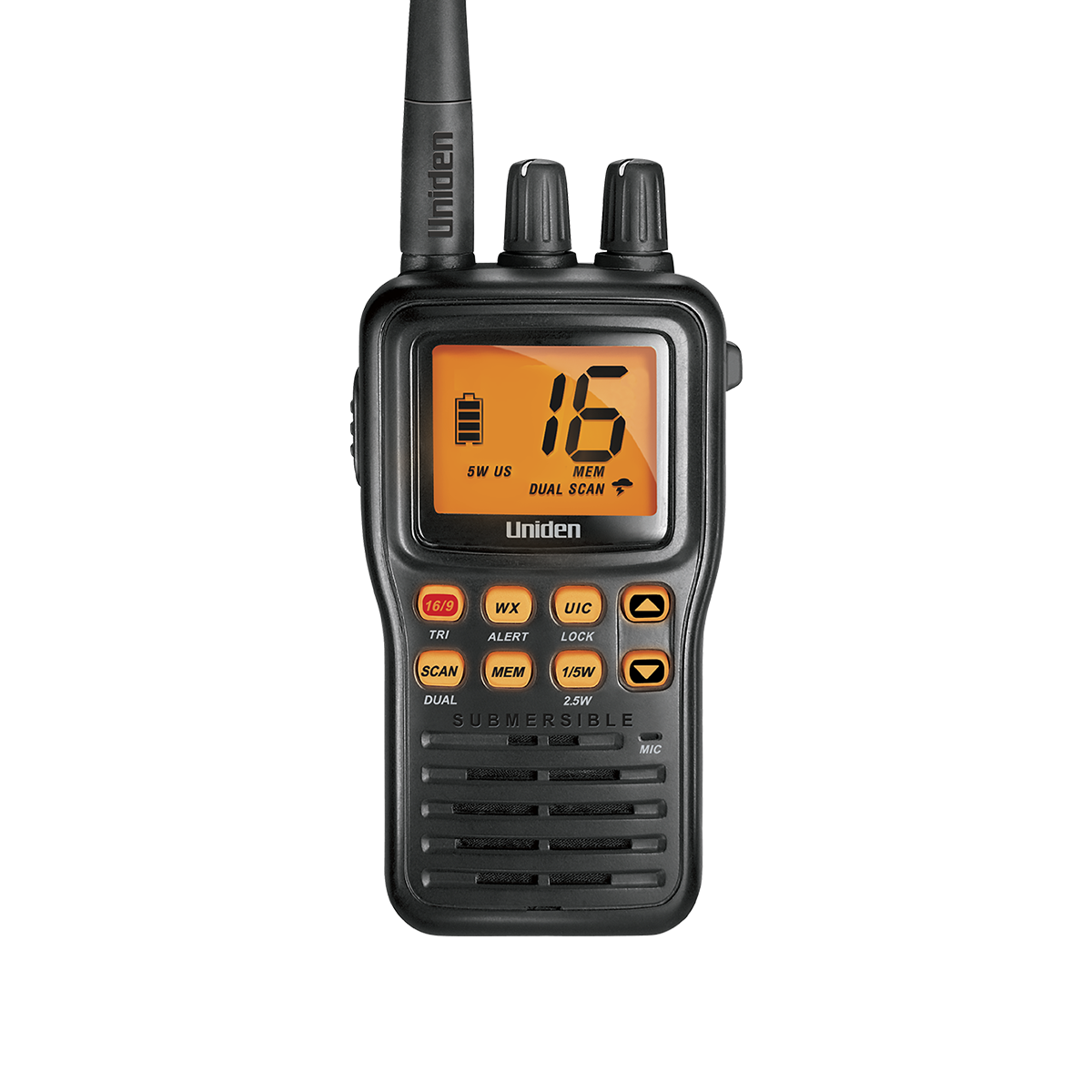
    Uniden MHS75 submersible handheld VHF marine radio
    A dedicated handheld VHF radio monitors Channel 16 and gives you real Coast Guard-monitored emergency communication, unlike a consumer walkie talkie.

    Weather Channels (WX1–WX10)

    NOAA Weather Radio broadcasts continuous forecasts and alerts on a dedicated set of weather channels (WX1 through WX10) that most marine VHF radios, including budget handhelds, tune separately from the standard ship channels. Checking the weather channel before heading out, and leaving a radio’s weather-alert function enabled while underway, is one of the simplest habits that separates prepared boaters from everyone else.

    DSC: Digital Selective Calling

    Modern fixed-mount and many handheld VHF radios include DSC (Digital Selective Calling), which lets you send an automated distress alert — including your GPS position, if the radio is connected to or has a built-in GPS — with a single button press, broadcast simultaneously to the Coast Guard and any DSC-equipped vessels in range. If your radio has DSC, register it for a free MMSI number before you need it; an unregistered DSC radio can still send an alert, but responders won’t have your vessel information on file.

    Frequently Asked Questions

    Can I use a regular walkie talkie instead of a marine VHF radio on the water?
    You can carry one as a backup for boat-to-boat chatter at close range, but it isn’t monitored by the Coast Guard and doesn’t reach shore stations or other vessels the way marine VHF does — it shouldn’t be your only communication device offshore or on open water.

    Do I need a license to operate a marine VHF radio?
    Recreational boaters in the U.S. operating domestically generally don’t need an individual license, but a vessel traveling internationally or carrying certain commercial/DSC equipment may need a Ship Station License — check current FCC requirements for your specific situation.

    What’s the difference between a handheld and a fixed-mount VHF radio?
    Fixed-mount radios run on the boat’s power, connect to a permanently mounted antenna, and transmit at higher wattage (typically 25W) for longer range; handhelds like the Standard Horizon HX40 are battery-powered, portable, and usually cap around 5-6W — ideal as a backup, for smaller boats, or for going ashore in a dinghy.

    How far does a handheld VHF radio actually reach?
    Range depends heavily on antenna height on both ends since VHF is line-of-sight — a handheld talking to another handheld at water level might only reach 2-5 miles, while a handheld talking to a tall shore station or another boat’s mast-mounted antenna can reach considerably farther.

    Ready to pick a specific radio? See our top handheld VHF radios for boaters comparison, or browse the full VHF radio collection. If you’re deciding between VHF and a consumer two-way radio for a specific use case, our VHF vs. two-way radio guide covers that comparison directly.

  • VHF vs. Two-Way Radio: What Boaters Actually Need (Featuring the Motorola MOTOTRBO CP200d)

    Ask five boaters what radio they need and you’ll get five different answers — and at least two of them will be wrong for what that person actually does on the water. Marine VHF, FRS/GMRS walkie talkies, and commercial two-way radios like the Motorola MOTOTRBO CP200d all say “radio” on the box, but they solve completely different problems. Get the wrong one and you’ll find out at the worst possible moment — usually when you’re trying to reach the dock, not the Coast Guard.

    VHF vs. FRS/GMRS vs. Business Radio — What’s the Difference?

    Marine VHF is the radio the Coast Guard, other vessels, and marinas monitor on Channel 16. It’s the only category built for distress calling, DSC (Digital Selective Calling), and ship-to-ship hailing over open water. If you’re underway and need to be reachable by anyone else on the water, a marine VHF like the Uniden Atlantis 155 or Cobra MR HH350 FLT is non-negotiable.

    FRS/GMRS radios (the Motorola Talkabout and Midland GXT lines) are consumer walkie talkies. They’re not monitored by anyone outside your group and can’t reach Channel 16, but they’re cheap, simple, and fine for keeping a dinghy crew, guests, or shore party in touch over a few miles.

    Business/commercial two-way radios like the Motorola MOTOTRBO CP200d are a third category entirely — built for one team to talk to itself reliably, all day, in noisy working conditions. They’re not marine-rated for distress use and can’t reach Channel 16, but for marina staff, charter crews, and dock-to-warehouse communication, they outperform both VHF and consumer FRS radios.

    Meet the Motorola MOTOTRBO CP200d

    The Motorola MOTOTRBO CP200d is a digital/analog commercial handheld with 16-channel capacity, IP54 water and dust resistance, and the kind of clear audio that cuts through engine noise and dock chatter. It’s built for the operational side of running a marina, charter business, or boatyard — coordinating slips, hauling gear, and keeping shop-floor staff connected — not for hailing other vessels.

    Right now it’s 15% off at $441.15 (regular $519.00). Shop the CP200d.

    Which Radio Actually Fits Your Situation?

    Here’s how we’d point different boaters and operators toward the right radio:

    Frequently Asked Questions

    Can I use a business radio like the CP200d to call for help on the water?

    No. The CP200d can’t reach Channel 16 or perform DSC distress calling. Keep a marine VHF aboard for that — the CP200d is for team and dock communication, not vessel-to-vessel hailing.

    Do I need a license to operate these radios?

    Marine VHF operation generally doesn’t require an individual license for recreational use in the US. GMRS radios like the Midland GXT67 PRO require an FCC GMRS license (no test required). Business radios like the CP200d typically operate on licensed frequencies managed by the purchasing business.

    What’s the difference between FRS and GMRS?

    FRS (Family Radio Service) is license-free but limited in power and range. GMRS allows higher power, repeater use, and longer range, but requires an FCC license.

    Ready to Gear Up?

    Browse the full lineup in VHF Radios & Marine Communication, or contact the technical team if you’re not sure which radio fits your setup.

🎁 10% OFF