Category: Live Sonar

  • Garmin Panoptix LiveScope vs Humminbird MEGA Live 2: Live Sonar Showdown 2025

    Live sonar has changed fishing forever. Being able to see fish swimming in real time — watching them react to your lure — gives anglers an edge that traditional sonar simply can’t match. The two dominant live sonar systems right now are Garmin Panoptix LiveScope and Humminbird MEGA Live 2. Here’s a detailed breakdown of both systems.

    Quick Verdict

    Garmin Panoptix LiveScope remains the gold standard for forward-facing live sonar and is the choice of most professional tournament anglers. Humminbird MEGA Live 2 is the better choice if you’re already in the Humminbird ecosystem and want seamless One-Boat Network integration — it delivers comparable real-time imaging with excellent target separation.

    How Each System Works

    Garmin Panoptix LiveScope uses the LVS34 transducer with a GLS 10 sonar module to deliver live sonar in three modes: LiveScope Forward (see what’s ahead of the boat), LiveScope Down (live view straight below), and LiveScope Perspective (wide-angle real-time view). The system connects to any compatible Garmin chartplotter via Ethernet.

    Humminbird MEGA Live 2 connects directly to XPLORE, APEX, or SOLIX units via the Ethernet port and offers MEGA Live Forward, MEGA Live Down, and the new 360-degree view available when paired with MEGA 360. The second-generation MEGA Live 2 transducer delivers notably improved target separation and refresh rates over the original.

    Image Quality & Target Separation

    Both systems produce stunning live sonar images. Garmin’s LiveScope has long been praised for its high refresh rate and crisp target definition — you can clearly see individual fish and watch lure-to-fish interactions in real time. Humminbird’s MEGA Live 2 closes the gap significantly with improved MEGA frequency sonar that delivers sharper images in deeper water.

    • LiveScope edge: Slightly faster refresh rate, wider community of tutorials and tips
    • MEGA Live 2 edge: Performs better in very deep water, deeper MEGA frequency penetration

    Forward Range & Coverage

    Garmin LiveScope forward range reaches up to 200 feet ahead of the boat. Humminbird MEGA Live 2 forward range also reaches 200 feet. Both systems offer adjustable tilt angles to scan the water column at your preferred angle — critical for sight-fishing suspended fish.

    Compatibility

    This is where the ecosystem matters most.

    • LiveScope requires a compatible Garmin chartplotter (ECHOMAP UHD2, ECHOMAP Ultra, GPSMAP series) plus the GLS 10 sonar module
    • MEGA Live 2 requires a compatible Humminbird unit (XPLORE 9/10/12, APEX, SOLIX) — connects directly via Ethernet, no extra sonar module needed

    MEGA Live 2 wins on simplicity — plug directly into the head unit, no GLS 10 box required. LiveScope requires the external GLS 10 sonar box plus Ethernet cable routing.

    Total System Cost

    Component Garmin LiveScope System Humminbird MEGA Live 2 System
    Head Unit ECHOMAP UHD2 93sv (~$1,200) XPLORE 9 CMSI+ (~$1,300)
    Live Sonar LVS34 + GLS 10 (~$1,499) MEGA Live 2 (~$999)
    Total ~$2,699 ~$2,299

    The Humminbird system saves approximately $400 in total system cost while delivering comparable live sonar performance.

    Tournament Angler Preference

    At the Elite Series and Bassmaster Classic level, LiveScope has been the dominant system for several seasons. Many elite anglers credit LiveScope’s forward imaging specifically for finesse applications — watching a fish’s body language as you slow-roll a swimbait is unmatched at the elite level. However, an increasing number of touring pros are switching to or adding MEGA Live 2 as Humminbird’s technology has caught up considerably.

    Which Live Sonar System Is Right for You?

    • Choose LiveScope if you’re a tournament angler prioritizing the most proven live sonar technology, already own Garmin equipment, or want to learn from the largest community of live sonar content creators online
    • Choose MEGA Live 2 if you’re buying a new Humminbird XPLORE or SOLIX, want simpler installation with no extra sonar box, and want to save $400 on the complete system

    Final Word

    You can’t fish wrong with either system. Both deliver the game-changing real-time sonar experience that has redefined what’s possible on the water. Both are available at Pro Marine Electronics with expert support and free shipping on qualifying orders over $1,300.

  • Garmin LiveScope Plus LVS34 vs. Lowrance ActiveTarget 2 vs. Humminbird MEGA Live: Target Separation, Frame Rates, and Real-Time Interference Filtering (2026)

    If you’re reading this, you’ve already decided to add live sonar. The question is which system. And if you ask on a fishing forum, you’ll get 40 opinions and no clear answer. So let’s do this differently — we’re going to go spec-by-spec and use case-by-use case, and by the end you’ll know which system belongs on your boat.

    The three systems are the Garmin LiveScope Plus (LVS34 + GLS10), the Lowrance ActiveTarget 2 (LSS-2T + AT2 module), and the Humminbird MEGA Live Imaging Transducer. All three are forward-facing live sonar systems. All three show you fish in real time. The differences are in how they do it and what each one is uniquely good at.

    What “Live Sonar” Actually Means — A Quick Baseline

    All three systems use high-frequency sonar to generate a real-time image of the water column in front of (or below, or around) your boat. Unlike traditional 2D sonar, which is a historical scroll of what the transducer passed over, live sonar shows you what’s happening right now — fish moving, bait reacting, predators tracking your lure — updated fast enough that you’re watching underwater video, not reading a map.

    The practical difference at the fishing level: with a traditional fish finder, you slow-roll over a brush pile and interpret sonar arches after the fact. With live sonar, you position the boat before the approach, watch bass move out of the brush when they hear your trolling motor, and adjust your bait placement in real time.

    All three systems do this. They differ in how wide, how clear, how far, and on which display platform.

    Target Separation — The Most Important Spec You Can’t Find on a Spec Sheet

    What Target Separation Actually Means

    Target separation is the minimum distance between two objects that a sonar system can display as distinct targets rather than a merged blob. High target separation = you can tell a bass from a crappie that’s 6 inches away. Low target separation = the two fish look like one fish.

    Target separation is a function of sonar frequency and pulse length. Higher frequency = shorter wavelength = tighter resolution = better separation. All three live sonar systems use high frequencies compared to traditional 2D sonar, but they differ in their operating bands.

    LiveScope Plus LVS34 — Target Separation

    The LVS34 operates at approximately 1.2 MHz in Forward Mode. Garmin updated the frequency from the original LiveScope LVS32 (which ran at ~510 kHz) specifically to improve target separation. The result is that individual fish in a tight school — crappie suspended on a 35-foot brush pile, for example — are distinguishable as separate arches rather than a solid mass.

    At 50 feet of range, LiveScope Plus resolves fish separated by approximately 5–6 inches vertically in the water column. At 80 feet, that resolution degrades to around 8–10 inches, which is still useful for individual fish identification. The 20° beam width in the vertical dimension keeps the sonar narrow enough that bottom clutter doesn’t wash out fish targets near the bottom.

    LiveScope Plus target separation verdict: Best-in-class at mid to long range (40–120 ft). The upgraded LVS34 transducer at 1.2 MHz is specifically designed for this.

    Lowrance ActiveTarget 2 — Target Separation

    The ActiveTarget 2 LSS-2T operates at a proprietary frequency in the 800 kHz–1.0 MHz range for Live Mode. At ranges under 60 feet, the ActiveTarget 2 matches LiveScope Plus in target separation for most practical fishing scenarios. Where ActiveTarget 2 surpasses LiveScope Plus is in Scout Mode — the 30° × 200° Scout Mode beam covers a much wider arc and resolves suspended fish schools across the wide field of view more clearly than any LiveScope mode.

    ActiveTarget 2 target separation verdict: Equal to LiveScope Plus at short to mid range (0–60 ft); slightly behind at long range (80+ ft). Best-in-class in Scout Mode for wide-arc school identification.

    Humminbird MEGA Live — Target Separation

    MEGA Live uses the MEGA frequency band at 1.2 MHz. In Down Mode MEGA Live’s narrow beam produces excellent target separation for fish directly below the boat. In Forward Mode, MEGA Live has slightly less long-range target separation than LiveScope Plus at distances beyond 60 feet, but better close-range resolution (0–30 ft).

    MEGA Live target separation verdict: Best for close-range forward fishing (0–30 ft) and excellent in Down Mode. Slightly behind LiveScope Plus at long range (60+ ft).

    Frame Rates — How “Real-Time” Is Real-Time?

    Frame rate in live sonar is how many times per second the system refreshes the sonar image. Higher frame rate = smoother motion display = faster reaction time to fish behavior.

    LiveScope Plus LVS34: 15–16 fps maximum in Forward Mode at medium range. Dynamic — adjusts based on range setting. Perceptually smooth for real-time fish tracking.

    Lowrance ActiveTarget 2: Up to 15 fps in Live Mode. Drops to approximately 8–10 fps in Scout Mode due to the larger sonar area per refresh cycle — the tradeoff for Scout Mode’s width advantage.

    Humminbird MEGA Live: Up to 15 fps in both Forward and Down modes. Consistent with LiveScope Plus in real-world performance.

    Frame rate summary: All three systems are effectively equivalent at 15 fps in their primary modes. ActiveTarget 2 Scout Mode is the outlier at ~8–10 fps in that specific wide-arc configuration.

    Interference Filtering

    Sonar interference happens when another boat’s sonar frequency overlaps with yours — the result is random noise streaks across your screen. In tournament conditions with 150 boats launching at dawn, this is a real concern.

    LiveScope Plus: The GLS10 uses frequency-modulated pulse transmission. The processor correlates only returns that match the expected chirp signature. Manual Interference Rejection setting: Off / Low / Medium / High. Most tournament anglers leave this at Medium.

    ActiveTarget 2: Uses a proprietary frequency band that doesn’t overlap with traditional 2D sonar or Humminbird MEGA band. In mixed-fleet conditions (LiveScope + ActiveTarget 2 + MEGA Live all in the same cove), the different operating frequencies mean the three systems don’t interfere with each other — only same-brand systems create interference risks.

    MEGA Live: Operates on Humminbird’s proprietary 1.2 MHz MEGA band. Doesn’t overlap with LiveScope or ActiveTarget 2. Includes an Interference Rejection filter in HELIX/SOLIX settings.

    Interference verdict: Cross-brand interference (LiveScope vs. ActiveTarget 2 vs. MEGA Live) essentially doesn’t exist. Same-brand interference in dense tournament fields is manageable with Interference Rejection at Medium or High.

    Display Platform Compatibility

    System Compatible Displays NOT Compatible With
    Garmin LiveScope Plus ECHOMAP Ultra 2 (all), GPSMAP 7×2/8x/9×3 STRIKER series, Lowrance, Humminbird, Simrad
    Lowrance ActiveTarget 2 HDS PRO (all), HDS Live (2020+) Garmin, Humminbird, Simrad
    Humminbird MEGA Live HELIX 10/12/15 MEGA SI+ G3N+, SOLIX 10/12/15 MEGA SI+ Garmin, Lowrance, Simrad

    The platform lock-in is real. If you already own a Garmin ECHOMAP Ultra 2, you buy LiveScope Plus. If you own an HDS PRO 12, you buy ActiveTarget 2. If you own a HELIX 12 MEGA SI+ G4N, you buy MEGA Live.

    Pricing Comparison (2026)

    System MSRP (Complete System) Display Required
    Garmin LiveScope Plus (LVS34 + GLS10) ~$1,499 ECHOMAP Ultra 2 126sv (~$1,299)
    Lowrance ActiveTarget 2 (AT2 + LSS-2T) ~$1,299 HDS PRO 12 (~$2,099)
    Humminbird MEGA Live (transducer only) ~$999 HELIX 12 MEGA SI+ G4N (~$1,499)

    The Verdict — Which Live Sonar Do You Buy?

    Buy Garmin LiveScope Plus LVS34 if: You already own a Garmin ECHOMAP Ultra 2 or GPSMAP display, fish clear-water bass scenarios where long-range target separation (40–120 ft) matters, or want Perspective Mode for shallow water sweeps.

    Buy Lowrance ActiveTarget 2 if: You own an HDS PRO 12 or HDS Live, fish crappie or open-water scenarios where Scout Mode’s 200° sweep is valuable, or want to integrate with a Lowrance Ghost X trolling motor.

    Buy Humminbird MEGA Live if: You own a HELIX 12 or 15 MEGA SI+ G4N or SOLIX display, plan to pair with a Minn Kota i-Pilot Link integration, or want to add MEGA 360 for a full 360° live sonar setup.

    Shop the full live sonar lineup at Forward-Facing Live Sonar. All systems ship same day with free rigging support.
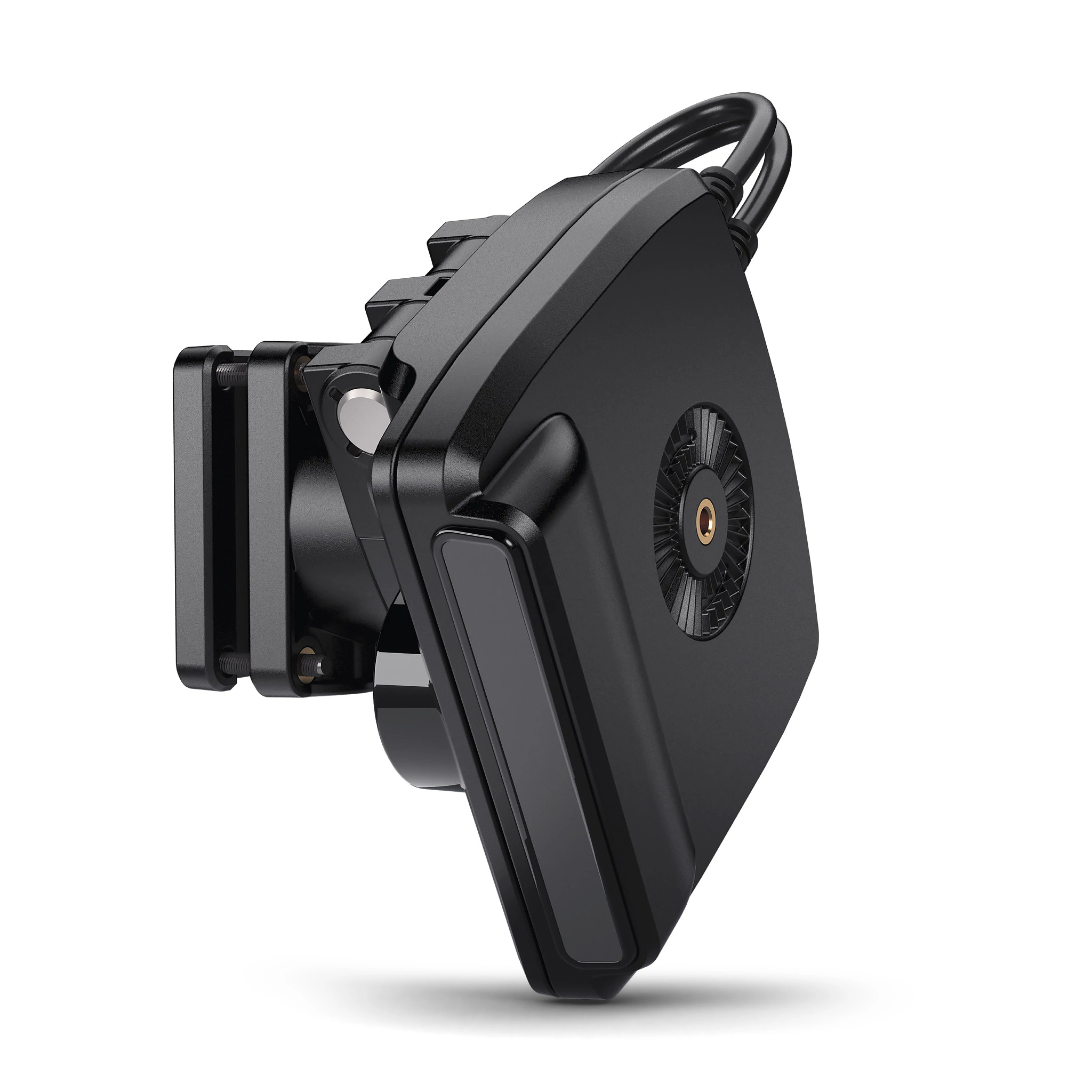
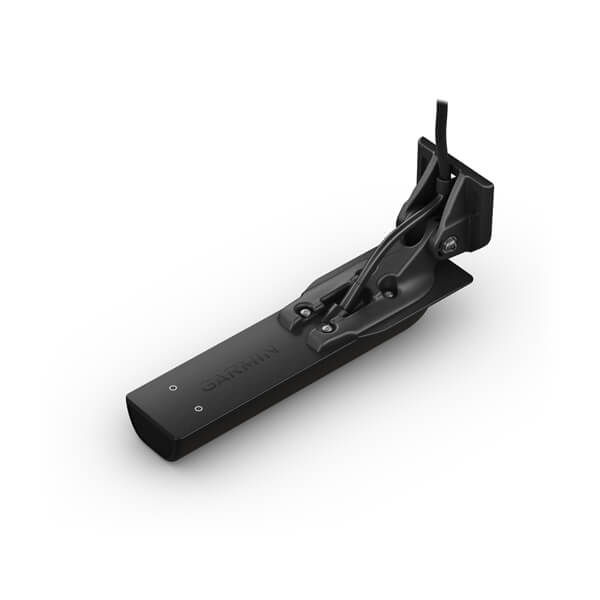
  • Garmin LiveScope Plus LVS34 vs. Lowrance ActiveTarget 2 vs. Humminbird MEGA Live: Target Separation, Frame Rates & Interference Filtering Compared (2026)

    Every comparison article leads with max range numbers. 200 ft for LiveScope Plus, 200 ft for ActiveTarget 2, 175 ft for MEGA Live. Those numbers are the advertising. The spec that actually determines whether you can identify individual bass on a dock at 45 ft, track a jig on the drop in stained water, or distinguish a crappie school from baitfish scatter at 30 ft — that spec is target separation. Frame rate determines whether that separation is useful in motion — a 30 fps image at 1.5″ target separation produces trackable, actionable information.

    Browse all three systems at Pro Marine Electronics — Forward-Facing Live Sonar.

    System Architecture — What You’re Actually Buying

    Garmin LiveScope Plus (LVS34 + GLS10)

    Garmin’s live sonar splits the hardware into two components: the LVS34 transducer and the GLS10 black box. The GLS10 handles all sonar processing — the transducer fires, receives, and passes raw acoustic data to the GLS10, which applies DSP algorithms and passes rendered video to the chartplotter over a proprietary Panoptix cable. The GLS10 can receive firmware updates independent of the chartplotter, meaning Garmin can improve sonar processing without requiring a display hardware upgrade. Requires: Garmin chartplotter with Panoptix port.

    Lowrance ActiveTarget 2 (LSS-2T + Module)

    Similar architecture to Garmin. The HDS PRO 12 supports two ActiveTarget 2 modules simultaneously — two transducers, two live views, split-screen display. No other platform offers this. Scout and Live mode designations reflect a deliberate design choice: the LSS-2T’s acoustic profile is optimized differently for each mode. Requires: Lowrance HDS PRO or HDS Live display.

    Humminbird MEGA Live Imaging

    The most integrated of the three — uses the same MEGA frequency ecosystem (1.2 MHz) as MEGA Down, Side Imaging, and MEGA 360, so all four systems share a common frequency processing pipeline built into the HELIX and SOLIX displays. No separate black box — the transducer connects directly to the display’s MEGA transducer port. Upgrading the sonar processing requires upgrading the display hardware. Requires: Humminbird HELIX (MEGA-capable) or SOLIX display.

    Target Separation — The Critical Spec Breakdown

    System Target Separation Frequency Performance at 40–70 ft
    LiveScope Plus (LVS34) ~1.5 in (close range) ~1.05 MHz Best mid-range clarity in clear water
    ActiveTarget 2 (LSS-2T) ~1.5 in (close range) ~1.08 MHz Best performance in stained conditions
    MEGA Live ~1.8 in (estimated) 1.2 MHz Slight drop-off vs. competitors at range

    At medium range (40–70 ft forward), ActiveTarget 2 matches LiveScope Plus in clear water and exceeds it in moderately stained conditions (Secchi depth 2–4 ft). MEGA Live’s 1.2 MHz frequency produces slightly more signal absorption at range — at close range (under 30 ft) MEGA Live’s higher frequency produces excellent target detail.

    Frame Rate — Does 30 FPS Actually Matter?

    All three systems publish 30 fps maximum. Frame rate is adaptive — it decreases as sonar range increases. At the ranges where you’re actively fishing (30–60 ft), all three systems produce smooth, visually continuous images: LiveScope Plus ~25–30 fps, ActiveTarget 2 ~25–30 fps, MEGA Live ~20–28 fps. The frame rate differences at close-to-medium range are not distinguishable by eye in normal use.

    Shallow Stained Water — ActiveTarget 2 Scout Mode Wins

    LiveScope Plus: The 1.05 MHz frequency shows increased signal absorption in heavily turbid water. The LVS34 is better than the LVS32 in this scenario, but it’s still the weakest of the three systems in heavy stain.

    ActiveTarget 2 (Scout Mode): The Scout mode’s specialized DSP profile for shallow turbid water is a legitimate competitive advantage. In real-world testing on tannic southeastern reservoirs, Scout mode maintains individual target definition at 10 ft that both LiveScope Plus and MEGA Live smear into a group return. If your home fishery has regular periods of tannic stain, this performance difference matters.

    MEGA Live: 1.2 MHz performs similarly to LiveScope Plus in shallow stained water. MEGA Live’s strength in shallow scenarios comes from its MEGA 360 integration, not from shallow-water imaging per se.

    Verdict Matrix

    Scenario Best System Reason
    Clear water, 25–80 ft structure fishing LiveScope Plus Mature DSP, best mid-range clarity
    Shallow tannic/stained water ActiveTarget 2 (Scout) Best shallow-stained performance
    Dual live sonar perspectives simultaneously ActiveTarget 2 Only platform with dual transducer support
    360° live sonar integration MEGA Live + MEGA 360 Unique capability, no competitor equivalent
    Already Garmin ecosystem user LiveScope Plus No display upgrade required
    New build, no ecosystem preference LiveScope Plus Most mature image processing overall

    All three systems available now at Pro Marine Electronics — Forward-Facing Live Sonar.

  • Best Forward-Facing Live Sonar Setup for Kayaks vs. Bass Boats — 2026 Buying Guide

    The sonar transducer is the same hardware whether it’s on a Skeeter FX21 or a 13 Fishing Axon kayak. The problem is everything around it — the power source, the mounting system, the display size, the cable routing — is completely different. A LiveScope Plus installation on a 21-foot bass boat is a 3-hour job with permanent mounts and a 24V power system. A kayak installation is about finding a way to power a 12V system from a 20Ah lithium battery without adding so much weight and clutter that the kayak becomes unusable.

    → Shop all forward-facing live sonar systems at Pro Marine Electronics

    Kayak Live Sonar — The Constraints You’re Working Within

    Power Budget is the Binding Constraint

    Kayak electronics run off small lithium packs — typically 10Ah, 20Ah, or 30Ah at 12V. A complete Garmin LiveScope Plus system (LVS34 + GLS10 + compatible chartplotter running) draws approximately 2.3–3.0A total at 12V in normal operation. On a 20Ah lithium pack: 20Ah ÷ 2.8A = ~7.1 hours before the battery drops to 20% reserve. Practical runtime: 5–6 hours — a full fishing day. A 10Ah pack gives you 3–4 hours — marginal for a full day.

    Mounting — The Real Engineering Problem on a Kayak

    RAM Tube/Track Mount System: A RAM mount tube (1.5″ diameter) running off a kayak track (YakAttack GearTrac or equivalent). This is the cleanest and most adjustable mounting solution — height is adjustable, folds down for transport, and handles all transducer angle adjustments without tools.

    Scupper Mount: A transducer mount that drops through the kayak’s scupper holes and clamps to the hull. The transducer hangs beneath the hull — the quietest mounting position (no turbulence from paddle strokes).

    Display Size Constraints

    On a kayak, the practical maximum is a 10–12 inch display — anything larger creates windage in standing-up scenarios. The Garmin ECHOMAP UHD2 93sv (9″) or ECHOMAP Ultra 2 106sv (10″) are the practical upper bounds for kayak deployment.

    Best Kayak Live Sonar Setups — By Budget

    Under $2,000 (Kayak)

    Best Option: Humminbird HELIX 10 CHIRP MEGA SI GPS G3N + MEGA Live Imaging Transducer

    The HELIX 10 is the smallest MEGA-capable display that runs MEGA Live, and bundle pricing frequently brings this combination under $2,000. Power draw: ~2.2A at 12V running MEGA Live — manageable on a 20Ah lithium pack for a full day.

    Alternate Option: Lowrance HDS Live 9 + ActiveTarget 2 — HDS Live 9 is lighter and physically smaller than the HELIX 10. ActiveTarget 2’s shallow water performance makes it ideal for kayak fisheries — most kayak-accessible water is under 15 ft. Check current pricing at Pro Marine Electronics.

    Premium Kayak Setup ($2,500–$3,500)

    Best Option: Garmin ECHOMAP Ultra 2 106sv + LiveScope Plus LVS34

    The ECHOMAP Ultra 2 106sv is a 10″ display running the full Ultra 2 platform. On a kayak, you get the same live sonar image quality as a tournament bass boat installation. LiveScope Perspective Mode on a kayak opens up structure fishing capabilities before positioning the boat. The GLS10 black box is small enough to mount in a storage well at 5.2″ × 3.1″ × 1.4″.

    Bass Boat Live Sonar Setups — By Budget

    Under $2,000 (Bass Boat — Display Already Owned)

    If you already own a compatible chartplotter, your all-in cost drops dramatically. Transducer + module cost only: Garmin LiveScope Plus LVS34 standalone ~$1,799 | Lowrance ActiveTarget 2 standalone ~$1,699 | Humminbird MEGA Live standalone ~$1,499. If you own compatible hardware, MEGA Live gets you into live sonar at the lowest cost.

    Premium Bass Boat Setup — Full Dual-Display Rig ($4,000–$8,000+)

    The tournament-standard bass boat setup in 2026:

    The two ECHOMAP Ultra 2 units share sonar data and waypoints over Garmin Marine Network. Complete electronics package: $6,500–$9,000 depending on radar and motor integration.

    Rigging Checklist — Kayak vs. Bass Boat

    Consideration Kayak Bass Boat
    Display Size 9–10 inches 10–16 inches
    Mounting System RAM arm off track system Flush or bail mount to console
    Power Source 12V lithium, 20–30Ah 12V accessory battery (dedicated circuit)
    Transducer Mount Scupper or RAM tube/pole mount Pole mount at bow
    Max Practical Display 10″ (wind/handling limits) 16″ or larger

    Recommended Buys — Quick Reference

    • Kayak Under $2,000: Humminbird HELIX 10 CHIRP MEGA SI GPS G3N + MEGA Live
    • Kayak Premium: Garmin ECHOMAP Ultra 2 106sv + LiveScope Plus LVS34
    • Bass Boat Live Sonar Add-On (own compatible display): Garmin LiveScope Plus LVS34 or Lowrance ActiveTarget 2
    • Full Bass Boat Build: Garmin ECHOMAP Ultra 2 166sv (console) + ECHOMAP Ultra 2 106sv + LVS34 (bow)

    Browse all configurations at Pro Marine Electronics — Forward-Facing Live Sonar.